

Summary:
People rarely open with it. They come in to talk about a lower back that has hurt for eight months, and somewhere near the end of the appointment they mention, almost as an aside, that they have not been sleeping, that they snapped at their kids again, that they canceled on friends for the third time.
That part of the story is not an aside. It is one of the most useful things you can tell a physician, and it is one of the most common experiences among people living with persistent pain in a city that does not slow down for anybody.
What follows is an honest look at how chronic pain and mental health interact, why that connection is physiological rather than a matter of character, and what can genuinely help.
The Toll Chronic Pain Takes On Mental Health
Pain that lasts months wears people down in predictable ways. Sleep is usually the first casualty, and it goes early. Concentration slips, because a part of your attention is permanently occupied. Social life narrows, sometimes because activities hurt and sometimes because explaining yourself repeatedly is exhausting. Work becomes harder, and worry about work follows.
Then there are the quieter losses. The identity of being someone who runs, who lifts their grandchildren, who never cancels. The frustration of not being believed, or of feeling like a difficult patient. The low, steady anxiety of not knowing whether this is permanent. Depression and anxiety occur substantially more often in people living with chronic pain than in the general population, and that is not a coincidence or a character flaw. It is a foreseeable response to months of relentless discomfort and uncertainty.

Is The Link Between Pain And Mood Real, Or Imagined?
It is real, it is physiological, and it runs in both directions. This matters enough to say plainly, because many people arrive braced for the suggestion that their pain is psychological. That is not what the evidence shows and it is not what any good pain physician believes.
Pain signals and mood are processed in overlapping regions of the brain and share several of the same chemical messengers. That shared architecture is why persistent pain can lower mood, and equally why low mood, poor sleep and high stress can measurably increase how much pain you feel from the same physical problem. Neither direction is imaginary. Both are mechanisms operating in the nervous system, and both can be influenced.
Sleep sits in the middle of it. Pain disrupts sleep, and poor sleep lowers your pain threshold the following day, which disrupts sleep again. Stress does something similar. Under sustained stress the nervous system runs at a higher baseline of alertness, and a system on higher alert reports pain more loudly. This is one of the reasons someone can have an identical MRI to another person and a completely different experience of daily life.
Understanding this changes what you can do about it. If mood, sleep and stress genuinely influence pain intensity, then attending to them is not a substitute for treating the physical problem, it is part of treating it. Addressing sleep can reduce pain. Reducing pain can lift mood. The loop that works against you can be made to work in your favor, and there are several points at which to enter it.
How Pain, Sleep, Stress And Mood Feed Into One Another
Most people living with chronic pain can describe the cycle before anyone draws it for them. A bad night leads to a heavier day. A heavier day means less activity and more time in your own head. Less activity means stiffer, weaker tissue, so the next attempt at something normal hurts more, which confirms the fear that you are getting worse.
There is a particular pattern worth naming, because nearly everyone falls into it. On a good day you do everything you have been putting off, all at once, and then you pay for it for three days. That boom and bust cycle keeps the nervous system in a constant state of alarm and makes progress almost impossible to see. Pacing, meaning spreading activity more evenly and stopping before the flare rather than after it, is unglamorous and remarkably effective.
Avoidance is the other common thread. When movement has hurt often enough, avoiding it is a rational response. Over months, though, avoidance shrinks your world and lowers your tolerance further, and the fear itself contributes to how loudly the pain system fires. Graded, planned return to activity, supervised by someone who understands your diagnosis, addresses both the physical deconditioning and the very reasonable apprehension attached to it.
None of this is a suggestion to think your way out of pain. It is a description of leverage points. When the cycle has several links, you do not have to break all of them at once. Improving sleep, restoring some predictable activity, and reducing the pain signal itself with targeted treatment each loosen the whole loop.
Want live answers?
Connect with a NY Spine Medicine expert for fast, friendly support.
Why Chronic Pain Feels Particularly Heavy In New York City
Living with pain in New York City has its own texture. Subway stairs are not optional. Apartments are walk ups. Commutes involve standing, carrying and long stretches without anywhere comfortable to sit. Work culture assumes you are available, and taking time for appointments feels like an admission of something. The pace that many people love about this city is the same pace that makes it hard to be quietly unwell in it.
Practically, this means treatment plans have to fit a real New York life rather than an ideal one. Appointment times need to work around a job. Rehabilitation has to account for the fact that you will be carrying groceries up three flights whether or not it is advisable. Good care here starts by understanding what your actual days demand.

Talking Honestly About Mental Health With Your Pain Physician
The most common worry we hear, usually indirectly, is that mentioning anxiety or low mood will lead a doctor to conclude the pain is not physical. It is an understandable fear, particularly for people who have already been dismissed somewhere along the way. But withholding it means your physician is working with an incomplete picture, and the parts you are leaving out are often the ones that would change the plan.
Concrete details help more than labels. How many hours are you actually sleeping, and what wakes you? How many days in the last two weeks did the pain stop you doing something you intended to do? Have you stopped doing things you used to enjoy? Is worry about the pain taking up a significant part of your day? Those answers give a physician something to work with in a way that saying you are fine does not.
It is also worth saying what you are afraid of. Many people carry a specific fear, that this is permanent, that they will end up unable to work, that something serious has been missed. Naming it lets your physician address it directly, and quite often the answer is genuinely reassuring. Unspoken fears tend to grow.
If any of this has moved beyond low mood, please say so. Persistent hopelessness, or thoughts of harming yourself, deserve immediate attention and support, and telling your physician, or someone you trust, or emergency services is the right thing to do rather than something to be ashamed of. You would not wait on chest pain. This is the same category of urgency, and help is available.
Pain Management In NYC That Treats The Whole Person, Not Just The Scan
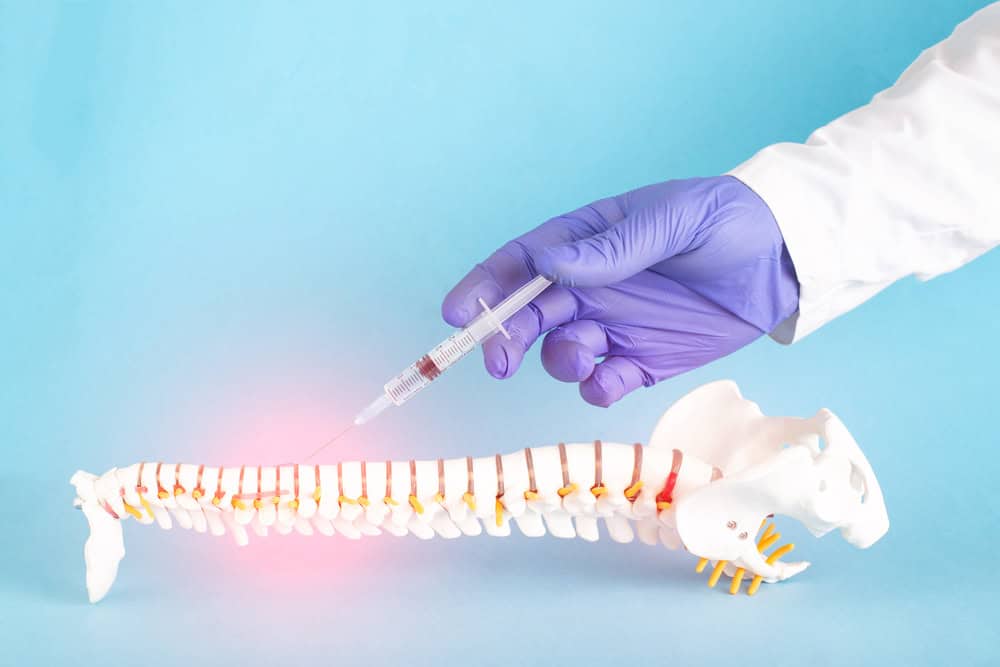
Effective pain management works on several fronts at once. The physical source of pain still needs identifying and treating properly. Where a specific structure is responsible, targeted interventional care such as an epidural steroid injection, a facet block or radiofrequency ablation can reduce the pain enough that everything else becomes possible. Relief creates room to sleep, to move and to re engage with life, and that room is where recovery happens.
Physical therapy plays a dual role here. It rebuilds strength and tolerance, and it also does something psychological that is easy to underestimate. Every week that you demonstrably do a little more than the week before chips away at the belief that your body is fragile. That change in expectation is measurable in how people function, not just in how they describe feeling.
Professional mental health support belongs in this picture too, and asking for it is a practical decision rather than an admission of anything. Approaches such as cognitive behavioral therapy have been adapted specifically for chronic pain, and they focus on sleep, pacing, activity and the thought patterns that keep the cycle turning, rather than on the assumption that your pain is emotional in origin. Many people find a small number of sessions genuinely changes how manageable their days feel.
Sleep deserves its own attention. If pain is waking you, that is a treatment target in itself, and it should be discussed rather than accepted. So should the practical texture of your life, work demands, caregiving, a walk up apartment, a long commute, because a plan that ignores those will not survive contact with your week.
The thread through all of it is coordination. When the physician treating the nerve, the therapist rebuilding your capacity and the support addressing sleep and mood are all working from the same understanding of your case, the plan reinforces itself instead of pulling in different directions.
Finding Support For Chronic Pain And Mental Health In NYC
If you take one thing from this, let it be that what chronic pain has done to your mood, your sleep and your sense of yourself is a normal consequence of a difficult situation, not a personal failing, and not evidence that the pain is imaginary. The connection between pain and mental health is physiological and it runs both ways, which is genuinely good news, because it means there are more places to intervene than you might have thought.
At NY Spine Medicine, we treat chronic pain with the whole person in view. Our physicians work to identify the specific structures involved, treat them with image guided interventional techniques, and coordinate that with in house physical therapy at our Manhattan and Brooklyn offices, while taking sleep, function and daily life in New York City seriously as part of the plan rather than as an afterthought. Where additional mental health support would help, we say so plainly and help you find it.
You do not have to carry this quietly or manage it alone. Call us at 212-750-1155 to talk to someone about what you are dealing with.