

Summary:
If you’ve been dealing with chronic back pain, sciatica, or nerve-related pain for months — or years — you’ve probably already tried something. Maybe a cortisone shot. A few weeks of physical therapy. A round of anti-inflammatories that helped for a while and then didn’t. And now you’re starting to wonder if surgery is just inevitable.
It isn’t. But the reason your previous treatments may not have worked isn’t that your condition is untreatable. It’s that individual procedures, applied in isolation, rarely resolve a complex pain problem on their own. There’s a better approach — and it’s backed by a growing body of clinical evidence.
Why Most Chronic Pain Treatments Fall Short on Their Own
Chronic pain is rarely a single-source problem. A herniated disc doesn’t just cause localized pressure — it triggers inflammation, alters how surrounding muscles compensate, and can compress nearby nerves in ways that send pain radiating down your leg or into your arm. Treating one layer of that without addressing the others is a bit like patching one hole in a leaking pipe and calling it fixed.
This is the core reason so many patients cycle through treatments without lasting results. One epidural injection reduces inflammation temporarily. Standalone physical therapy builds strength but can’t resolve active nerve compression. Neither alone is designed to do what a coordinated, multi-modal protocol can do when all the pieces work together.

What a Comprehensive Non-Surgical Pain Management Protocol Actually Looks Like
A comprehensive protocol isn’t a menu of options — it’s a sequenced plan. Each component is timed and layered to build on the last, rather than applied randomly or in response to whatever hurts most that week.
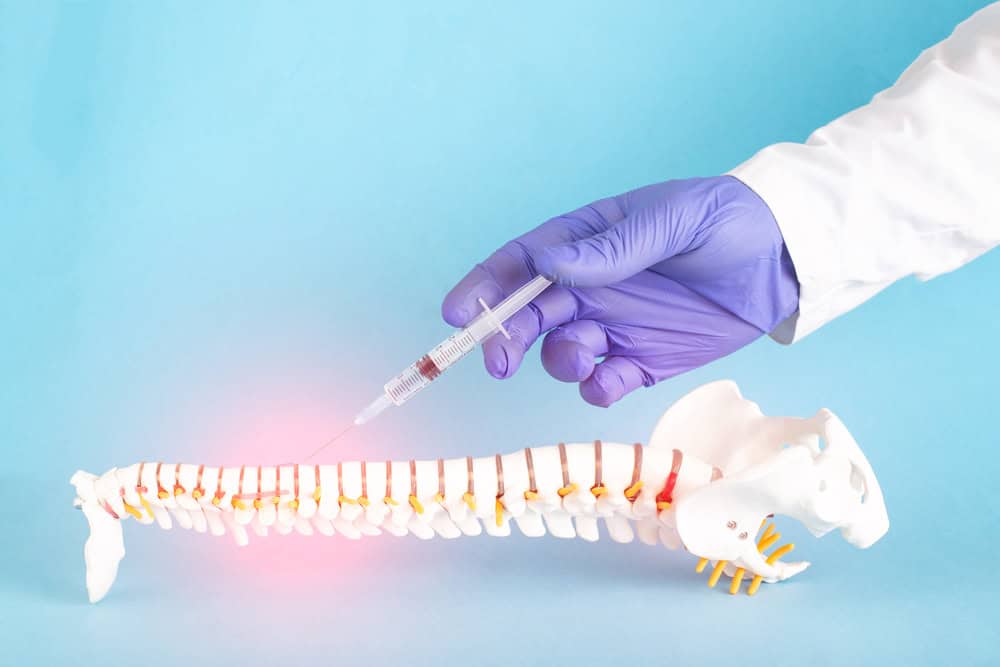
In practice, this often starts with targeted interventional procedures like epidural steroid injections or spinal injections, which are designed to reduce inflammation and create what clinicians call a “therapeutic window” — a period where the pain is calm enough that rehabilitation can actually take hold. Without that window, asking someone with active nerve compression to do physical therapy is like asking them to strengthen a broken foundation. The inflammation has to come down first.
Once that window opens, physical therapy becomes significantly more effective. Rather than just managing symptoms, it can address the muscular imbalances, postural patterns, and movement deficits that contributed to the problem in the first place. In many cases, this is what converts short-term relief into long-term recovery.
The clinical evidence behind this approach is substantial. Research on transforaminal epidural steroid injections for disc herniations shows success rates of 63% at one month, rising to 74% at three months — with high-quality evidence from multiple randomized controlled trials. A 2021 meta-analysis of 17 RCTs found significant reductions in leg pain and improvements in function for sciatica patients who received epidural steroid injections compared to placebo. And when it comes to surgery avoidance, the data is striking: in one study, 20 of 28 patients who received steroid injections as part of their treatment ultimately decided against surgery — compared to only 9 of 27 in the control group, a statistically significant difference.
That’s not a small distinction. For patients who are terrified of going under the knife, it’s everything.
How Epidural Injections Fit Into a Broader Pain Management Plan
Epidural steroid injections are often misunderstood — both by patients who’ve never had one and by patients who’ve had one and felt like it didn’t work. The misunderstanding usually comes down to context. An ESI administered as a standalone procedure, with no follow-up protocol attached, is not the same as an ESI administered as the first step in a coordinated plan.
When used correctly, an epidural injection delivers anti-inflammatory medication directly to the site of nerve irritation — the epidural space surrounding the spinal cord. For conditions like sciatica, lumbar radiculopathy, or pain caused by degenerative disc disease, this precision matters. It’s not a general anti-inflammatory taken orally and distributed throughout the body. It’s targeted, which is why the documented success rates — ranging from 50% to 84% depending on the condition — are meaningful.
The key is what happens next. If the injection reduces pain and inflammation enough to allow movement and rehabilitation, that window needs to be used. Physical therapy during this period reinforces the gains made by the injection, addresses underlying structural contributors, and helps prevent the cycle from restarting. Spinal injections targeting specific joints or nerve pathways can be layered in where additional precision is needed.
None of this is experimental. The World Health Organization issued a 2024 guideline specifically endorsing non-surgical management of chronic primary low back pain — a formal, international validation of the approach that many pain management specialists have been practicing for years. For patients who’ve been told surgery is their only option, that guideline is worth knowing about.
Want live answers?
Connect with a NY Spine Medicine expert for fast, friendly support.
Non-Surgical Pain Management in NYC: What Makes This City Different
New York City creates pain problems that other cities don’t — and it also creates barriers to resolving them that patients elsewhere don’t face. Understanding both is part of what makes working with a specialist who actually knows this market matter.
The physical demands of living in NYC are genuinely different. The subway alone — the stairs, the standing, the crowded platforms, the uneven pavement between stops — aggravates back and spine conditions in ways that car-dependent cities simply don’t produce. Add in the long hours at desks in Manhattan offices, the physically demanding jobs that define much of the workforce in Queens and the Bronx, and the cold winters that cause muscles to contract and stiffness to spike, and you have a city that produces chronic pain at a high rate and with real specificity.
How NYC's Boroughs Create Distinct Pain Patterns — and Why It Matters for Treatment
The five boroughs aren’t interchangeable when it comes to chronic pain. The conditions that bring someone into our practice in Brooklyn are often different from what brings someone in from Staten Island, and a good treatment plan should account for that.
In Brooklyn, NY, the combination of a humid coastal climate and harsh winters is a real aggravator for arthritis and inflammatory conditions. Cold temperatures cause muscles to tighten and joints to stiffen, and Brooklyn’s dense residential neighborhoods mean a lot of walking on uneven surfaces year-round. For residents already managing degenerative disc disease or sciatica, winter in Brooklyn isn’t just uncomfortable — it’s a genuine clinical challenge.
In Queens, NY, the workforce skews toward physically demanding industries — construction, building services, healthcare aides, food service. Repetitive strain injuries, work-related back injuries, and cumulative musculoskeletal damage are common, and many of these patients are navigating Workers’ Compensation claims alongside their treatment. Getting the documentation right from the start matters enormously for both their care and their coverage.
Staten Island’s pain profile is shaped heavily by commuting. The borough is the most car-dependent in the city, and long stretches of sitting in traffic on the way into Manhattan and back — day after day, year after year — are a significant driver of chronic low back and neck pain. The cumulative toll of that kind of sustained, static posture is real, and it’s the kind of thing that responds well to a structured non-surgical protocol rather than repeated short-term fixes.
Manhattan’s desk workers face their own version of the same problem. Sitting for eight to ten hours a day in chairs that weren’t designed for lumbar support, often with poor home ergonomics now layered in from remote work, creates the conditions for lumbar disc degeneration and sciatica to develop and worsen. And in the Bronx, NY, where winters are the harshest in the city and barriers to specialist care have historically been higher, patients often arrive having waited longer than they should have — which means the underlying condition has had more time to progress.
Knowing these patterns matters because it shapes how we think about sequencing, urgency, and what a realistic recovery looks like for each patient.
What NYC Patients Should Know Before Choosing a Pain Management Specialist
The NYC pain management market is crowded. There are large hospital systems, boutique clinics, multi-location practices, and everything in between — and from the outside, it can be genuinely hard to tell them apart. A few things are worth paying attention to when you’re evaluating your options.
First, credentials matter — but specificity matters more than volume. A board-certified pain management specialist has completed medical school, a residency in a related field (anesthesiology, neurology, or physical medicine and rehabilitation are the most common), a dedicated fellowship in pain management, and ongoing board certification. That pathway exists because pain medicine is a distinct specialty, not an add-on. The physician leading your care should have that background, and you should be able to verify it.
Second, ask whether the practice offers a coordinated protocol or a menu of individual procedures. These are not the same thing. A practice that offers epidural injections, physical therapy, and spinal injections as separate, unconnected services is not the same as one that integrates them into a sequenced plan built around your specific imaging, history, and functional goals. The distinction between getting a procedure and having a plan is one of the most important things to understand before you commit to a course of treatment.
Third, look at what the reviews actually say — not just the star rating, but the content. Long-term patient relationships, patients who describe having their MRI results explained clearly and thoroughly at the first visit, patients who came in expecting surgery and left with a non-surgical plan that worked — those are the signals worth paying attention to. They tell you something about how the practice actually operates.
Finally, if you were injured in a car accident or a workplace incident, confirm that the practice has experience handling No-Fault and Workers’ Compensation insurance. In New York, No-Fault documentation must be filed within 30 days of an accident. A practice that knows how to handle that process correctly from the start protects both your care and your coverage.
Is Non-Surgical Pain Management the Right Path for You?
If you’ve been living with chronic pain — whether it’s back pain, sciatica, nerve pain, or something that’s never been fully explained — and you’re not sure whether surgery is actually necessary, the honest answer is: for most people, it isn’t. Not when a comprehensive, coordinated non-surgical protocol is designed and executed well.
The evidence supports it. The WHO endorses it. And the patients who’ve gone through a real protocol — not a single injection, not a few weeks of PT, but a sequenced plan — often describe it as the first time something actually worked.
If you’re in Manhattan, Brooklyn, Queens, the Bronx, or Staten Island and you’re ready to get a real answer about what’s causing your pain and what can actually be done about it without surgery, we’re here to help you figure that out. Contact NY Spine Medicine today to schedule your consultation.