

Summary:
Most people considering acupuncture in New York City are not shopping for a philosophy. They have had a stiff neck for eight months, they would rather not take another pill, and someone they trust told them it helped.
That is a reasonable place to start, and it deserves a straight answer rather than either a sales pitch or a dismissal. Acupuncture is not magic and it is not nothing. For certain kinds of pain it performs well enough that major medical guidelines now list it among the options worth trying.
Here is what it does, who it tends to help, and how to fit it into pain management that is already underway.
What Acupuncture Is, and What It Is Not, in Plain Terms
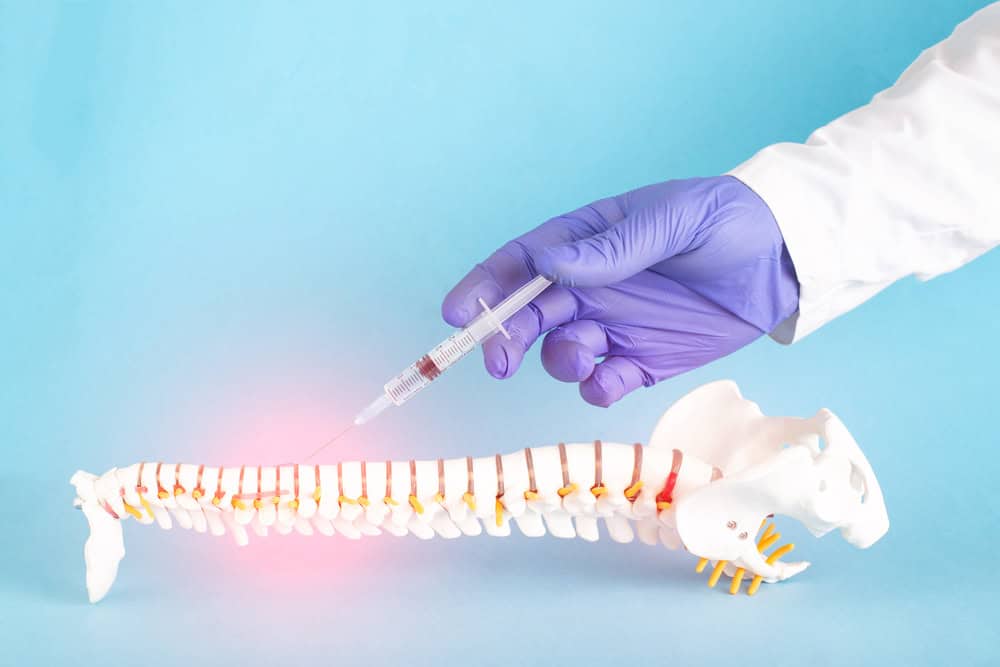
Acupuncture involves inserting very thin sterile needles at specific points on the body, usually left in place for around twenty to thirty minutes. The needles are far finer than the ones used for injections or blood draws, which is why most people describe the sensation as a dull ache or a feeling of heaviness rather than a sharp stick.
It comes out of traditional Chinese medicine, and the classical explanation involves the flow of energy along channels in the body. Modern practice in New York City is usually framed differently, in terms of nerve stimulation and pain modulation, and you do not have to accept the traditional model to benefit from the treatment. What matters clinically is whether the needling changes your symptoms, not which vocabulary the practitioner uses to explain why.

How Does Acupuncture Affect Pain in the Body?
The honest answer starts with an admission. The mechanism is not fully settled. What researchers have documented is that needling produces measurable effects on the nervous system rather than working purely by suggestion.
Inserting a needle stimulates nerve fibers in skin and muscle. That input travels to the spinal cord and the brain, where it appears to influence the systems that turn pain signals up or down, including the release of the body’s own pain modulating chemicals. Imaging studies have shown changes in activity within pain processing regions during treatment.
There are local effects too. Needling into a taut band of muscle, sometimes called a trigger point, can produce a brief twitch and a release of that tension. Blood flow to the area increases. For a shoulder or a low back that has been locked up for weeks, that alone can change how you move the following day.
The placebo question deserves a straight answer rather than a defensive one. Trials comparing real acupuncture with sham needling often show a smaller difference than trials comparing acupuncture with no treatment at all. Some read that as evidence it is mostly expectation. A more careful reading is that sham needling is not an inert placebo, since it still involves touch and skin stimulation, and that both groups usually improve more than patients who receive nothing.
What this means practically is modest and useful. Acupuncture can lower pain and improve function for many people. It is not going to correct a structural problem, it does not repair a compressed nerve, and it should never be the reason a worrying symptom goes uninvestigated.
Which Pain Conditions Respond Best to Acupuncture in NYC?
Chronic low back pain is the best studied application and the most common reason patients in New York City are referred for acupuncture. Guidelines for back pain routinely list it among reasonable nondrug options, particularly for pain that has lasted longer than a few weeks.
Neck pain and tension type headache also respond reasonably well, and there is decent support for migraine prevention. Patients who cannot tolerate preventive medication, or who would rather limit how much medication they take, often find that the most appealing part of the evidence.
Knee osteoarthritis is another area with real support, generally as an addition to exercise rather than a replacement for it. Myofascial pain, the deep aching muscular pain that develops around a joint or across the shoulders, tends to respond relatively quickly, sometimes within a handful of sessions.
The evidence is weaker for true nerve compression pain. If you have a herniated disc pressing on a nerve root and weakness in the leg, acupuncture may take some edge off the discomfort, but it is not addressing the compression, and evaluation of that compression should not be postponed while you try it.
Acupuncture is also used for nausea related to chemotherapy, jaw pain, and pain after certain surgeries. If your particular condition is not on any published list, that is not proof it cannot help you, but it is a good reason to set a clear checkpoint rather than committing to a long course up front.
Want live answers?
Connect with a NY Spine Medicine expert for fast, friendly support.
What an Acupuncture Session in New York City Actually Involves
Your first visit is mostly conversation. A licensed acupuncturist takes a full history, asks about sleep, digestion, stress, and energy alongside the pain itself, and examines the area that hurts. In New York City many practitioners also look at the tongue and take pulses at the wrist, which is part of the traditional assessment.
Then you lie down and the needles are placed, often at the painful area and often at points on the arms, legs, or ears well away from it. You rest with them in place for twenty to thirty minutes, sometimes with heat or gentle electrical stimulation applied. Most people find it relaxing and a fair number fall asleep. Afterward you may feel loose, a little tired, or briefly more sore before things settle, and none of that is unusual.

How Many Sessions Before You Can Tell Whether It Is Working?
The most common mistake is judging acupuncture on a single session. Some people notice a change immediately, especially with muscular pain, and that is genuinely encouraging. Many do not, and that is not a sign it will not work for them.
A reasonable trial is somewhere around six sessions, usually once or twice a week. By the end of that stretch you should be able to say whether anything has moved, and the honest checkpoint is function rather than intensity alone. Are you sleeping better. Can you turn your head to check a blind spot. Did you get through the week without a day you had to write off.
If the answer is a clear no after a fair trial, stop. Continuing indefinitely because you have already spent the money is how people end up with an open ended appointment that is not helping them. A good practitioner will raise this before you have to.
If it is helping, sessions usually get spaced out. Weekly becomes every other week, then monthly maintenance for some people, particularly with headache or arthritis. Others complete a course, improve, and come back only when symptoms return.
Track it simply. A note on your phone after each session about pain, sleep, and one activity you care about is worth far more than trying to recall six weeks later whether things are better. It also gives your physician something concrete to work with when you discuss the rest of the plan.
One practical note for New York City. Coverage varies considerably between plans, and workers compensation and no fault auto cases run on different rules again, so ask about coverage before you commit to a course rather than after.
Safety, Licensing, and Choosing an Acupuncturist in New York City
Acupuncture has a good safety record when it is performed properly. The most common side effects are minor. Slight bruising, a spot of bleeding at a needle site, brief soreness, or feeling lightheaded during a first session.
Serious complications are rare and they are nearly always a matter of technique. The one worth knowing about is a punctured lung from needling too deeply over the chest or upper back, which is uncommon and is largely a function of training. Infection is also rare, because single use sterile disposable needles are standard practice.
Tell your practitioner if you take a blood thinner, if you have a bleeding disorder, if you are pregnant, if you have a pacemaker or another implanted device, or if your immune system is suppressed. None of these are automatic disqualifications, but each one changes technique, and electrical stimulation in particular needs care around implanted devices.
On credentials, New York State licenses acupuncturists, and that license is the baseline to verify. Some physicians and physical therapists also perform needling with additional training, and dry needling of trigger points, while related, is a narrower technique aimed at muscle rather than a full course of acupuncture.
Questions worth asking before you book. How much experience do you have with my specific problem. How many sessions before we reassess. Do you communicate with the rest of my care team. A practitioner who welcomes that last question is usually the one you want.
One line matters more than all of the above. Acupuncture is not the right first stop for symptoms that suggest something urgent. Progressive weakness, loss of bowel or bladder control, fever alongside back pain, or new severe pain after significant trauma need medical evaluation right away, not a needling appointment next week.
Where Acupuncture Fits in Your NYC Pain Management Plan
The reasonable summary is that acupuncture is a legitimate option for several common pain problems, with a real if imperfect evidence base, a good safety profile in trained hands, and clear limits. It works best alongside exercise, physical therapy, and appropriate medical treatment rather than instead of any of them.
The better question is not whether acupuncture works, but what job you want it to do. If the job is reducing muscular pain enough that you can participate in rehabilitation, it is well suited to that. If the job is standing in for an evaluation you have been putting off, it is the wrong tool entirely.
At NY Spine Medicine, we treat complementary approaches as part of a coordinated plan rather than as a separate track, so what you get out of acupuncture is measured against the same functional goals as your physical therapy and any interventional treatment, and the plan gets adjusted based on what is actually moving.
If you want help deciding whether acupuncture belongs in your plan, call our New York City office at 212-750-1155.