

Summary:
If you’ve been dealing with burning feet at night, numbness in your hands, or that strange tingling that never quite goes away, you’ve probably already Googled your symptoms more times than you’d like to admit. Maybe your primary care doctor ran some tests, found nothing alarming, and told you to monitor it. Maybe you’ve been on medication that takes the edge off but doesn’t really fix anything. Either way, you’re still here — which means something isn’t right, and you know it.
A neuropathy specialist approaches this differently. We’re trained to find the underlying cause of nerve-related pain, not just manage the symptoms. Here’s what that process actually looks like.
What Our Neuropathy Doctors Actually Do
A neuropathy doctor — typically a neurologist, a pain management specialist, or in some cases both — focuses on diagnosing and treating conditions that affect the peripheral nervous system. That’s the network of nerves outside your brain and spinal cord, the ones responsible for sensation, movement, and organ function in your limbs and extremities.
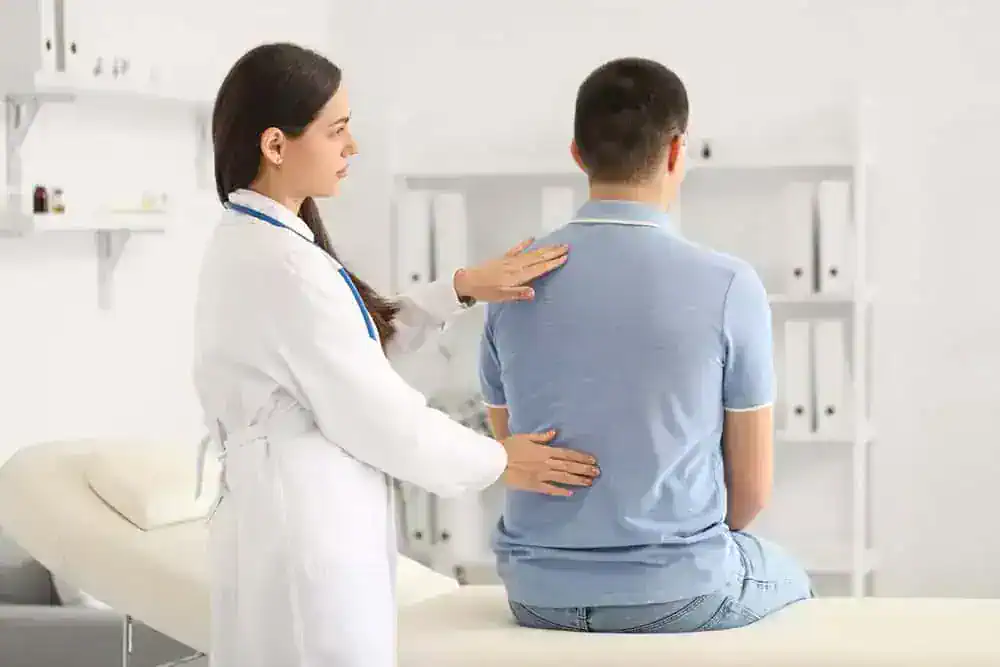
What sets our neuropathy specialists apart from a general practitioner is the depth of evaluation. Rather than a quick reflex test and a referral, we take a thorough medical history, perform a detailed neurological exam, and use advanced diagnostic tools to determine not just whether nerve damage is present — but why.
That last part is what most patients have never actually received.
Why So Many Neuropathy Cases Go Undiagnosed or Misdiagnosed
Peripheral neuropathy is one of the most frequently misdiagnosed conditions in modern medicine. The symptoms — burning, tingling, numbness, weakness, or sharp pain, usually in the feet and hands — overlap with so many other conditions that it’s easy for a non-specialist to attribute them to poor circulation, an orthopedic issue, or even stress. Some patients are told it’s just a side effect of aging. Others are handed a prescription for gabapentin and sent home.
The problem is that standard primary care evaluations often miss neuropathy entirely, especially in its early or moderate stages. A quick reflex test or a basic blood panel won’t catch nerve damage that hasn’t yet progressed to a severe level. And because more than 100 distinct types of peripheral neuropathy exist — each with different causes and different treatment needs — a generic workup is rarely enough to get to the truth.
This is why the misdiagnosis rate in this space is so high. Estimates suggest that at least 25% of peripheral neuropathy cases are idiopathic, meaning no cause is identified without specialized testing. That doesn’t mean no cause exists — it means the right tests weren’t ordered.
For patients in New York, this problem is compounded by the pace of the city. Busy hospital systems see enormous patient volumes. Appointments are short. Follow-up care is often fragmented across multiple providers who don’t communicate well with each other. A patient might see their internist, then a podiatrist, then a neurologist at a large hospital — and still leave without a clear diagnosis or a plan that actually addresses the nerve damage.
The longer nerve damage goes untreated, the harder it becomes to reverse. That’s not meant to alarm you — it’s meant to explain why getting a proper evaluation sooner rather than later genuinely matters.
How Nerve Conduction Studies and EMG Testing Change the Picture
The two most important diagnostic tools in neuropathy care are nerve conduction studies (NCS) and electromyography (EMG). These tests measure how well electrical signals travel through your nerves and muscles, and they can detect damage that standard exams and basic bloodwork simply cannot.
A nerve conduction study sends small electrical impulses through specific nerves and measures the speed and strength of the signal. Slower or weaker signals indicate nerve damage — and the pattern of results helps identify which nerves are affected, how severely, and often what type of neuropathy is involved. An EMG test uses a small needle electrode to assess the electrical activity of individual muscles, helping distinguish between nerve damage and muscle-related conditions.
Many patients are anxious about these tests, particularly the EMG. The needle insertion is mildly uncomfortable, and the electrical impulses can feel unusual. But the vast majority of patients describe it as tolerable, and the information these tests provide is genuinely irreplaceable. There’s no imaging study or blood test that gives you the same level of detail about what’s happening in your peripheral nervous system.
What matters most is that these tests are performed and interpreted by someone with real neurological training. The results inform everything that follows — the diagnosis, the treatment approach, and the realistic expectations for recovery. When these tests are done in-house rather than referred out to a separate facility, the process is faster, more integrated, and less likely to result in gaps or miscommunication in your care.
At NY Spine Medicine, EMG and nerve conduction studies are performed directly at our practice. You’re not being sent somewhere else and waiting weeks for results to filter back. The evaluation, the testing, and the treatment planning happen in the same place, with the same physician overseeing all of it.
Want live answers?
Connect with a NY Spine Medicine expert for fast, friendly support.
What Neuropathy Treatment Actually Looks Like
Once a diagnosis is established and the underlying cause is identified, treatment can begin in earnest. What that looks like depends entirely on the type of neuropathy, its severity, and what’s driving it — which is exactly why the diagnostic phase matters so much. Treating nerve pain without knowing its cause is like patching a leak without finding the source.
Effective neuropathy treatment is rarely a single intervention. The most successful outcomes come from a multimodal approach — combining physical therapy, nerve stimulation, medication management, and in some cases regenerative medicine — adjusted over time based on how you respond.

Why Medication Alone Isn't Enough for Most Neuropathy Patients
Gabapentin and pregabalin are the most commonly prescribed medications for neuropathic pain, and they work for some patients. But a large number of people find that these drugs take the edge off without providing real relief — and come with side effects like brain fog, fatigue, and dizziness that make daily functioning harder, not easier.
The reason medication alone often falls short is that it addresses the symptom — the pain signal — without touching the underlying nerve damage or its cause. If diabetic neuropathy is progressing because blood sugar remains poorly controlled, no medication will stop that progression. If a compressed nerve is causing pain in your hand, a prescription doesn’t decompress it.
This is where a comprehensive treatment plan makes a real difference. Physical therapy can improve circulation, strengthen supporting muscles, and help restore function in areas affected by nerve damage. Transcutaneous electrical nerve stimulation (TENS) and other forms of nerve stimulation can interrupt pain signals and provide relief that medication hasn’t been able to deliver. For patients who haven’t responded to conventional approaches, regenerative medicine offers a newer avenue worth exploring.
The goal isn’t to manage your symptoms indefinitely. It’s to understand why the nerve damage is happening, slow or stop its progression where possible, and help you function better in your daily life. For New Yorkers, that means being able to walk to the subway without pain, navigate stairs safely, and get through the day without your feet burning by evening.
What Sets Our Double Board-Certified Neuropathy Specialists Apart
Here’s something worth understanding about how neuropathy care is typically structured. Neurologists are trained to diagnose nerve conditions. Pain management specialists are trained to treat chronic pain. Most patients end up bouncing between these two worlds — seeing a neurologist who identifies the problem but doesn’t aggressively treat it, then a pain management doctor who treats the pain but may not have the neurological depth to understand what’s really driving it.
The gap between those two specialties is exactly where many neuropathy patients fall through the cracks.
Dr. Doug Schottenstein, who leads NY Spine Medicine, is double board-certified in both neurology and interventional pain management — a combination that’s genuinely uncommon. His neurology training was completed at Emory University, recognized as one of the leading neurology programs in the country. His pain management training was completed at Columbia University and New York Presbyterian, one of the top five hospital systems in the nation. He currently holds an appointment as assistant professor of anesthesiology and neurosurgery at Cornell University.
What this means practically is that the physician evaluating your nerve condition is the same physician designing your treatment plan. There’s no handoff between a diagnostician and a treater. No information lost in translation. No waiting for two separate specialists to coordinate.
This matters especially in New York, where the Bronx, Brooklyn, and parts of Queens have some of the highest diabetes rates in the state — and diabetic neuropathy is the most common form of peripheral neuropathy. Patients in these boroughs often have complex cases that require both neurological precision and sophisticated pain management. Having both in one practice, at multiple locations across the city, is a meaningful difference in the quality of care available to you.
Medicine at our practice is never rushed. We’re a private practice, and we treat one patient at a time. That’s a deliberate choice — because nerve conditions require the kind of attention that a high-volume hospital system, by its nature, can’t always provide.
Finding the Right Neuropathy Doctor in New York
Peripheral neuropathy affects an estimated 20 to 30 million Americans, and many of those cases go undiagnosed for years. If you’ve been living with burning, numbness, tingling, or nerve pain and haven’t gotten a clear answer yet, the problem likely isn’t that nothing is wrong — it’s that the right evaluation hasn’t happened yet.
A proper neuropathy workup starts with understanding your full medical history, moves through advanced diagnostic testing, and ends with a treatment plan built around your specific condition and its underlying cause. That process takes time, expertise, and a physician who specializes in exactly this.
If you’re in New York and you’re ready to stop guessing, we’re here to help. Reach out to schedule a consultation with one of our neuropathy doctors — and find out what’s actually going on.