

Summary:
Most people don’t Google “epidural injection” out of curiosity. They search it because they’ve already tried something else (usually physical therapy) and they’re still hurting. Maybe their doctor mentioned it as a next step. Maybe a coworker swore by it. Either way, they want to know if this is going to help, or if it’s just another thing to try.
That’s a fair question, and it deserves a straight answer. What follows isn’t a sales pitch for injections. It’s a real look at what each treatment does, when one makes more sense than the other, and why, for a lot of people, the smartest move involves both.
What An Epidural Steroid Injection Does (And What It Doesn't)
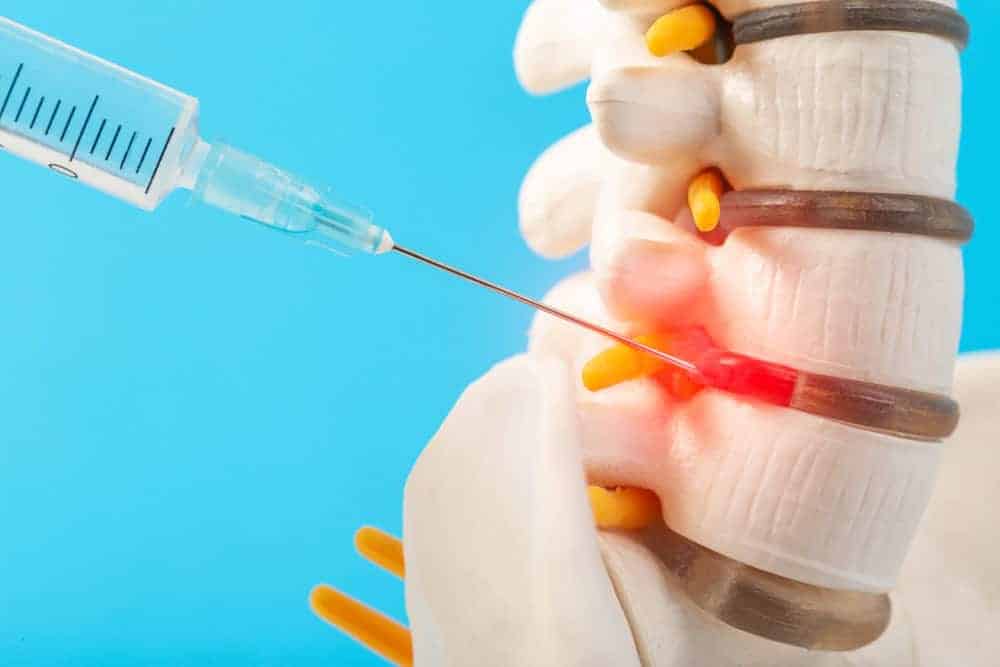
An epidural steroid injection delivers anti-inflammatory medication directly into the epidural space, which is the area around your spinal cord where irritated nerve roots live. The goal is to reduce the inflammation that’s causing your pain, numbness, or radiating symptoms down your leg or arm.
It’s worth clearing up a common mix-up right away: this is not the same epidural used during childbirth. That procedure uses anesthetic to block sensation. An epidural steroid injection uses corticosteroid medication to calm an inflamed nerve. Different drug, different purpose, different target.
What it doesn’t do is fix the underlying structural problem, such as the herniated disc, the bone spur, or the narrowed canal. It treats the inflammatory response those structures are triggering. That distinction matters a lot when you’re deciding if an injection is the right move for you.

How Does The Injection Procedure Work?
The procedure is done in an outpatient setting and typically takes less than 30 minutes. You’ll lie on a table, and the physician uses a fluoroscope (a live X-ray) to guide the needle to the precise location in your spine. Before the medication is delivered, contrast dye is injected to confirm the needle is exactly where it needs to be. This imaging-guided approach is the clinical standard of care, and it separates a precise, effective injection from a blind guess.
After the procedure, you’ll rest for about 15 to 20 minutes before heading home. Most patients return to light activity the next day. There’s often a brief window (sometimes 24 to 48 hours) where pain may temporarily feel a little worse before the steroid takes effect. That’s normal, and it’s worth knowing ahead of time so it doesn’t catch you off guard.
Relief can begin within a few days and typically lasts anywhere from several weeks to a few months, depending on the condition being treated and how well the nerve responds. The injection doesn’t cure anything permanently, but that’s not the point. The point is to reduce inflammation enough that your body and your physical therapy can do the rest of the work.
One thing that surprises a lot of patients is that the procedure itself is far less dramatic than they imagined. The fear of a needle near the spine is real and completely understandable. But under fluoroscopic guidance, performed by a physician with the right training, serious complications are rare. The risk profile looks nothing like surgery. There’s no general anesthesia, no hospital stay, and no weeks of recovery.
Which Conditions Respond To An Epidural Injection?
Not every type of back pain is the right candidate for an epidural steroid injection. The conditions that tend to respond well are those where nerve root inflammation is the primary driver of symptoms, meaning the pain isn’t just in your back, but is radiating, burning, or shooting somewhere else.
Herniated discs are probably the most common reason people end up here. When a disc presses against a nerve root, the body mounts an inflammatory response that amplifies the pain far beyond what the mechanical compression alone would cause. Reducing that inflammation can make a dramatic difference, often quickly. Sciatica, which is that sharp, electric pain that travels from the low back down through the buttock and into the leg, is frequently rooted in this kind of nerve irritation, and it’s one of the conditions that responds most consistently to epidural steroid injections.
Spinal stenosis, which is a narrowing of the spinal canal that puts pressure on the nerves, is another common indication. So are bone spurs and degenerative disc disease when they’re causing nerve compression rather than just localized back stiffness.
What tends not to respond as well? Pure muscle pain. Postural strain. General stiffness without nerve involvement. If your pain is localized to the muscles of your back and doesn’t radiate, doesn’t cause numbness or tingling, and doesn’t follow a nerve pattern, an injection is probably not your first move. That’s a conversation worth having with a physician who can evaluate your imaging and your symptoms together, rather than just one or the other.
This is why getting a proper diagnostic workup before committing to any treatment matters. An MRI can show structural changes, but it takes clinical expertise to connect what’s on the image to what you’re feeling.
Want live answers?
Connect with a NY Spine Medicine expert for fast, friendly support.
When Physical Therapy Should Come First (And When It's Not Enough)
Physical therapy is genuinely effective for a wide range of back pain conditions, and for most people, it’s the right place to start. Building core strength, improving mobility, correcting movement patterns, and reducing muscular imbalances can resolve a lot of back pain without any procedural intervention at all.
The problem is that physical therapy requires you to be able to do the work. When nerve inflammation is severe enough, patients guard, compensate, and cannot perform exercises correctly, which limits what physical therapy can accomplish. That’s the clinical moment where an injection makes the most sense: not as a replacement for physical therapy, but as the tool that makes physical therapy possible again.

Is An Epidural Injection Better Than Physical Therapy, Or Should You Do Both?
Here’s the framing most people don’t hear: for many patients dealing with nerve-related back pain, the question isn’t injection or physical therapy. It’s which one first, and when to add the other.
The clinical evidence supports this. Research has consistently shown that epidural steroid injections work best when they’re part of a broader treatment plan, not a standalone fix. The injection reduces inflammation and quiets the nerve enough that a patient can engage meaningfully in physical therapy. The physical therapy then addresses the biomechanical issues that contributed to the problem in the first place. One addresses the fire, while the other removes the fuel.
Think about it from a practical standpoint. If you’ve been trying to do physical therapy for weeks but every exercise triggers shooting pain down your leg, you’re not getting the full benefit of those sessions. Your body is too guarded, too reactive. An injection that calms that nerve response can be the thing that finally lets you do the physical therapy properly and build the strength and flexibility that makes the improvement last.
This matters a lot for people living and working in New York City. If you are commuting from Brooklyn on the B train, standing through long subway rides from Queens, or sitting at a desk in Midtown through back-to-back meetings, you need a treatment plan that works with your life, not one that sidelines you for months. The combination approach, when done right, tends to produce faster, more durable results than either treatment alone.
How Do You Know When It's Time To Move Beyond Physical Therapy?
This is the question most people are asking when they search this topic. They’ve been doing the right things, such as showing up to physical therapy, doing their home exercises, and following the plan, and they’re still not where they need to be. At what point is it reasonable to escalate?
There’s no universal answer, but there are reliable clinical signals. If your pain is radiating down your leg, into your foot, or down your arm, and that pattern hasn’t improved after several weeks of consistent physical therapy, that’s a sign the nerve root inflammation may need to be addressed more directly. If you’re experiencing numbness, tingling, or weakness alongside your pain, that’s another signal worth taking seriously. And if pain is severe enough that you simply can’t perform your physical therapy exercises without significant guarding or compensation, you may be working harder than you’re benefiting.
It’s also worth recognizing that waiting too long can have its own consequences. Prolonged nerve compression and inflammation can become harder to treat over time. The goal of an injection isn’t to skip the work; it’s to create a window where the work can happen.
For people living across the five boroughs (Manhattan, Brooklyn, Queens, the Bronx, and Staten Island), there’s an added layer of context. The physical demands of daily life in New York City are real and often underestimated. Long commutes on the subway, extended periods of standing, awkward postures during rush hour, and the cumulative stress of navigating a dense urban environment all add up. That load on the spine can make it harder for conservative treatment alone to keep pace. It doesn’t mean everyone needs an injection. But it does mean that if physical therapy isn’t moving the needle after several weeks, there’s a legitimate clinical reason to explore what’s next, and to do it sooner rather than later.
Finding The Right Back Pain Treatment In New York City: What To Do Next
The short version is that physical therapy and epidural steroid injections aren’t competing options. For many patients, especially those dealing with radiating nerve pain from a herniated disc, sciatica, or spinal stenosis, the most effective path forward involves both in the right sequence, managed by someone who understands the full picture.
If you’ve been doing physical therapy and still aren’t getting where you need to be, that’s not a failure. It’s information. It means the inflammation driving your symptoms may need to be addressed before your body can respond the way it should.
At NY Spine Medicine, we offer both interventional pain management and physical rehabilitation under one roof, which means the transition from injection to physical therapy is coordinated rather than pieced together across different providers. If you have imaging and want a physician’s read on what it shows, we offer a complimentary MRI review. It’s a low-commitment first step toward understanding what’s going on and what, specifically, is most likely to help.