

Summary:
If you are in enough pain to be reading this, being told to try physical therapy can feel like being told to wait. You want the imaging, the injection, the thing that fixes it.
That reaction is fair, and it is also why so many treatment plans stall. The procedures that reduce pain work best when something is being done with the relief they create. Without that, the pain usually comes back on the same schedule it always did.
Physical therapy is not the consolation prize you get before real treatment. It is the part of the plan that determines whether anything else holds.
What Physical Therapy Is Actually Doing For Your Spine
Good physical therapy is not stretching and heat packs. It is a progressive, measured attempt to change how load moves through your body. That usually means building strength in the deep trunk muscles that stabilize each spinal segment, restoring mobility in the hips and the mid back so the low back stops absorbing motion it was never meant to absorb, and retraining the patterns you use to sit, stand, lift, and walk.
There is a second effect that gets less attention. Pain that has been present for months changes how the nervous system responds to ordinary input. Movement starts to feel threatening, so you move less, so you get weaker and stiffer, so movement hurts more. Graded, controlled loading interrupts that cycle. Part of what therapy treats is not the tissue at all but the expectation that movement will cause damage.

Why Does Physical Therapy Fail For Some Patients?
The most common reason is that the pain was too high to work through. If you cannot get through a session without flaring for two days afterward, you are not going to progress, and you are not going to keep going. That is not a failure of discipline. It is a sequencing problem, and it is often the exact situation where a well targeted injection changes the outcome. Working through severe pain is not toughness. It usually produces guarding, which is the opposite of what therapy is trying to teach.
The second reason is that the diagnosis was wrong or incomplete. Therapy aimed at a lumbar disc will not do much for pain that is coming from the sacroiliac joint or an arthritic hip. If six weeks of appropriate therapy has produced no change at all, the answer is usually a better diagnosis rather than more of the same protocol.
The third reason is that it was passive. Ultrasound, heat, ice, electrical stimulation, and hands on treatment can feel good and can help you tolerate the active work, but they do not build anything. If most of your visit is spent lying on a table, you are receiving comfort rather than a treatment plan. Ask what you are supposed to be able to do in four weeks that you cannot do today.
The fourth reason is the honest one. Home exercises are the majority of the treatment, and most patients do not do them. Two supervised sessions a week is a small fraction of your total activity, and the gains come from what happens on the other five days. Fifteen minutes daily beats an hour on Sunday. If the program you were given is too long to fit into your life, say so and ask for a shorter version you will actually complete. A therapist would far rather adjust the program than have you quietly abandon it.
How Injections And Therapy Are Supposed To Work Together
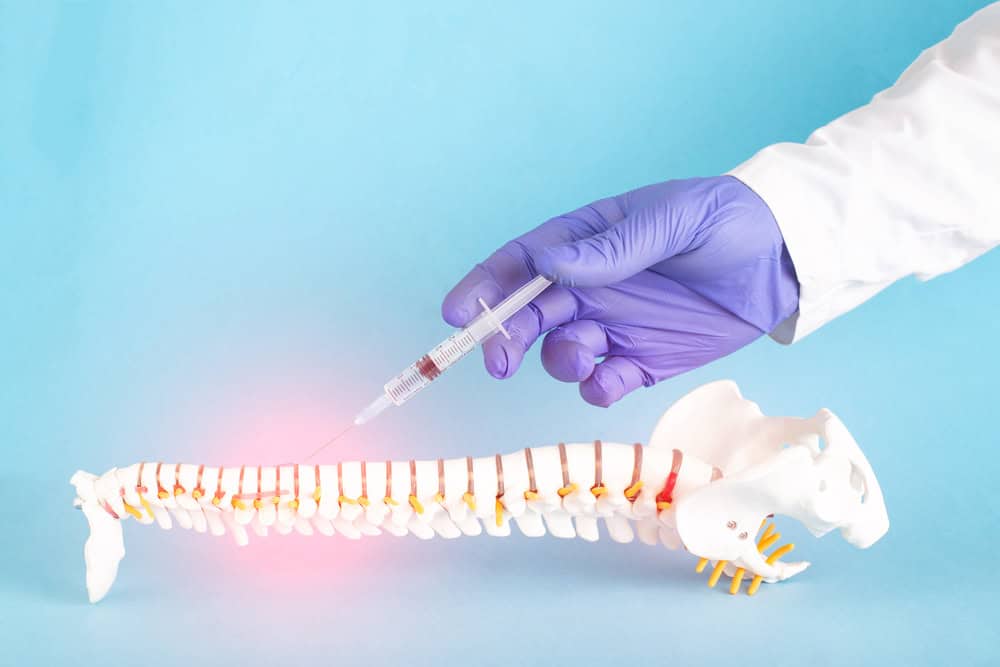
The most useful way to think about an epidural, a facet block, or a radiofrequency ablation is that it buys time in which movement is tolerable. The procedure reduces the pain signal. It does not strengthen a single muscle or change how you bend to pick something up. What you do inside that window decides whether the relief was an interlude or a turning point.
Sequencing matters, and it runs both directions. Some patients should start with therapy and never need anything else, which is a large group and includes most first episodes of back pain. Some patients are hurting too much to participate, and for them the injection comes first and therapy begins a week or two later, once the medication has taken effect. Some patients cycle through both, using an occasional procedure to hold ground while they keep building. The right sequence depends on how much pain you are in and what the exam shows, not on a fixed rule.
The mistake we see most often is the injection that stands alone. A patient feels dramatically better for a month, does nothing different, and is back in the office when the effect wears off, asking for another one. Nothing about that pattern is the patient’s fault. It usually happens because the injection was performed in one place, the therapy was ordered somewhere else, and nobody held the plan together. Coordinating the two is not a luxury. It is the difference between a repeating cycle and an exit from it. At NY Spine Medicine, physical therapy runs inside the same practice as the interventional care, which is why that handoff happens on a schedule rather than by accident.
Want live answers?
Connect with a NY Spine Medicine expert for fast, friendly support.
Active Work Versus Passive Treatment, And Why It Matters
Passive treatment is anything done to you. Manual therapy, dry needling, traction, modalities, massage. Active treatment is anything you do, including loaded exercise, mobility work, balance and gait training, and a graded return to the activities you have been avoiding.
Both have a place, and the ratio should shift over time. Early on, when everything hurts, passive work can lower symptoms enough that you can move. By the middle of a course of therapy, most of your time should be active and progressively harder. If you are eight weeks in and still spending the visit on a table under a heat pack, the plan has stopped advancing. Progression is the whole point. Muscles adapt to demand, and demand that never increases stops producing change.

How To Tell Whether Your Physical Therapy Is Actually Working
Do not judge it by how you feel walking out of a session. Judge it by what you can do at the end of the week. Useful measures are concrete: how far you can walk before symptoms start, how long you can sit, how many stairs you can manage, whether you sleep through the night, whether you can carry something up from the basement without planning around it. Pick two or three that matter to your life and track them, because memory is unreliable when you are in pain.
Expect the timeline to be measured in weeks, not days. A reasonable checkpoint is four to six weeks. By then you should see some directional change in at least one of those measures, even if the pain itself has not dropped much. Function frequently improves before pain does, and that is a legitimate sign of progress rather than a consolation prize.
Soreness after a session is normal and should settle within a day. A flare that lasts several days, or symptoms that start radiating further down the limb than before, means the load was too much or the exercise was wrong for your problem. Tell the therapist. Adjusting the program is a routine part of the process, not a setback. Certain changes should stop therapy and prompt a call the same day: new or increasing weakness, numbness in the groin or inner thighs, loss of bowel or bladder control, a fever with back pain, or pain that begins after a fall. Those are evaluated, not exercised through.
It is also worth asking your therapist directly what the goal of the current phase is and what the criteria are for moving to the next one. A therapist with a clear answer has a plan. The question is not confrontational, and it usually improves the care you get.
What Happens To Your Plan Once You Finish Formal Therapy Sessions
This is where most of the long term outcome is decided, and it is barely discussed. Discharge from physical therapy is not the end of treatment. It is the point where supervision stops and maintenance begins. The strength you built over eight weeks will fade in a similar span if nothing keeps loading it. Nobody tells you that, and it is the single most common reason a good result quietly unwinds.
What that looks like in practice is modest. Two or three short sessions a week of the exercises that helped most, plus walking, plus something that keeps you moving that you do not hate. The specific activity matters less than the fact that it continues. Patients who stay with swimming, cycling, strength training, yoga, or a home program hold their gains. Patients who stop drift back to baseline and often conclude that therapy did not work, when what actually happened is that it ended. The best predictor of whether you keep doing something is whether it fits into your day without negotiation.
Expect flares. Chronic spine problems are not linear, and a bad week after a long flight, a heavy weekend, or a stressful stretch at work is not evidence of failure. The response to a flare is usually to reduce load briefly, keep moving within tolerance, and return to your program rather than stopping entirely. Complete rest for more than a day or two tends to make the following week harder. Knowing that in advance is what keeps a flare from turning into a spiral.
Reassessment is worth scheduling deliberately. A short review at three or six months is enough to progress the program, correct the drift that creeps into every home exercise routine, and catch new problems early. If pain has changed character, moved, or brought new symptoms with it, that is a reason to be seen rather than to push harder. The plan is supposed to evolve as you do, and a program written for the worst week of your life is not the right program a year later.
Building A Plan That Holds Up After The Pain Improves
The short version is that no procedure in Pain management was designed to be the whole treatment. Injections, ablations, and medications lower the volume of the pain. Physical therapy is what changes the conditions that keep turning it back up. When patients get a durable result, it is almost always because both happened, in the right order, with someone paying attention to the whole plan.
That also means physical therapy deserves the same seriousness you would give a procedure. Show up, do the home program, tell the truth about what is and is not working, and expect progression. It is the least glamorous part of pain management and reliably the most important.
At NY Spine Medicine, our Manhattan and Brooklyn offices provide physical therapy and interventional pain management under one roof, so the timing between an injection and the rehabilitation that follows is planned rather than left to chance. If you are stuck in a cycle where relief keeps expiring, call 212-750-1155 and we will look at the whole plan rather than at the next procedure.