

Summary:
If you’ve been dealing with back pain long enough to start researching spinal injections, you probably already know the basics aren’t cutting it. The ibuprofen helped for a while. Physical therapy was fine but didn’t get you all the way there. Maybe your doctor mentioned injections, or maybe you landed here on your own trying to figure out if this is actually worth pursuing.
Either way, you deserve a straight answer — not a page full of medical disclaimers and vague reassurances. Here’s what spinal injections actually are, when they make sense, and what to look for in a provider before you commit to anything.
What Spinal Injections Actually Do — and Why They're Not Just Masking Pain
One of the most common things patients say when they first hear about injection therapy is some version of: “Isn’t that just covering up the problem?” It’s a fair question, and the honest answer is no — not when it’s done right.
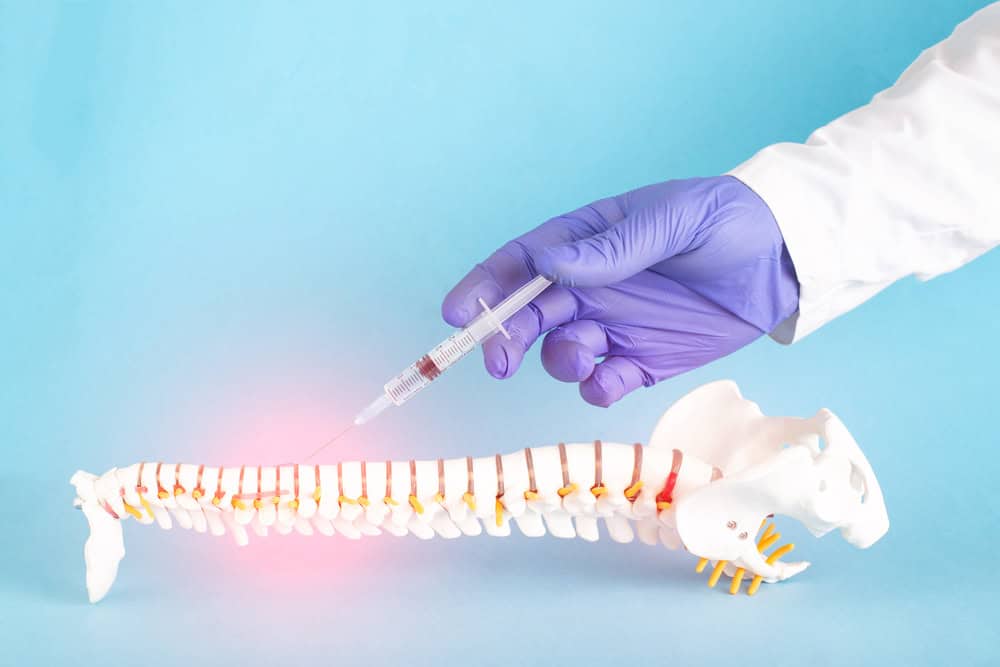
Spinal injections work by delivering anti-inflammatory medication directly to the area where a nerve is being irritated or compressed. That might be in the epidural space around the spinal cord, near a specific nerve root, or inside a facet joint. The goal isn’t to numb the pain indefinitely — it’s to reduce the inflammation that’s causing the pain in the first place, which gives your body a real window to heal.
That window matters more than most people realize. When pain is under control, you can actually participate in physical therapy, move more normally, and start rebuilding the strength and mobility that chronic pain tends to erode. The injection creates the conditions for recovery. It’s not a shortcut — it’s a tool.

What Types of Spinal Injections Are There?
The term “spinal injection” covers a range of procedures, and the right one depends entirely on what’s causing your pain and where it’s coming from. The most commonly performed are epidural steroid injections, or ESIs — and they’ve been used in clinical practice since the 1950s. That’s over seventy years of data, refinement, and real-world outcomes. This is not experimental territory.
Epidural steroid injections can be delivered in a few different ways. An interlaminar approach places the medication into the epidural space more broadly, while a transforaminal approach targets a specific nerve root exit point. The transforaminal route is often preferred when the pain is clearly radicular — meaning it travels down the arm or leg — because it delivers medication closer to the actual source of irritation.
Facet joint injections address a different problem entirely. The facet joints are the small joints that connect each vertebra to the one above and below it, and they can become inflamed and arthritic just like any other joint. When facet joints are the culprit, an injection directly into the joint — or a medial branch block targeting the nerves that supply those joints — can provide targeted relief that broader treatments simply can’t reach.
Sacroiliac joint injections are another category worth knowing about. The sacroiliac joint connects the spine to the pelvis, and problems there account for roughly 20% of back pain cases, even though they’re frequently misdiagnosed as lumbar disc issues. If you’ve had lumbar treatments that didn’t quite resolve your pain, the SI joint may be worth evaluating.
For patients with radicular pain — the shooting, burning, or tingling sensation that travels from the spine into the leg or arm — nerve block injections can interrupt the pain signal along a specific nerve pathway. These are particularly relevant for sciatica, which is essentially the result of the sciatic nerve being compressed or irritated, most often by a herniated disc or bone spur in the lumbar spine.
The common thread across all of these procedures is precision. None of them are effective as a guess. Which is why imaging guidance — specifically fluoroscopy, a real-time X-ray system — is the standard of care for spinal injections. When performed under fluoroscopic guidance, the risk of serious complications is less than one in 500,000. That’s an extraordinarily low risk profile for a procedure that can produce months of meaningful relief.
Who Is a Good Candidate for Spinal Injection Treatment?
Spinal injections aren’t the first thing anyone should try, and they’re not the right fit for every patient. Generally speaking, they’re most appropriate for people who have already attempted more conservative approaches — rest, anti-inflammatory medications, physical therapy — and haven’t gotten adequate relief. They’re also strongly indicated when imaging, like an MRI, confirms a structural problem such as a herniated disc, spinal stenosis, or significant facet joint degeneration that explains your symptoms.
Conditions that respond well to injection therapy include lumbar and cervical radiculopathy (nerve root compression causing arm or leg pain), sciatica, herniated or bulging discs, facet joint syndrome, sacroiliac joint dysfunction, and spinal stenosis. If you’ve been told you have any of these diagnoses and you’re still in significant pain, injections are worth a serious conversation with a qualified specialist.
One thing worth understanding is that injections are often most effective as part of a broader treatment plan, not as a standalone fix. The research consistently shows that patients who use the pain relief window provided by an injection to engage in physical therapy tend to have better long-term outcomes than those who simply wait for the injection to wear off. The injection buys you time and comfort. What you do with that time matters.
The candidacy question also depends heavily on the provider’s diagnostic process. A thorough evaluation — reviewing your imaging, understanding your symptom history, and identifying the specific pain generator — is what separates a well-targeted injection from one that misses the mark. Patients who aren’t good candidates for injections should be told that directly, along with what other options exist. That kind of honesty is part of what quality care looks like.
It’s also worth noting that most patients need more than one injection to achieve optimal relief. Two to three injections over the course of treatment is common, and they can be safely administered up to three or four times per year with at least two weeks between sessions. One injection that doesn’t fully resolve your pain is not a failed treatment — it’s often just the beginning of a process.
Want live answers?
Connect with a NY Spine Medicine expert for fast, friendly support.
Choosing a Spinal Injection Specialist in New York: What Actually Matters
New York has no shortage of pain management providers. That’s both a benefit and a challenge — you have options, but the quality varies more than most patients realize. The decision of who performs your spinal injection is not a minor one. The physician’s credentials, training, and technique directly affect both your safety and your outcome.
Board certification in pain medicine is the baseline. But the specific type of certification matters. A physician who is double board-certified in both interventional pain management and neurology brings something to the table that most pain specialists simply don’t have: a full understanding of the neurological system underlying your pain, not just the mechanics of placing a needle. Nationwide, only approximately 200 physicians hold that dual credential.

What to Look for in a Pain Management Doctor Before Booking an Injection
Most patients don’t know what questions to ask when evaluating a pain management provider, and that’s understandable — this isn’t a category where people shop around often. But a few factors consistently separate excellent outcomes from mediocre ones, and they’re worth knowing before you make a call.
First: does the physician use imaging guidance for every spinal injection? Fluoroscopy-guided placement is the standard of care, not a premium add-on. A provider who performs blind injections — without real-time imaging to confirm needle placement — is operating below that standard. It’s a reasonable and important question to ask directly.
Second: what is the physician’s specific training in interventional pain procedures? Fellowship training at an academic medical center, particularly one affiliated with a major research hospital, indicates a level of subspecialty expertise that goes beyond standard residency. The difference between a physician who completed a fellowship in interventional pain management at a top-ranked institution and one who added pain procedures to a general practice is significant.
Third: does the provider take time to explain your diagnosis and the reasoning behind the recommended treatment? Patients who understand what’s being treated, why this particular injection type was chosen, and what realistic outcomes look like tend to have better experiences and better results. A physician who rushes through that conversation is a yellow flag.
Finally: does the practice have a genuine non-surgical philosophy, or does it feel like injections are being pushed as the primary revenue driver? The best pain management providers are transparent about when injections are unlikely to help and when other approaches — including surgery, if truly necessary — are the more appropriate path. That kind of honest guidance is what builds trust over time, and it’s what patients in New York deserve.
Why New York Patients Specifically Benefit from Getting This Right
There’s something particular about back pain for people living and working in New York that doesn’t quite apply the same way in other cities. The physical demands of daily life here are real and relentless. You’re standing on subway platforms, absorbing the jolts of the 4, 5, and 6 trains, carrying bags across uneven pavement, and sitting at a desk in Midtown for eight to ten hours before doing it all again. That cumulative load on the lumbar and cervical spine is not trivial — and it’s a big part of why chronic back pain and sciatica are so prevalent among this city’s working population.
The other thing that’s particular to New York is the cost of being sidelined. In a city where professional output is everything and the pace doesn’t slow down for anyone, back pain that limits your ability to sit, concentrate, or move freely isn’t just physically miserable — it’s professionally disruptive. You need something that works, works relatively quickly, and doesn’t require weeks of recovery.
That’s where spinal injections, when appropriate and properly performed, genuinely deliver. Research consistently shows that lumbar epidural steroid injections most often produce pain relief that lasts three months or more — and for many patients, significantly longer. Success rates across studies range from 50% to 84% depending on the specific condition being treated. Those aren’t guaranteed outcomes, but they’re meaningful numbers for a minimally invasive procedure with a same-day recovery profile.
For New York patients who are already considering surgery — or who’ve been told surgery might be necessary — injections often represent the clearest path to avoiding the operating room altogether. When inflammation is reduced and the nerve has space to recover, surgery becomes a conversation that many patients never have to finish. That’s not a promise, but it is a documented and common outcome. And in a city where the thought of weeks of post-surgical recovery is genuinely untenable for most people, that possibility is worth pursuing seriously.
We’re located at 18 East 48th Street in Midtown Manhattan — steps from Grand Central Terminal and accessible from virtually anywhere in the five boroughs. For patients coming in from across the city or the broader metro area, that accessibility matters. Getting to a specialist shouldn’t add another layer of stress to an already difficult situation.
When Spinal Injections Make Sense — and How to Take the Next Step
If you’ve been managing back pain, sciatica, or a diagnosed spinal condition for a while now and conservative treatments haven’t gotten you where you need to be, spinal injections are worth a real, informed conversation — not a rushed recommendation, and not a dismissal.
The most important things to take away from this: imaging-guided injections performed by a fellowship-trained, board-certified specialist carry a very low risk profile and a solid track record of meaningful relief. They work best as part of a broader treatment plan. And the quality of the physician performing them matters more than most patients initially expect.
At NY Spine Medicine, we offer a free MRI review — if you already have imaging, you can send it to us and one of our physicians will review it at no charge before you commit to an appointment. It’s a straightforward way to get a qualified opinion on what you’re actually dealing with and whether injection therapy makes sense for your specific situation. If you’re ready to stop managing the pain and start addressing it, we’re here to help you figure out the right path forward.