
Summary:
Twenty five years ago, chronic back pain had a fairly short menu. Medication, physical therapy, and eventually surgery. If the first two did not work, the third was the option that remained.
What changed the picture was precision. Imaging technology and needle based techniques made it possible to deliver medication to one specific nerve or joint, and to test whether that structure was the one causing the problem in the first place.
That middle ground is what interventional pain management occupies, and understanding how it works makes it much easier to evaluate whatever is being recommended to you.
What The Word Interventional Actually Means Here
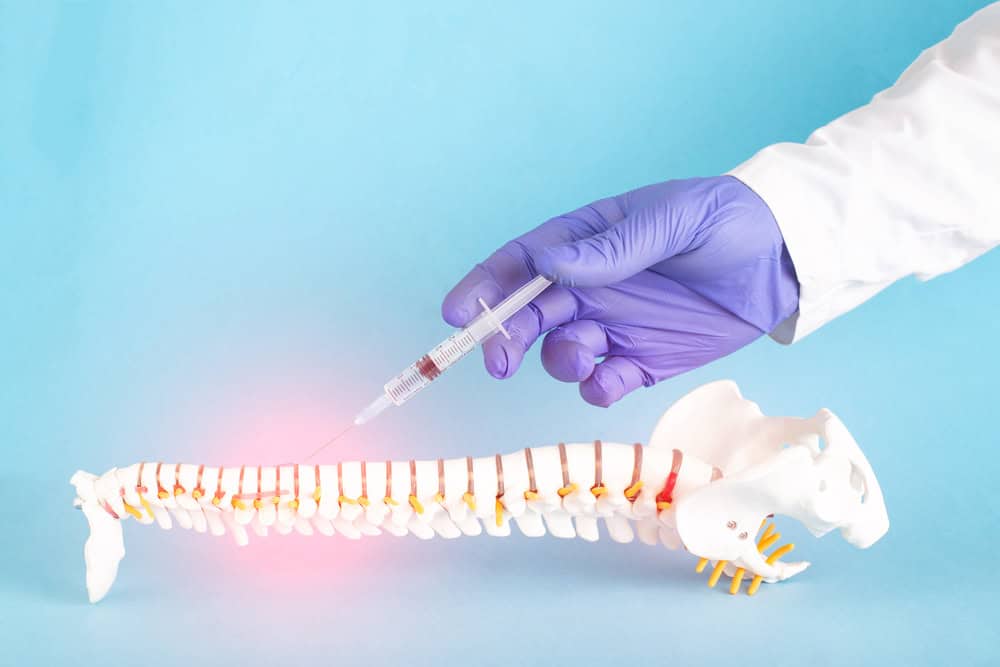
An interventional technique is any procedure that treats pain by physically reaching the structure involved, rather than by circulating a drug through your whole system or by working on the body from the outside. In practice that means needles, guided by imaging, placed with millimeter accuracy.
The category is broader than most patients realize. It includes epidural steroid injections, facet joint and medial branch blocks, radiofrequency ablation, sacroiliac joint injections, peripheral and sympathetic nerve blocks, trigger point injections, kyphoplasty for painful vertebral fractures, regenerative injections, and spinal cord stimulation. They differ enormously in what they do, but they share one logic: identify the pain generator, treat it directly, and judge the result by what changes.

Why Is Image Guidance Considered Non Negotiable?
The single technical development that made this field possible is real time imaging. Nearly every interventional spine procedure is performed under fluoroscopy, which is live X-ray, and some are done under ultrasound or CT depending on the target. The physician watches the needle advance on a screen rather than estimating its position by feel and surface landmarks. The dose of radiation involved in a typical procedure is small and the exposure is brief.
Contrast dye adds a second layer of confirmation. Before any medication is delivered, a small amount of dye is injected and its spread is observed. That pattern shows exactly where the medication will go and, just as importantly, where it will not. It also confirms the needle is not somewhere it should never be, such as inside a blood vessel. Patients sometimes feel a moment of pressure as this happens, which is expected.
This matters for two reasons. The first is safety. The structures near a spinal nerve root include arteries and the covering of the spinal cord, and knowing precisely where the needle sits is what keeps a routine procedure routine. The second is that guidance is what makes the diagnostic value real. If you do not know exactly where the medication landed, you cannot draw any conclusion from how the patient responded.
A blind injection, placed by anatomy and experience alone, may still help someone. It cannot tell you why. In a field built on narrowing down which of several nearby structures is responsible, that difference is the whole argument, and it is why image guidance is the standard of care rather than an upgrade. It also explains why these procedures are performed in a suite equipped for imaging rather than in an ordinary exam room.
The Diagnostic Role: Using A Needle To Answer A Question
This is the part of interventional pain management that patients almost never hear explained, and it is arguably the more important half. Imaging shows structure. It cannot show which structure hurts. In a lumbar spine with a bulging disc, arthritic facet joints, and a degenerated sacroiliac joint, all three are plausible sources, and a scan cannot referee between them.
A diagnostic block can. A small volume of local anesthetic is placed onto one target under image guidance. If your pain drops substantially while the anesthetic is working, that structure is very likely responsible. If nothing changes, it very likely is not, and the workup moves on. The anesthetic then wears off, which is expected and is not a sign the procedure failed. Few areas of medicine offer a test this direct.
This is why your physician asks you to pay close attention for the first several hours afterward, and often asks you to record pain scores on a simple form. That window is the test. Patients who forget to track it lose the information, and it usually cannot be recovered without repeating the procedure. Where the stakes are higher, such as before radiofrequency ablation, the block is commonly repeated to confirm the response was consistent rather than coincidental.
The practical consequence is that a negative result is not a wasted procedure. It removes a suspect. Treatment plans built on a confirmed target hold up far better than plans built on a plausible one, and a sequence of blocks is how a careful practice gets from a list of possibilities to a specific answer.
Want live answers?
Connect with a NY Spine Medicine expert for fast, friendly support.
The Therapeutic Role: Interrupting The Cycle Pain Creates
The treatment side is more familiar. Steroid placed near an inflamed nerve root reduces the inflammation generating your symptoms. Anesthetic and steroid in an arthritic joint calms it. Radiofrequency ablation interrupts the small nerves carrying pain from a facet joint, producing relief measured in months rather than weeks.
What these have in common is that they buy a window rather than repair anatomy. That window is not a small thing. Pain drives inactivity, inactivity drives weakness and stiffness, and both feed back into more pain. Interrupting that loop long enough to rehabilitate is frequently what turns a chronic problem into a manageable one. It is also why an interventional procedure ordered without a rehabilitation plan attached to it tends to deliver a fraction of what it could have.
Where These Techniques Sit Between Physical Therapy And Surgery
Modern spine care is generally organized as a ladder that starts with the least invasive option with a reasonable chance of working, and stops climbing as soon as something works. The bottom rungs are activity modification, physical therapy, and simple medication. Most episodes of back and neck pain resolve there and never need anything else.
Interventional techniques occupy the next rungs. They are considered when conservative care has been given a fair trial without an adequate result, when pain is severe enough to prevent participation in therapy, or when the diagnosis needs to be established before anyone commits to a larger decision. They are less invasive than surgery, they do not alter the structure of the spine, and they leave every subsequent option available.
Surgery remains the right answer for a defined set of problems, and interventional care does not compete with it in those cases. Progressive neurological deficit, significant instability, severe stenosis that has stopped responding to everything else, and cauda equina syndrome are surgical situations, and delaying them with injections is a mistake. A responsible pain physician says so plainly and refers. Any procedure that only postpones a necessary operation has cost you time.
For the large group in between, though, the ladder matters. Many patients who would once have gone straight from failed physical therapy to a surgical consultation now have several structured steps in between, and a meaningful proportion of them never need the operation. That is the practical role of interventional techniques in modern practice. They widen the middle of the pathway, and they make the eventual decision about surgery a better informed one.
Neuromodulation, Regenerative Options, And Some Honest Limits
At the more advanced end of the field sits neuromodulation. Spinal cord stimulation places thin leads in the epidural space that deliver mild electrical signals to alter how pain messages are processed before they reach the brain. It is used for a narrow group of patients, most often those with persistent nerve pain after spine surgery or with certain neuropathic conditions that have not responded to other treatment. It is not a first line option and is not offered casually.
Its most useful feature is that it is tested before it is committed to. Patients undergo a trial period with temporary leads, and only those who get meaningful relief go on to a permanent implant. Few treatments in medicine let you evaluate the result before making the decision. Patient selection, including a psychological evaluation, is a routine and appropriate part of that process rather than an obstacle.
Regenerative approaches, including platelet rich plasma and related injections, occupy a different position. They are used in selected musculoskeletal conditions and remain an area of active investigation, with evidence that varies considerably by condition and by technique. The honest framing is that they are reasonable to discuss for some problems and are not a proven answer for degenerative spine disease. Anyone presenting them as a guaranteed alternative to established care is overstating what is known.
The broader limits deserve the same directness. Interventional procedures do not repair discs, reverse arthritis, or cure chronic pain. Results vary between patients, and some patients get little benefit even from a technically perfect procedure. Every procedure carries risk, including bleeding, infection, nerve irritation, and reactions to medication, all uncommon but real. And none of these techniques works well as a standalone treatment. The evidence and everyday experience point the same way. They work best embedded in a plan that includes rehabilitation and management of whatever else is contributing.
Deciding Whether An Interventional Approach Fits You
The useful way to think about interventional pain management is not as a list of procedures but as a method. Narrow the possible sources of pain using history and examination, confirm the suspect with a targeted block when the picture is unclear, treat that structure precisely, then use the relief to rebuild function. Each step informs the next, and a procedure that does not fit that logic is worth asking about.
It also means the right questions are simple ones. What structure do you think is causing this, how confident are you, what would confirm it, what is the realistic benefit, how long does it usually last, and what happens afterward.
At NY Spine Medicine, our Manhattan and Brooklyn offices provide the full range of image guided interventional techniques alongside diagnostic testing and in house physical therapy, which keeps the diagnostic work, the procedure, and the rehabilitation connected rather than split across three offices. If you want an evaluation that starts with finding the source rather than with scheduling a procedure, call 212-750-1155.