

Summary:
Spinal stenosis is one of the few spine conditions where patients describe the same story almost word for word. You can stand at the sink for a while, but not too long. You can walk to the corner, but somewhere in the second or third block your legs turn heavy and start to burn. You lean on a shopping cart and it goes away. You sit on a bench for two minutes and you are fine again.
That pattern is not vague. It is specific enough that a physician often suspects the diagnosis before the exam begins, and it points to a mechanical problem.
Here is what spinal stenosis actually is, how we work it up at NY Spine Medicine, and what the treatment path looks like from conservative care through interventional procedures.
What Spinal Stenosis Means in Plain Language
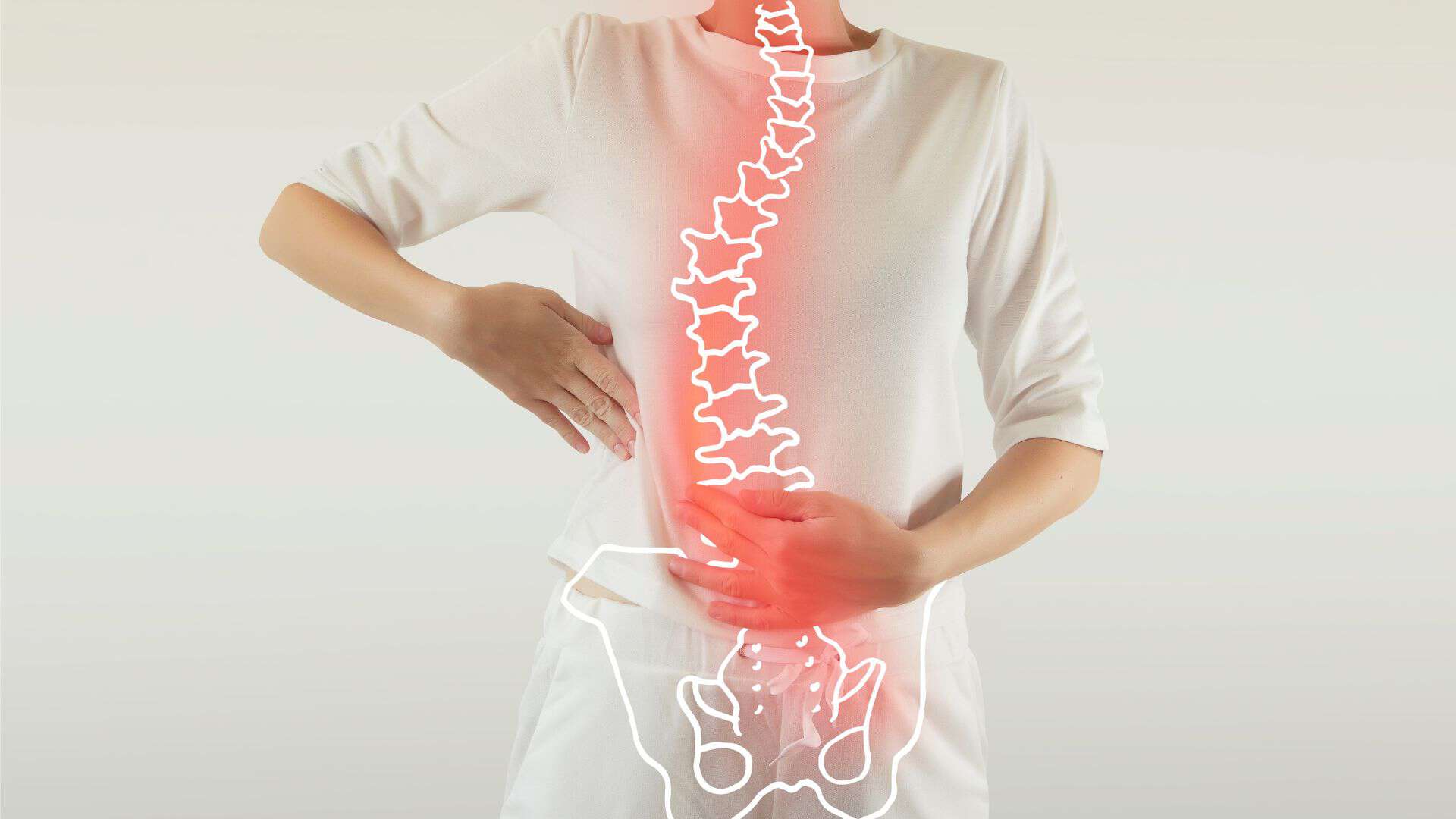
Your spine is not solid bone. It is a stack of vertebrae with a hollow channel running down the middle, the spinal canal, plus small side openings called foramina where nerve roots branch off toward the rest of your body. Stenosis simply means narrowing. Spinal stenosis means one or more of those spaces has gotten smaller.
The narrowing usually comes from several things happening at once. Discs lose height and bulge backward. Facet joints at the back of the spine enlarge as arthritis develops, the way any arthritic joint thickens. The ligamentum flavum, a ligament lining the back of the canal, buckles and thickens. Each change takes a little space, and together they can reduce the channel meaningfully.
Most stenosis occurs in the lower back, where it produces leg symptoms, or in the neck, where it can affect the arms and, if the cord itself is compressed, coordination and walking. The lumbar version is by far the more common of the two.

What Are the Symptoms of Spinal Stenosis?
The signature symptom is neurogenic claudication, a technical name for a very recognizable experience. After walking a predictable distance, your legs begin to ache, burn, or feel heavy and unreliable. Keep walking and it worsens. Sit down, and within a couple of minutes it clears.
Posture explains why. Leaning forward opens the spinal canal slightly, giving crowded nerves a little more room. That is why people with stenosis can push a shopping cart through a supermarket far longer than they can walk the same distance upright, and why a stationary bike is often comfortable when walking is not. It is also why standing still at a counter can be harder than walking.
Back pain is often present but is frequently not the main complaint. Many patients with significant stenosis describe their back as merely stiff, while their legs are what stop them. That mismatch confuses people who expect a spine problem to hurt mostly in the spine.
Numbness and tingling in the feet are common, and some people describe a sense that they cannot quite feel the ground. Balance can suffer for that reason. Weakness can develop as well, and it usually comes on slowly enough that people adapt around it without noticing, until a stair or a curb makes it obvious.
When the narrowing affects a single nerve root at its exit rather than the whole canal, the picture looks more like sciatica, with pain following one specific leg pathway. Central and foraminal stenosis can coexist, which is one reason a careful exam matters more than a headline on an imaging report.
Symptoms often vary from day to day, which is normal for stenosis and not a sign that something has gone wrong.
How Is Spinal Stenosis Diagnosed at NY Spine Medicine?
Diagnosis starts with the history, and the questions are quite specific. How far can you walk before symptoms start? Is the distance consistent? Does sitting relieve it, and how quickly? Can you walk uphill or push a cart more comfortably than you walk on flat ground? Those answers separate neurogenic claudication from vascular claudication, which comes from narrowed arteries and does not care about your posture.
The physical exam checks strength, reflexes, and sensation, watches how you walk, and tests the positions that open and close the canal. Pulses in the legs are checked too, because peripheral arterial disease can imitate stenosis closely enough that assuming is a mistake.
MRI is the imaging study of choice. It shows the canal, the nerve roots, the discs, and the ligament thickening that plain X-rays cannot. When a patient cannot have an MRI, a CT scan, sometimes with contrast placed in the spinal canal, provides an alternative. X-rays still have a role for alignment and for detecting instability when you bend forward and back.
Here is the part patients are rarely told. Imaging findings and symptoms do not always match. Plenty of people have narrowing on a scan and no symptoms whatsoever. The scan is one input, and it has to be read against how you actually function. A radiology report is not a treatment plan.
EMG and nerve conduction studies, which we perform in office, help when the picture is ambiguous. They can confirm whether nerve roots are genuinely irritated, suggest which levels are involved, and rule out peripheral neuropathy, which produces overlapping foot symptoms and is common enough to muddy the diagnosis regularly.
Want live answers?
Connect with a NY Spine Medicine expert for fast, friendly support.
Why Spinal Stenosis Develops Slowly and Gets Missed
Stenosis is a condition of accumulation. In most people no single event causes it. Discs dehydrate over decades, joints wear, ligaments thicken, and the space narrows a fraction at a time. Because the change is gradual, so is the adaptation.
Patients often shrink their lives to fit the condition without registering that they are doing it. You stop walking to the farther subway station. You take the elevator. You pick the restaurant with the shorter walk from the car. By the time someone seeks care, the walking distance has frequently been declining for years.
That slow onset is worth naming, because it means the useful measure of severity is not how much it hurts but how much you have given up. Bringing that history to an appointment gives a physician far more to work with than a pain rating does.

Nonsurgical Treatment for Spinal Stenosis, Starting With Movement
The first and most effective intervention for most people is a physical therapy program designed around the mechanics of stenosis. That means flexion-based exercise, which uses the same principle that makes a shopping cart comfortable, along with core and hip strengthening and hip flexor work, since tight hip flexors pull the lower back into the extended position that closes the canal.
Conditioning matters more here than in almost any other spine condition. A stationary or recumbent bike lets you build cardiovascular endurance in a forward-leaning position that stenosis tolerates well. Pool walking works for the same reason, since buoyancy unloads the spine. Both keep you fit while walking is limited, which protects you from the deconditioning spiral that makes everything worse.
Practical adaptation belongs in the plan too. Interval walking, meaning walking to the point just before symptoms start and then sitting briefly before continuing, often lets people cover far more distance in a day than pushing through does. In New York City, where getting anywhere involves walking, that one change can restore a surprising amount of independence.
Weight management, where relevant, reduces the load on the lumbar spine. Anti-inflammatory medication has a limited but real role during flares, and some patients benefit from medications aimed specifically at nerve pain, prescribed individually.
What conservative care does not do is widen the canal. It improves how well you tolerate the narrowing, which for many people is enough for a long time. Being clear about that distinction upfront keeps expectations honest, and it keeps patients from concluding that therapy failed when it did exactly what it can do.
Injections and Procedures We Use for Stenosis in New York City
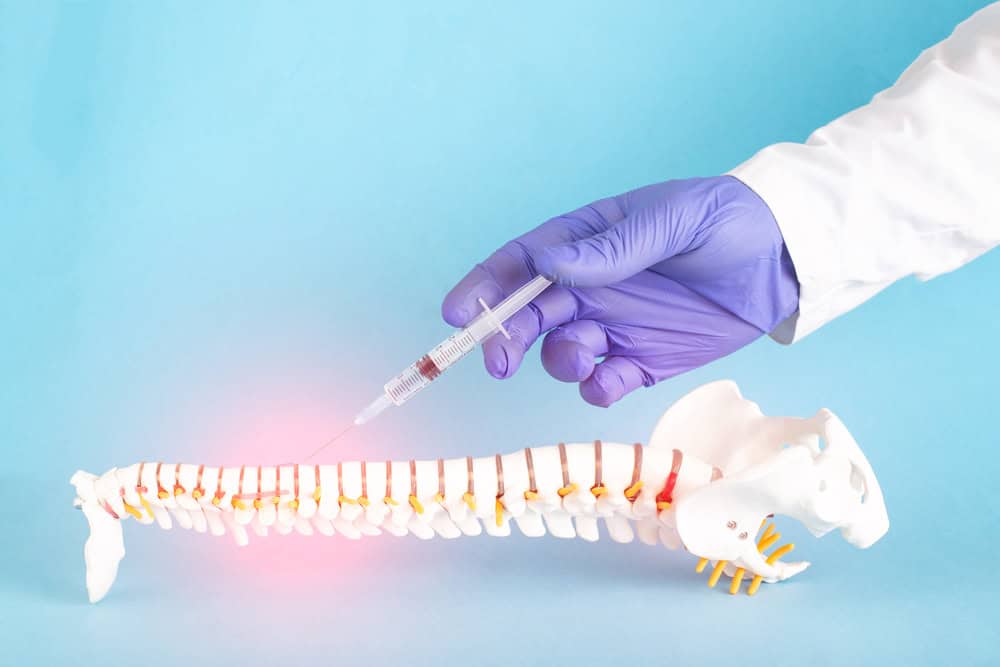
Epidural steroid injections are the most common interventional step. Steroid placed in the epidural space near the crowded nerves reduces inflammation and swelling around them, which effectively buys a little room in a space that has none to spare. The injection is performed under fluoroscopic guidance, with contrast confirming needle position before any medication is delivered.
The realistic expectation matters. For stenosis, epidural injections tend to give meaningful relief for a period of weeks to months rather than permanently, because the underlying narrowing is structural and an injection does not change bone or ligament. That window is not wasted time. It is when physical therapy becomes productive, and the gains you make during it are what carry forward after the steroid wears off.
Injections can be delivered by different approaches, and the choice is not arbitrary. A caudal, interlaminar, or transforaminal approach may be selected depending on whether the narrowing is central or at the nerve exit, and at which level. A transforaminal injection can also serve a diagnostic purpose, confirming which level is generating your symptoms when the MRI shows narrowing at several.
Facet joint injections and medial branch blocks come into play when the arthritic joints contributing to the narrowing are also generating pain of their own. If diagnostic blocks confirm that, radiofrequency ablation can provide longer relief from that component, though it does not address the nerve crowding itself.
For a subset of patients with severe, persistent nerve pain who are not surgical candidates, or who have already had surgery without adequate relief, spinal cord stimulation is discussed. It always involves a trial period first, so you can experience whether it helps before anything permanent is implanted.
Surgery, usually a decompression such as a laminectomy, is appropriate when symptoms are disabling despite a genuine trial of everything else, or when there is progressive weakness. We are not surgeons, and that shapes our role usefully. We can tell you honestly when the interventional options are worth pursuing and when it is time to have a surgical conversation instead.
Living Better With Spinal Stenosis, and Where to Start
The honest summary is that spinal stenosis is usually a managed condition rather than a cured one, and that is far less discouraging than it sounds. Most people with stenosis do not deteriorate quickly, and most never end up in surgery. What changes their lives is a plan that combines the right kind of exercise, well timed injections when inflammation is limiting them, and enough understanding of the mechanics to adapt intelligently instead of simply doing less.
At NY Spine Medicine, we handle that whole sequence in our Manhattan and Brooklyn offices. We use EMG and nerve conduction testing when the picture is unclear rather than relying on an MRI report, we perform image-guided epidural and facet procedures ourselves, and we keep physical therapy in house so the exercise program and the injection schedule are coordinated rather than running on separate tracks. If the evaluation points to progressive weakness, bowel or bladder changes, or another situation needing prompt surgical attention, we will say so.
If your walking distance has been shrinking, call us at 212-750-1155 and we will help you understand what is narrowing and what can be done about it.