

Summary:
Two providers can give you two different answers to this question on the same day, and both can be defended. That is confusing when you are the one in pain and just want to know what to do on Monday.
The confusion comes from framing it as a competition. Physical therapy and interventional pain management do different jobs. One changes how your body handles load. The other reduces the pain signal coming from a specific structure.
So the question is not which one is better. It is which one your situation calls for first, and what needs to be true before the other gets added.
What Each Of These Two Approaches Is Built To Do
Physical therapy works on capacity. Strength in the muscles that stabilize your spine, mobility in the hips and mid back, endurance, balance, and the movement patterns you use hundreds of times a day without noticing. It changes what your body can tolerate, and the effect builds slowly over weeks.
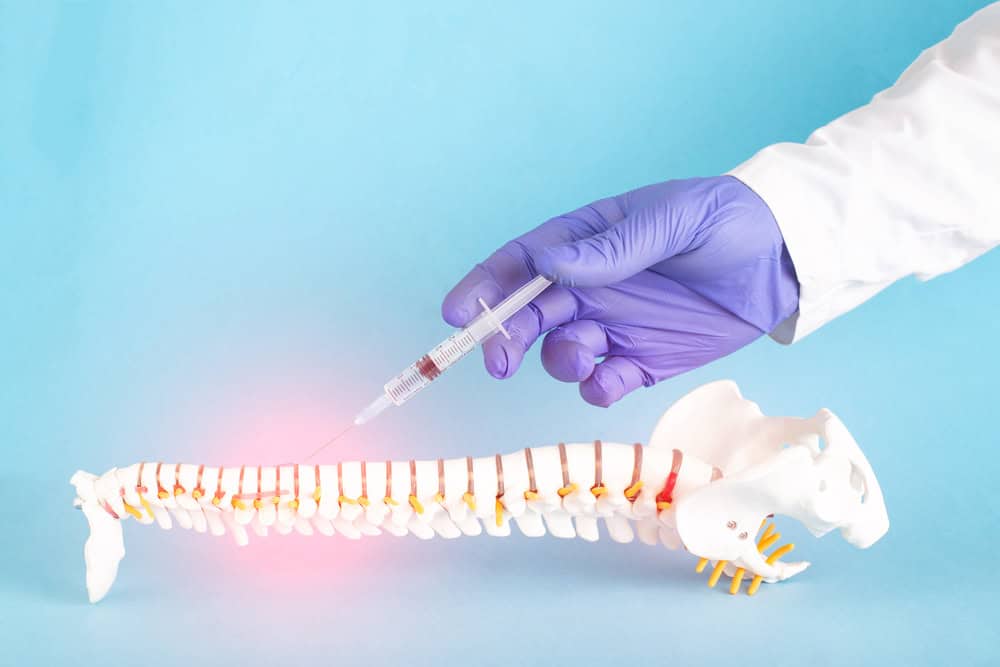
Medical pain management works on the signal. Using image guided injections and related procedures, it reduces inflammation around a specific nerve root, calms a specific arthritic joint, or interrupts the nerves carrying pain from one structure. The effect arrives faster and lasts for a defined period. It does not make you stronger, and it does not change how you bend down to lift a suitcase.

When Should Physical Therapy Come First?
For most new episodes of back or neck pain, therapy first is the right call, and it is what the majority of patients need. The typical profile is pain that started within the last several weeks, is centered in the back or neck rather than shooting down a limb, has no numbness or weakness attached to it, and is uncomfortable without preventing you from doing most of your day. Ordinary muscular strain, early degenerative change, and postural overload all live in this group.
Two things make therapy first reasonable here. The first is that most of these episodes improve, and improve faster with graded movement than with rest. The second is that starting with a procedure in this situation skips over the cause. Even if an injection reduced the pain, the mechanics that produced it would be unchanged, and the problem would likely return.
Give it a fair trial before judging it. That usually means four to six weeks of active, progressive therapy plus the home program, which is where most of the benefit comes from. Passive treatment alone, meaning heat, ultrasound, and a table, is not the same thing and should not be counted as a trial. Ask the therapist what you should be able to do in four weeks that you cannot do today, and hold the plan to it.
What counts as progress is worth defining in advance. Look for change in function rather than only in pain: walking further, sitting longer, sleeping through the night, getting through a workday. Function often improves before pain does. If nothing at all has moved after six weeks of appropriate active therapy, that is the point to look again at the diagnosis rather than to book another six weeks of the same.
When Medical Pain Management Should Come First Instead
The clearest indication is pain that is too severe to work with. If you cannot get through a therapy session without a flare that lasts for days, if you cannot sleep, or if standing up out of a chair is the hardest part of your morning, therapy is unlikely to progress. In that situation an injection is not skipping a step. It is what makes the step possible.
Radiating symptoms are the second common reason. Pain travelling down the leg past the knee, or into the arm and fingers, particularly with numbness or tingling in a defined pattern, suggests an irritated nerve root. Therapy still matters for these patients, but an epidural steroid injection often reduces the inflammation enough that therapy becomes productive rather than provocative.
The third reason is a diagnosis nobody has confirmed. When the exam and the imaging point in different directions, or when several structures could plausibly be responsible, a diagnostic block answers the question directly by numbing one target and observing what happens. Months of therapy aimed at the wrong structure is a common and avoidable waste.
The fourth is failed prior therapy. If you have completed a genuine course of active therapy without benefit, more of the same is rarely the answer. Either the diagnosis needs revisiting or the pain needs to come down first, and both of those are pain management questions. Bring the details of what you did, because a therapist and a physician reading the same history will often notice different things in it.
Want live answers?
Connect with a NY Spine Medicine expert for fast, friendly support.
The Symptoms That Change The Question Entirely
A small set of findings takes the sequencing question off the table, because they need evaluation before any treatment plan is written. Progressive weakness in an arm or leg, a foot that has started to drag, loss of bowel or bladder control, numbness in the groin or inner thighs, and a fever alongside back pain all belong in that group.
So does back pain following significant trauma such as a fall or a car accident, unexplained weight loss with night pain, and severe pain in someone with a history of cancer, osteoporosis, or immune suppression. These are not reasons to panic, and most turn out to be manageable. They are reasons to be seen promptly rather than to start a course of anything. If you recognize yourself here, urgent evaluation comes first and the sequencing conversation happens afterward.

What To Do When Physical Therapy Has Been Making It Worse
This happens often enough to deserve its own discussion, and patients usually respond by quitting quietly and deciding therapy is not for them. That is the wrong conclusion most of the time, but the experience is real. Being made worse by treatment is discouraging, and it is worth naming rather than absorbing.
Start by separating two things. Muscle soreness for a day after a session, especially early on, is expected and normal. A flare that lasts several days, pain that begins radiating further down the limb than before, or new numbness and weakness are different, and they mean the load or the exercise selection is wrong for your problem. That is not a reason to stop. It is a reason to say something.
The most common fixable causes are straightforward. Too much progression too early. Exercises chosen for a different diagnosis, which is why a program aimed at a disc can aggravate a facet problem and the reverse. Pain that was simply too high to load, which correct sequencing fixes. And occasionally a diagnosis that was never fully established, which is where a pain management evaluation is genuinely useful.
Say it directly at the next session and be specific about what hurt, when, and for how long. Good therapists adjust constantly and would far rather modify a program than have a patient disappear. If two rounds of adjustment do not help, that is a reasonable point to ask for a physician evaluation of the diagnosis rather than to keep pushing. Neither of those steps is giving up on therapy. Both are how the sequence gets corrected.
How The Two Work Together Once You Have Sorted Out The Sequence
Once the order is right, the pattern that produces the best results is fairly consistent. A procedure reduces the pain. Therapy starts within days to a couple of weeks, while the relief is at its strongest, and progresses steadily during that window. By the time the procedure has worn off, you are stronger and moving better than you were before it, which is the entire point. The relief is the opportunity, not the outcome.
The timing is not arbitrary. Starting therapy six weeks after an injection wastes most of the window the injection created. Starting the same afternoon can be too soon, because you may still be numb and not getting accurate feedback from your body. Days to a couple of weeks is the usual target, adjusted to the procedure and to you. Ask before you leave the procedure suite when therapy should resume, because the answer differs by procedure.
Communication between the two sides is what makes it work, and it is the piece most often missing. The therapist needs to know exactly what was treated, at what level, and what to watch for. The physician needs to know how you responded during therapy, what provoked symptoms, and whether progress stalled. When those two sit in different practices with no shared record, that information usually does not travel, and the plan quietly falls apart between them.
It is also normal to move back and forth. Some patients have a procedure once and never need another. Some use one occasionally to hold ground during a flare while continuing to build. Some do well with therapy alone after an initial period of interventional treatment. None of that is failure. Chronic spine problems are managed rather than solved, and a plan that adapts is doing what it should. What matters is that somebody is tracking the whole arc rather than treating each visit as an isolated event.
Figuring Out Which One You Actually Need This Week
The short version is that this is a sequencing question rather than a competition. New, uncomplicated, tolerable pain usually starts with physical therapy. Severe pain, radiating symptoms with numbness or weakness, an unconfirmed diagnosis, or therapy already tried without benefit usually starts with a pain management evaluation. Certain symptoms skip the question entirely and need to be seen promptly.
What you should not do is wait for one to fail completely before considering the other. The most common preventable outcome in spine care is a patient who spends a year alternating between the two without anyone connecting them.
At NY Spine Medicine, our Manhattan and Brooklyn offices provide interventional pain management and physical therapy inside one practice, so the sequencing decision gets made once, by people who can see both sides of it, and adjusted as you respond. If you are not sure which one you need first, call 212-750-1155 and start with an evaluation that answers that question.