

Summary:
The hardest part of getting help for persistent pain is usually not the treatment. It is the not knowing. Who do you see, what will they do, will you be believed, and how long will any of it take.
Pain management is more structured than it looks from the outside. There is a sequence, most patients move through the same steps, and almost none of it is mysterious once somebody lays it out.
Here is the whole path, step by step, from deciding it is time through your first follow up visit, along with the parts patients most often get wrong.
Step One: Knowing When It Is Time To Be Seen
There is no pain score that qualifies you. The useful signals are duration and trajectory. Pain that has lasted more than six weeks despite reasonable self care, pain that is worsening rather than settling, pain that has begun radiating into an arm or a leg, pain that wakes you regularly, or pain that has changed what you can do at work or at home are all reasonable reasons to be evaluated.
Some symptoms should not wait for an appointment at all. Progressive weakness in a limb, loss of bowel or bladder control, numbness in the groin or inner thighs, fever alongside back pain, unexplained weight loss with night pain, or severe pain after a fall or a car accident need urgent evaluation. Those are emergency situations rather than scheduling situations, and it is better to be checked and reassured than to wait it out.

Step Two: What Should You Bring To The First Visit?
Start with imaging. If you have had an X-ray, MRI, or CT scan, bring the actual images on a disc or arrange for the digital study to be sent, not only the written report. The report is a summary written for another physician, and your treating doctor will usually want to look at the images themselves. Bringing them also spares you a repeat scan and the wait that comes with it. If a study is more than a year or two old and your symptoms have changed, expect that a new one may be needed.
Bring a written treatment history. Every course of physical therapy with dates and how you responded, injections with the level treated and the effect, chiropractic care, medications tried including the ones that did not work and why you stopped, braces, and any prior surgery with the operative report if you have it. This single page prevents the most common waste in pain management, which is repeating something that has already failed.
Bring a current medication list, including over the counter drugs and supplements, because several of them affect bleeding and matter before any procedure. Note allergies, any implanted device such as a pacemaker or stimulator, and whether you are taking a blood thinner. Bring your insurance card, your referral if your plan requires one, and if this is a workers compensation or auto injury case, the claim number, adjuster, and employer or carrier contact.
Finally, write down three specific things you cannot currently do that you want back. Sitting through a movie, sleeping on your side, carrying groceries up two flights, getting through a shift without stopping. Those become the measures everyone uses to judge whether treatment is working, and they are far more useful than a number.
Step Three: What Actually Happens During The Evaluation
Expect the first visit to be mostly talking and examining, and expect it to take longer than a typical appointment. The history is the most valuable diagnostic tool in the room. Where exactly the pain sits, whether it travels and how far, what it feels like, what makes it better and worse, how it began, how it has changed, what it does to your sleep, and how it responds to sitting, standing, walking, and bending.
The physical exam follows the story. Range of motion, strength testing in specific muscle groups, reflexes, sensation, gait, and provocative maneuvers designed to load one structure at a time. None of it should hurt for more than a moment, and you can say so if something does. A physician examining you for back pain will usually also check your hips, because hip arthritis imitates back pain often enough to be a genuine trap.
Imaging gets reviewed in that context rather than in isolation. This is the step patients find most surprising, because a scan that a previous provider described as showing degenerative changes may turn out to be unremarkable for your age and irrelevant to your symptoms. Findings only matter when they line up with your history and your exam.
You should leave the first visit with three things: a working diagnosis in language you can repeat to someone else, a plan for the next four to six weeks, and a clear idea of what would change that plan. If you do not have those, ask before you go. It is a fair question and any good physician expects it.
Want live answers?
Connect with a NY Spine Medicine expert for fast, friendly support.
Step Four: The Testing That Confirms Or Corrects The Diagnosis
Not everyone needs additional testing. When the picture is clear, treatment starts. When it is not, there are a few standard tools. New or updated imaging may be ordered if your symptoms have changed or nothing recent exists. EMG and nerve conduction studies measure how well your nerves are conducting signals, and they are the standard way to separate a pinched nerve in the spine from a peripheral neuropathy.
Diagnostic injections deserve their own mention, because they are unusual in medicine. A small amount of local anesthetic is placed onto one specific structure under image guidance. If your pain drops substantially while the anesthetic is active, that structure is very likely the source. If it does not, the workup moves elsewhere. That is why your physician will ask you to track your pain carefully for the first several hours afterward. Your report is the test result.

Step Five: Building A Treatment Plan You Actually Agree With
A plan generally has three layers running at once. There is something to reduce the pain, which may be an interventional procedure, a medication adjustment, or both. There is rehabilitation, which is the part that changes the mechanics underneath the pain. And there is management of the contributors, which can include sleep, activity pacing, weight, blood sugar control, or an unrelated joint problem that is changing how you move. The layers work together, and skipping one is the usual reason a plan underperforms.
Ask what the plan is trying to achieve, and by when. A useful plan has checkpoints. If the goal is to reduce leg pain enough that you can complete physical therapy sessions without flaring, then four to six weeks from now there is a specific thing to look at. Vague plans produce vague follow up appointments.
Ask about the alternatives too, including doing nothing for a while, because for some conditions watchful waiting alongside good rehabilitation is a legitimate option and should be named as one. Ask what the procedure involves, what recovery looks like, what the realistic range of benefit is, how long it typically lasts, and what the risks are. Any physician who cannot describe the downside of a procedure has not described it fully.
Be honest about what you will actually do. If a home program takes forty minutes and you know you will not do it, say so and get a shorter one. If a medication makes you too foggy to work, that is a reason to change it, not a reason to quietly stop taking it. Plans built on what you can sustain outperform plans built on what sounds ideal.
Step Six: The Procedure Itself And What Follows In The Weeks After
Most interventional procedures are outpatient and take under thirty minutes of actual procedure time. You will get instructions in advance about eating, about holding blood thinners if that applies, and about arranging a ride if sedation is planned. Follow them precisely, because the most common reason procedures get rescheduled is a missed instruction rather than anything medical. Bring someone with you if you are anxious. Nobody thinks less of you for it.
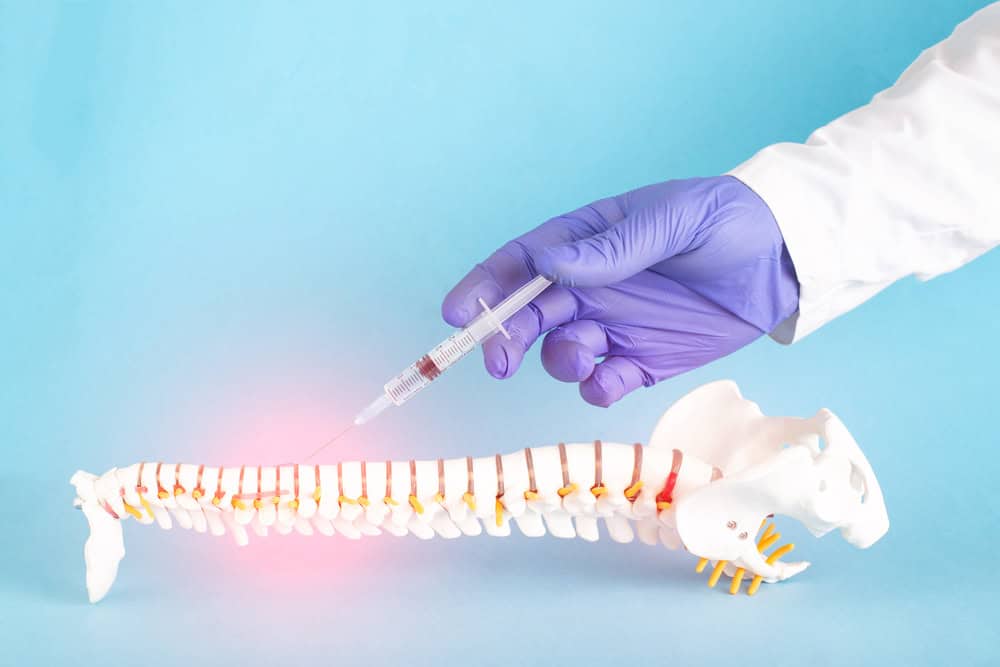
On the day, you change, an intravenous line may be placed if sedation is used, and you lie on the procedure table. The skin is cleaned and numbed. The physician uses fluoroscopy, which is live X-ray, to guide the needle, and contrast dye is often injected first to confirm placement before any medication is delivered. Most patients feel pressure rather than pain. Afterward you are observed briefly and go home the same day.
The first two weeks matter more than patients expect. Track your pain for the first several hours, since that window reflects the local anesthetic and carries diagnostic meaning. Then track it daily as the steroid takes effect, which usually takes several days rather than working immediately. Write it somewhere you will find it again rather than trying to remember. Some soreness at the injection site is normal. Fever, a severe headache that appears when you sit or stand, new weakness, or drainage from the site is not, and those warrant a call.
Physical therapy usually begins within days to a couple of weeks after the procedure, and that timing is deliberate. The relief is the window in which rehabilitation is possible, and waiting six weeks to start wastes most of it. At your follow up visit, bring the log. The plan gets adjusted from what actually happened, and the difference between a treatment that worked partially and one that did not work at all often lives entirely in the details you recorded at home.
Taking The First Step Without Overthinking All Of It
The whole sequence looks longer written out than it feels in practice. An evaluation, testing if the picture is unclear, a plan with checkpoints, a procedure if one is indicated, rehabilitation, and a follow up that adjusts based on your response. Most patients move through it faster than they expected, and almost all of them say afterward that the waiting was the worst part.
The single most useful thing you can control is preparation. Imaging, treatment history, medication list, and three specific things you want back. That page of information turns the first visit from a conversation about how much it hurts into a conversation about what to do next.
At NY Spine Medicine, our Manhattan and Brooklyn offices handle evaluation, EMG and nerve testing, image guided procedures, and physical therapy inside one practice, which means the steps connect instead of stalling between providers. If you have been meaning to start and have not, call 212-750-1155 and we will begin with the evaluation.