


Summary:
The honest answer to how effective nerve blocks are is that it depends less on the injection and more on the diagnosis behind it. A well targeted block for pain coming from a single irritated nerve can bring that pain down dramatically within minutes. The same injection, aimed at a nerve that is not the source, will do very little.
That is why experienced pain physicians talk about nerve blocks in two ways at once. They are a treatment, and they are also a test. A block that relieves your pain for exactly as long as the numbing medicine lasts has still told you something valuable, even if the pain is back by evening.
Knowing which kind you are being offered, and what would count as success, changes the conversation.
What A Nerve Block Is Actually Doing, In Plain Terms
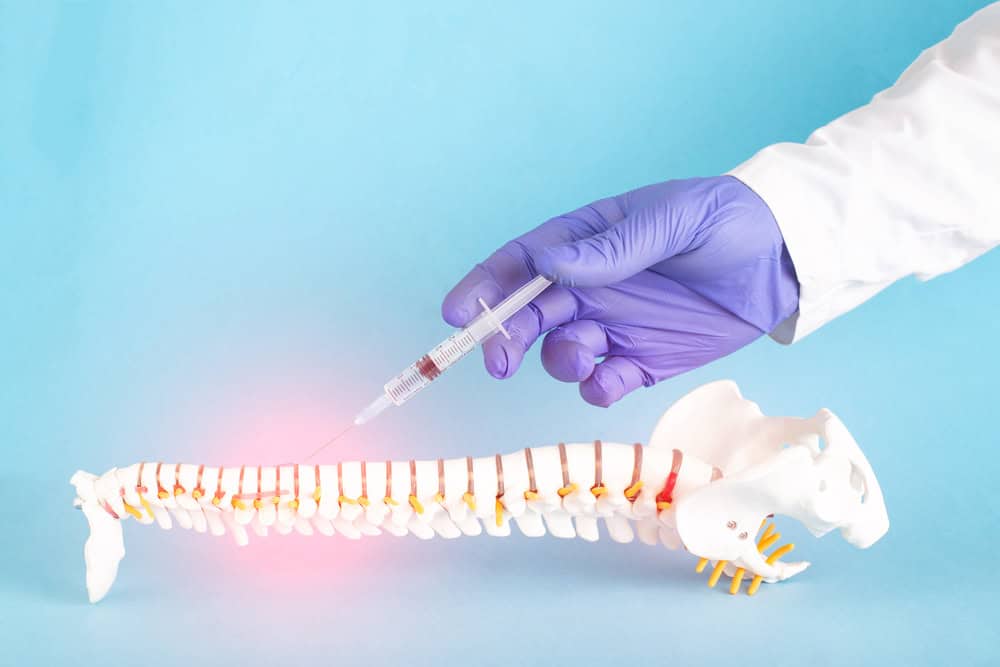
A nerve block is an injection of local anesthetic, often combined with a steroid, placed next to a specific nerve or group of nerves. The anesthetic interrupts the signal that nerve is carrying. The steroid, when it is used, reduces inflammation around the nerve so the quiet lasts longer than numbing medicine would manage on its own.
Placement is the whole game. Most blocks performed in a pain practice are done with fluoroscopic guidance, which is a live X ray, or with ultrasound, so the physician can watch the needle reach the intended spot. Contrast dye is often used first to confirm that the medication will spread where it is supposed to and nowhere else.
That precision is not a luxury. Nerves sit millimeters from one another, and the difference between a block that works and one that does nothing is often smaller than the width of a pencil.
Which Types Of Pain Respond Best To Nerve Blocks?
Some pain patterns are naturally suited to this approach, and some are not.
Blocks tend to work well when the pain follows a nerve. Radiating pain down one leg or one arm from an irritated nerve root, the kind that travels in a recognizable stripe, often responds to a selective nerve root block. Neck and back pain that is worse with extension, twisting, or standing, and that is coming from the small facet joints, responds to medial branch blocks aimed at the tiny nerves supplying those joints. Headaches originating at the base of the skull often respond to occipital nerve blocks. Knee pain in someone who cannot have or does not want surgery may respond to genicular nerve blocks. Rib and chest wall pain after an injury or a shingles outbreak may respond to intercostal blocks.
Blocks also have a specific role in pain driven by the sympathetic nervous system. Complex regional pain syndrome, with its burning pain, swelling, and color and temperature changes in a limb, is often evaluated and treated with a lumbar sympathetic or stellate ganglion block. In those cases the block can do more than relieve pain temporarily. It can make therapy possible that was not possible before.
Where blocks are less effective is pain that is diffuse, mechanical, and not traceable to a nerve or a joint. Broad muscular back pain with no clear pattern, pain that moves around, and pain that is largely driven by deconditioning or a sensitized nervous system will not be solved by numbing one nerve. That is not a reason to skip the evaluation. It is a reason to expect a different recommendation.
Your description of the pain is genuinely diagnostic here. Burning, shooting, and electrical suggests a nerve. Deep, achy, and worse in certain positions suggests a joint. Physicians ask those questions because the answers change which block, if any, is worth doing.
Diagnostic Blocks Versus Therapeutic Blocks, And Why It Matters
This is the distinction most patients are never told about, and it causes a great deal of unnecessary disappointment.
A therapeutic block is meant to relieve pain for a meaningful period. Steroid is usually included, the goal is weeks or months of improvement, and success is measured by how you feel next month. For some patients a small series of these over time keeps a condition manageable without escalating to anything larger.
A diagnostic block is meant to answer a question. It may use only local anesthetic, and it may be expected to wear off within hours. Success is measured by what happens inside that short window. If your pain drops substantially while the anesthetic is active, that particular nerve is confirmed as a contributor. If nothing changes, it is not.
Medial branch blocks are the clearest example. Before radiofrequency ablation is offered for facet joint pain, physicians typically perform one or two diagnostic medial branch blocks. The purpose is to confirm that those specific nerves are carrying the pain, because ablation deliberately interrupts them for a much longer period. Doing the ablation without that confirmation is guessing with a more permanent tool.
So a diagnostic block that relieves your pain for four hours and then wears off completely is not a failed treatment. It is a successful test, and it usually means the next step has a much better chance of working.
Ask which one you are getting. It is a fair question, and the answer tells you how to judge the result.
Want live answers?
Connect with a NY Spine Medicine expert for fast, friendly support.
How Long Relief Usually Lasts, And What Changes That
Two clocks run after a nerve block. The local anesthetic works within minutes and typically wears off within hours. If a steroid was used, its effect builds over several days, which is why some patients feel worse on day two and noticeably better by day five.
Beyond that, the honest ranges are wide. Some people get weeks. Many get several months. A few get relief that outlasts anything anyone expected, because the block broke a cycle of inflammation and muscle guarding that had been feeding itself.
What shortens the result is usually mechanical. Ongoing compression that has not changed, heavy repetitive loading at work, and untreated deconditioning all cut the benefit short. What extends it is using the low pain period for rehabilitation instead of resting through it and waiting to see what happens.

What It Actually Means When A Nerve Block Does Not Work
A block that fails is information, and it should change the plan rather than simply be repeated.
There are a few explanations, and they lead in different directions. The first is that the target was wrong. The pain is coming from somewhere else, and the block correctly ruled that nerve out. The second is that the target was right but the pain has more than one source, which is common in people who have had symptoms for years. Relieving one contributor still leaves the others in place. The third is technical, where the medication did not spread as intended, which is exactly why imaging guidance and contrast confirmation matter.
There is a fourth possibility that deserves a plain description. Pain that has been present for a long time can persist even after the original driver has been treated, because the nervous system has become efficient at producing the signal. Blocking a peripheral nerve in that situation may not change much. That is not imaginary pain and it is not a character flaw. It means the useful treatments are different ones, and they often include graded activity, sleep work, and approaches aimed at the nervous system rather than at a single nerve.
It is worth writing down what happened in the hours after your injection, including how much relief you had and for how long. That detail is what your physician uses to decide what comes next, and memory blurs it within a week.
What should follow a block that did not work is a conversation, not an automatic repeat. If two well placed blocks at the same target produced nothing, a third is unlikely to be the answer.
Risks, Repeat Injections, And How Often Blocks Can Be Done Safely
Nerve blocks are common and generally well tolerated, which is not the same as risk free.
The usual experience is soreness at the injection site for a day or two, and sometimes a temporary increase in pain before the improvement starts. Temporary numbness or weakness in the area supplied by the blocked nerve is expected with some blocks and resolves as the anesthetic wears off. Depending on the block, you may need someone to drive you home.
Less common problems include bleeding or bruising, infection, a reaction to the medication, and, rarely, irritation of the nerve itself. Steroids carry their own considerations. They can raise blood sugar for several days, which matters if you have diabetes, and repeated exposure over time has effects on bone and other tissue. That is the main reason blocks are spaced out rather than given on demand.
On frequency, practices vary and the right interval depends on the block and on you. A common approach is to allow several weeks between injections at the same site and to limit how many steroid injections are given in a year. If you find yourself needing them far more often than that, the honest read is that the block is managing a problem rather than solving it, and something else in the plan should change.
Certain situations require planning ahead. Blood thinners often need to be held before an injection, and that decision belongs to the physician who prescribed them rather than to you alone. Active infection, poorly controlled blood sugar, and pregnancy all affect timing as well.
Finally, some symptoms mean an injection is not the next step at all. Weakness that is getting worse, numbness in the groin or inner thighs, new loss of bowel or bladder control, fever alongside back pain, or significant pain following a fall or a car accident all call for prompt evaluation first.
Finding Out Whether A Nerve Block Fits Your Kind Of Pain
The short version is that nerve blocks are very effective for pain with a clear nerve or joint source, and unimpressive for pain that has neither. Effectiveness is not really a property of the injection. It is a property of the match between the injection and the diagnosis.
A more useful way to think about it: a nerve block is one of the few treatments that tells you something even when it fails. Used well, a short series of blocks can map where your pain is actually coming from and point directly at what should happen next, whether that is ablation, targeted therapy, or a different diagnosis entirely.
At NY Spine Medicine, our physicians in Manhattan and Brooklyn perform these injections under image guidance and treat them as part of a diagnostic sequence rather than as a standalone service. Because physical therapy is in house, the window of relief a block creates can be put to use instead of wasted.
If you are wondering whether a nerve block would help your particular pain, call us at 212-750-1155 and we will walk through what your symptoms suggest.