Most Ridgewood residents commuting into the city on NJ Transit’s Main Line don’t think of their daily commute as a physical risk until something goes wrong on a platform, in a parking lot, or at the office after years of desk work catch up with them. A slip on an icy Ridgewood Station platform, a neck injury from a rear-end collision on Route 17, a nerve condition that built up slowly through years of professional work these are real, compensable injuries, and how they’re documented from day one determines everything about your claim.
That’s the part most people don’t realize until it’s too late. The insurance carrier isn’t waiting around. Their independent medical examiner is going to review your case and produce a report and if your treating physician’s records aren’t thorough, specific, and clinically credible, that report can minimize or outright deny what you’re owed. Working with a qualified NY work injury doctor in Ridgewood means your injury is evaluated and documented by someone who understands the full picture, including the neurological components that a generalist would miss entirely.
Ridgewood’s workforce is overwhelmingly professional finance, healthcare, law, technology which means the dominant injury profile here isn’t construction accidents. It’s nerve compression, radiculopathy, repetitive strain, and ergonomic injuries that develop over time. Those conditions are complex to diagnose and easy for insurers to challenge. You need a physician whose credentials are difficult to dismiss, whose documentation holds up under scrutiny, and whose clinical approach is built around finding the root cause not just managing symptoms until the claim closes.
NY Spine Medicine is led by Dr. Douglas Schottenstein, M.D., who holds double board certification in both neurology and interventional pain management a combination held by approximately 200 physicians in the entire United States. That distinction means he can identify the neurological root cause of a work injury and treat it with precision, without defaulting to surgery. For Bergen County professionals dealing with nerve-related pain, radiculopathy, or spine conditions stemming from years of demanding work, that combination of expertise matters in ways a standard pain management clinic simply cannot provide.
Dr. Schottenstein has been named to the Castle Connolly and New York Magazine Best Doctors List for ten consecutive years the same lists that educated, healthcare-savvy New York–area residents actually use when choosing a physician. He completed his interventional pain management fellowship at Columbia University/NewYork-Presbyterian Hospital and holds an academic appointment as Assistant Professor of Anesthesiology and Neurosurgery at Weill Cornell Medicine.
For Ridgewood residents, the location is practical: our office at 18 East 48th Street in Midtown Manhattan is directly accessible from Ridgewood Station via NJ Transit no extra trip, no disruption to your day.
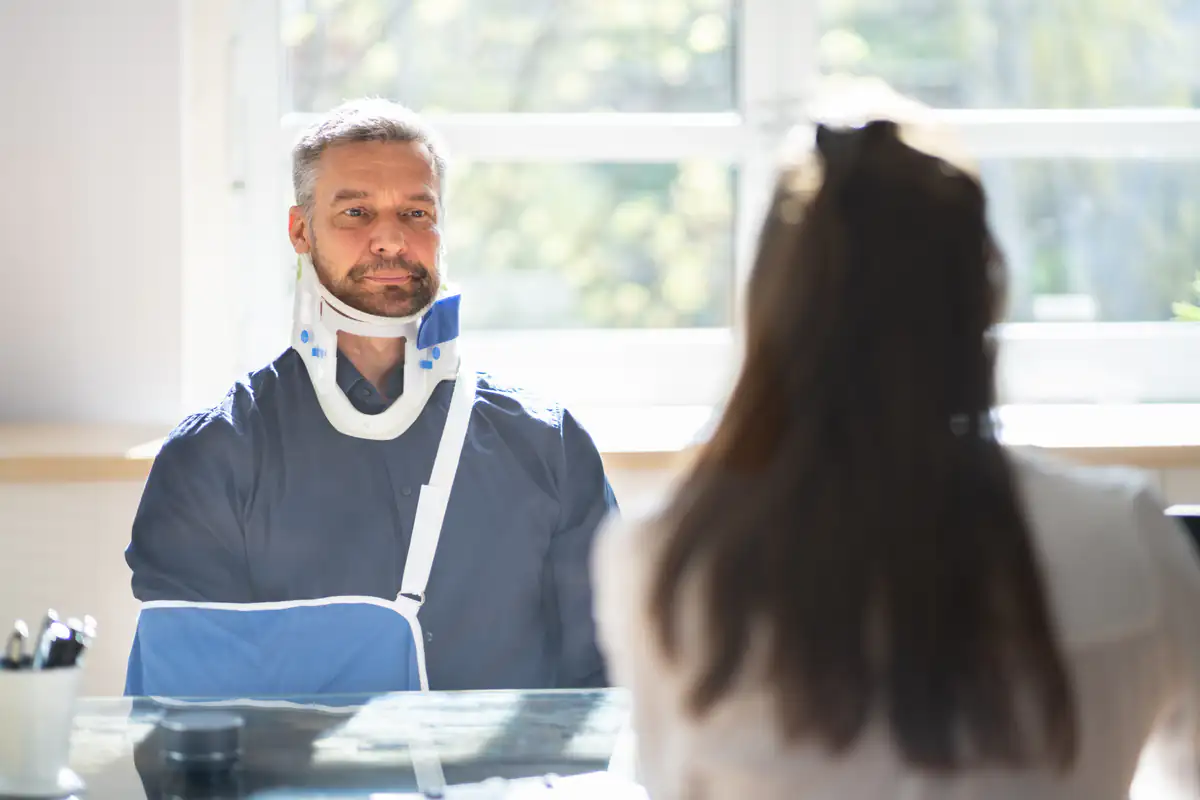
The first step is straightforward: you contact NY Spine Medicine, and we connect you with a qualified workers’ compensation physician quickly. There’s no navigating a hospital system referral process or waiting weeks for an opening. Time matters in workers’ comp both for your recovery and for your claim and our intake process is built around that reality.
Once you’re connected, your initial evaluation is thorough. Dr. Schottenstein’s background in neurology means the assessment goes deeper than a standard physical exam. Work injuries especially the kind that develop over time in professional and commuter settings often have a neurological component that doesn’t show up on a surface-level review. Nerve conduction, radiculopathy, referred pain patterns these get identified and documented accurately from the start. That documentation becomes the foundation of your claim and your defense against an insurer’s independent medical examiner.
From there, treatment is built around your specific injury, not a generic protocol. We exhaust every non-surgical option first minimally invasive procedures like epidural steroid injections, nerve blocks, radiofrequency ablation, and spinal cord stimulation before surgery is ever on the table. Throughout the process, we handle all communication and documentation with your employer and insurer. If you’re a Ridgewood professional who already manages a demanding schedule and a long commute, the last thing you need is to become your own case manager on top of recovering from an injury.

Ready to get started?
Workers’ compensation covers your medical treatment meaning there’s no out-of-pocket cost to you for authorized care. But “covered” doesn’t mean you’re stuck with whoever your employer points you toward. In New Jersey, you have the legal right to choose any authorized workers’ compensation provider. Your employer can direct you to a network within the first 30 days, but after that, you’re free to see any qualified physician. And even within that window, you have choices you’re not required to see a doctor whose loyalty is to your employer rather than to you.
For Ridgewood residents, the injury profile most commonly seen in workers’ comp claims includes spine and nerve conditions, repetitive strain from professional work environments, and acute injuries sustained during commutes or at healthcare facilities like those in the Valley Health System network, which employs thousands of Bergen County residents. These aren’t simple injuries, and they require a physician who can document them with the clinical depth that holds up when an insurance carrier pushes back.
We take a fully interventional and non-surgical-first approach every available minimally invasive option is explored before surgery is ever discussed. We handle all paperwork, insurer communication, and NJ workers’ compensation system documentation on your behalf. With 881 verified Zocdoc patient reviews averaging 4.8 stars, and a physician named to the Best Doctors list ten years running, this is the level of care Ridgewood residents expect from every professional they work with and there’s no reason workers’ comp should be any different.

Yes and this is one of the most important things to understand before you do anything else. In New Jersey, you have the legal right to choose any authorized workers’ compensation provider. If your employer uses a Preferred Provider Organization network, you’ll need to start treatment within that network, but only for the first 30 days. After that, you can switch to any qualified workers’ comp physician you choose.
What this means practically is that you don’t have to see a doctor your employer selects for you, and you don’t have to stay with a provider who isn’t serving your interests. For Ridgewood residents, this right exists regardless of what your employer tells you. If you’ve been injured and you’re being directed to a specific clinic, know that your options don’t end there. Choosing a physician with the right credentials and a clear commitment to your recovery rather than a quick return-to-work clearance can make a significant difference in both your health outcome and your claim.
Ridgewood’s workforce is unusual compared to most New Jersey towns. With roughly 96% of working residents in professional or administrative roles, the injury profile here skews heavily toward ergonomic conditions, repetitive strain, and nerve-related pain rather than the acute physical trauma more common in construction or manufacturing communities. Years of desk work, prolonged commuting on NJ Transit, and the physical demands of healthcare employment at facilities like those in the Valley Health System network all contribute to a distinct pattern of work-related injuries.
Spine and nerve conditions are particularly common in Ridgewood cervical and lumbar radiculopathy, nerve compression, and chronic neck and back pain that developed gradually over years of professional work. These injuries are compensable under workers’ comp but are frequently challenged by insurers because they don’t fit the obvious “accident on a job site” narrative. Having a physician with genuine neurological expertise, not just general pain management training, is what makes the difference in getting these conditions properly diagnosed, documented, and treated. That’s exactly the gap that our dual board certification in neurology and interventional pain management fills.
An independent medical examination, or IME, is an exam requested by the insurance carrier not by you. The doctor who performs it is selected and paid by the insurer, which creates an inherent conflict of interest. IME reports frequently minimize the severity of injuries or conclude that a worker has reached maximum medical improvement before they actually have, which can be used to reduce or deny benefits.
This is where your treating physician’s documentation becomes your most important asset. When your treating doctor’s records are thorough, clinically specific, and authored by someone with verifiable credentials double board certification, a fellowship from Columbia University/NewYork-Presbyterian, a decade of Best Doctors recognition those records carry real weight. They’re harder for an insurer to dismiss than a report from a physician with generic credentials. For Ridgewood professionals dealing with complex spine or nerve conditions, the quality of your treating physician’s documentation isn’t a minor detail. It’s often what determines how your claim resolves.
It can, and more often than people realize. Workers’ compensation in New Jersey covers occupational injuries and illnesses which includes conditions that develop over time as a result of your work environment, not just sudden accidents. Chronic neck and back pain from prolonged computer work, nerve compression from repetitive tasks, and radiculopathy that developed over years of professional employment are all potentially compensable conditions.
The challenge with these injuries is documentation. Because they develop gradually, insurers are more likely to argue that the condition is pre-existing, unrelated to work, or not severe enough to warrant benefits. That argument is much harder to sustain when the treating physician has the neurological training to identify the precise mechanism of injury, document it with clinical specificity, and establish a clear connection between the work environment and the condition. For Ridgewood’s professional workforce where this type of injury is far more common than acute trauma working with a physician who understands both the neurology and the workers’ comp documentation requirements is genuinely important.
As quickly as possible and not just for medical reasons. In New Jersey, you’re required to notify your employer of a work injury within 90 days, but waiting that long is a serious mistake. Delays in treatment create gaps in your medical record that insurers will use to argue your injury isn’t as serious as you claim, or that it wasn’t work-related at all. The sooner you’re evaluated and treated, the stronger your claim documentation from the start.
For Ridgewood residents, this is especially relevant in winter months when slip-and-fall injuries on icy sidewalks, commuter station platforms, and parking areas spike. An injury that happens on a Monday morning rushing to catch the train at Ridgewood Station needs to be evaluated and documented that week not weeks later when you’ve decided it “probably isn’t that bad.” Many work injuries feel manageable at first and worsen over time, particularly spine and nerve conditions. Early evaluation protects both your health and your legal right to benefits.
For most Ridgewood residents, yes and this is a practical point worth knowing. Our office is located at 18 East 48th Street in Midtown Manhattan. If you’re already commuting to New York City via NJ Transit’s Main Line or Bergen County Line out of Ridgewood Station, the office is directly on your existing commute route. You take the train to Hoboken Terminal, connect to the PATH, and you’re in Midtown. For a Ridgewood professional who commutes to the city five days a week, scheduling an appointment doesn’t mean adding a separate trip it can fit into a normal workday with minimal disruption.
This matters because one of the biggest barriers injured workers face is the logistical burden of getting to medical appointments while managing a job, a family, and a recovery. Ridgewood’s direct rail connection to Midtown removes that barrier entirely. Route 17 and Route 208 also provide straightforward driving access for those who prefer to drive, with Route 208’s Maple Avenue exit offering a direct approach from the south through Glen Rock.