

Summary:
You have probably seen the advertising. Regenerate damaged tissue. Heal without surgery. Sometimes with the words stem cells attached, and often with a price that implies a certainty nobody actually has.
Underneath the marketing there is real science, real research, and real clinical use. There is also a wide gap between what has been demonstrated and what gets promised, and that gap is where people spend significant money on things that may not help them.
Here is what regenerative treatments actually are, what the evidence supports today, where the uncertainty sits, and what to ask before agreeing to anything.
What Regenerative Medicine Actually Means Here
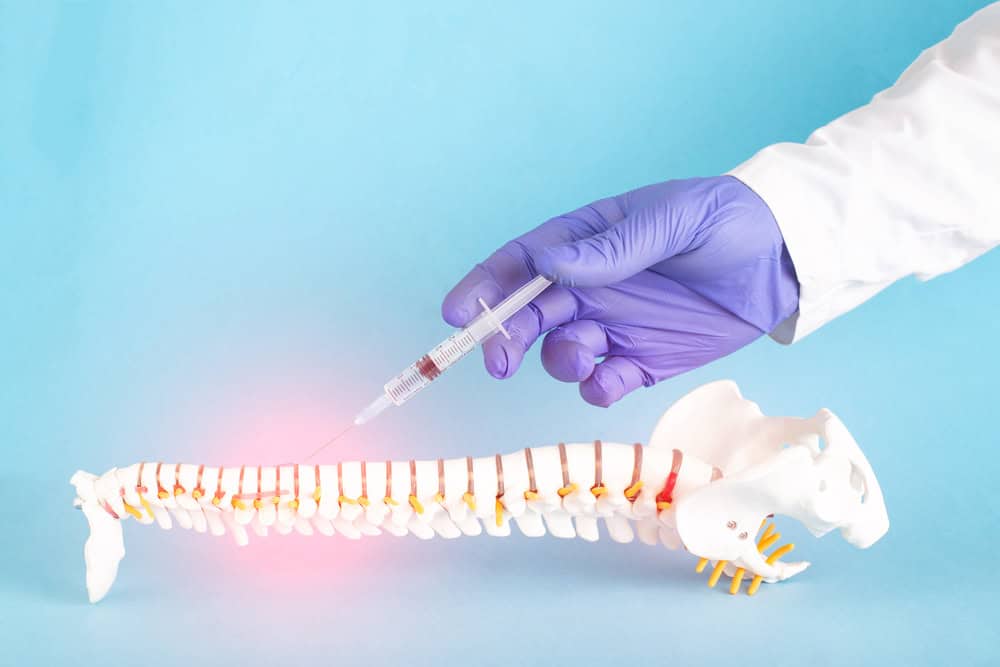
In a pain management setting, regenerative medicine usually means one of a few things. Platelet rich plasma, prepared from your own blood. Bone marrow aspirate concentrate, drawn from your pelvis. Occasionally prolotherapy, which uses an irritant solution rather than biologic material. The shared idea is to influence the healing environment of a tissue rather than simply to block the pain it is producing.
That is genuinely different from how most pain treatments work. A steroid injection reduces inflammation. An ablation interrupts a nerve. These approaches instead attempt to change the biology at the site, using signaling molecules and cells that are already part of your own repair process.
The concept is sound. Whether the execution reliably produces meaningful improvement, in which conditions, and for how long, is exactly what remains under active study. Those are separate questions, and it is worth keeping them separate.
How Is Platelet Rich Plasma Prepared And Used?
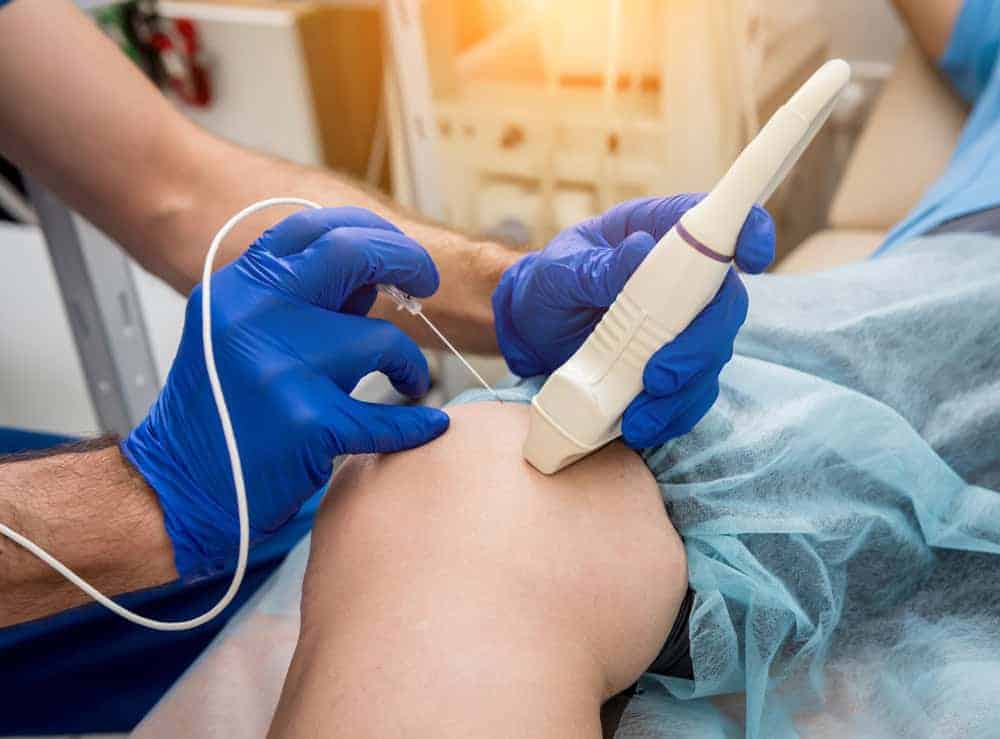
Platelet rich plasma is the most widely used regenerative treatment, and the process is straightforward. Blood is drawn from your arm, spun in a centrifuge to separate its components, and the platelet rich portion is concentrated and then injected into the target area, usually with ultrasound or fluoroscopic guidance.
Platelets are not only for clotting. They carry growth factors, which are signaling proteins involved in tissue repair. The intent is to deliver a higher concentration of those signals to a tissue that has a poor blood supply or that appears stuck in a chronic, incomplete healing state.
That last point explains why certain tissues get targeted more often than others. Tendons, ligaments, and the discs and joints of the spine all have limited blood supply, which is part of why they heal slowly and unpredictably.
The procedure itself is usually done in an office, takes under an hour including preparation, and uses your own blood, which removes the risk of an immune reaction or of disease transmitted from a donor. Soreness at the site for a few days afterward is common and expected, because part of the intent is to provoke a healing response.
One thing that complicates the research is that platelet rich plasma is not a single standardized product. Preparation methods differ. The resulting platelet concentration differs. Whether white blood cells are included differs. Injection technique and the number of treatments differ. Two studies both labeled platelet rich plasma may be testing meaningfully different things, which is one reason results across trials are inconsistent.
Anti inflammatory medications are often paused around the time of the procedure, since the treatment depends on an inflammatory healing response. Your physician will give you specific guidance on that.
What The Evidence Currently Supports, And What It Does Not
This is the section that matters most, and it requires more hedging than a marketing page would prefer.
The clearest supporting evidence sits outside the spine. Lateral epicondylitis, commonly called tennis elbow, is one of the better studied applications, with a number of trials suggesting benefit over time compared with some alternatives. Knee osteoarthritis has been studied extensively, with many trials showing improvement in pain and function, though the results vary and some comparisons are less favorable. Several other tendon problems have promising but mixed data.
For spine conditions specifically, the evidence is earlier and thinner. Research into platelet rich plasma for disc related pain, facet joints, and the sacroiliac joint does exist and some of it is encouraging, but those studies are generally smaller, the methods vary widely, and long term data is limited. Anyone telling you the spine evidence is settled is well ahead of what has actually been shown.
Bone marrow derived treatments have a smaller research base still, with early studies that are interesting rather than conclusive.
There is also an expectation problem worth understanding. These procedures are visible, often paid for out of pocket, and surrounded by optimism, all of which produce real expectation effects, and expectation effects are powerful in pain research specifically. Well designed trials with proper controls are the only way to separate that out, and there are not yet enough of them in every application.
So the fair summary is this. Regenerative treatments are a legitimate area of medicine under genuine investigation, with reasonable support for certain conditions, weaker and earlier support for spine applications, and considerable variability between studies. They are not a cure for anything, they do not reverse degenerative change, and their effect is not guaranteed.
Want live answers?
Connect with a NY Spine Medicine expert for fast, friendly support.
Stem Cell Claims And Why Caution Is Warranted
The phrase stem cell therapy deserves particular care. It is used loosely in advertising and covers products that differ enormously in what they are and how they are regulated.
Treatments using your own bone marrow or fat, minimally processed and used within the same procedure, sit in one regulatory category. Products derived from amniotic tissue, umbilical cord, or placental sources sit in a different one, and many of those have never gone through an approval process establishing that they work. Regulators have acted against clinics making unsupported claims.
Practical guidance: be wary of anyone using stem cell as a general promise, ask what material is being used and where it comes from, and grow more skeptical the more confident the claim sounds. Serious practitioners here tend to be the most careful about what they say.

Who Might Be A Reasonable Candidate, And Who Probably Is Not
Nobody should start here. Regenerative treatment is not a first line option, and it is not a substitute for figuring out what is actually wrong.
The situations where it becomes more reasonable to consider tend to share a few features. There is a clear diagnosis, so the target is known. Conservative care has been tried honestly and has not resolved the problem. Standard interventional options have either been tried, are not appropriate, or would not address the specific issue. And surgery is either not indicated or is something you are reasonably trying to avoid or postpone.
Tendon and joint problems generally have a stronger case than complex spine pain, simply because the evidence is further along. Younger patients with a specific injury tend to be better candidates than older patients with widespread degenerative change, because there is a defined thing to influence.
The situations where it makes less sense matter just as much. Pain with no clear source. Advanced degenerative arthritis where the structure has already changed substantially. Active infection, certain blood disorders, or active cancer, which are typically contraindications. And any situation where a well established treatment exists and has not been tried yet, because reaching for the unproven option first is a strange sequence.
Cost belongs in this conversation honestly. These treatments are frequently not covered by insurance and are paid out of pocket. That is not by itself an argument against them, but it does mean the decision deserves the same scrutiny as any other significant purchase made while you are in pain.
And the usual overriding signs still apply. Progressive weakness, loss of bowel or bladder control, fever alongside back pain, or significant unexplained weight loss are reasons for prompt evaluation, not for scheduling an elective injection of any kind.
Questions To Ask Before Agreeing To A Regenerative Treatment
If you are considering this, a handful of specific questions will tell you a great deal about who you are dealing with.
Ask what the evidence is for your specific condition, not for regenerative medicine in general. The answer should be specific and should include the limitations. A practitioner who cannot describe the uncertainty is either unfamiliar with the literature or is not being straight with you.
Ask what exactly is being injected and how it is prepared. For platelet rich plasma, that means which preparation system is used, roughly what concentration is targeted, and whether white blood cells are included. Vagueness on this point is a warning sign.
Ask how the injection will be guided. Placement matters, and ultrasound or fluoroscopic guidance is the standard for most targets. A blind injection into a joint or near a tendon is considerably less reliable.
Ask what realistic success would look like and how it will be measured. Improvement from these treatments typically develops over weeks rather than immediately, and an honest answer describes a probability and a timeframe rather than a promise.
Ask how many treatments are anticipated, what the total cost will be, and what happens if there is no response at all. Being told in advance that you will need a fixed series regardless of how you respond is a business model rather than a treatment plan.
Ask what the alternatives are, including doing nothing further for now. A practitioner who cannot make a fair case for the other options is not really offering you a choice.
Finally, ask what the plan is if this does not work. Everybody should have an answer to that question. If the only answer is another round of the same thing, be cautious.
None of these questions are hostile. In a field this new, a practitioner who welcomes them is telling you something reassuring, and one who deflects them is telling you something as well.
Deciding Whether Regenerative Treatment Makes Sense For You
The honest takeaway is that regenerative medicine is neither a breakthrough that changes everything nor a scam. It is an emerging area with a genuine scientific basis, real but uneven evidence, and marketing that has run well ahead of what has been demonstrated, particularly where the spine is concerned.
Reframed usefully: treat it as an option to weigh after the diagnosis is clear and the better established approaches have been given a fair try, with realistic expectations and a full understanding of the cost. Not as a first step, and not as a way to skip finding out what is actually wrong.
At NY Spine Medicine, we discuss regenerative options in exactly that context. The starting point is always the diagnosis, built from examination, imaging review, and electrodiagnostic testing where it applies, and we will tell you plainly when the evidence for a treatment is limited rather than letting enthusiasm do the talking.
If you are considering a regenerative treatment and want a candid assessment of whether it fits your situation, call us at 212-750-1155.