

Summary:
The word surgery tends to arrive early in a spine conversation, and usually from the patient rather than the doctor. Somebody at work had a fusion. A relative had a discectomy. You are holding an MRI report full of words like herniation and stenosis, and it reads like a countdown.
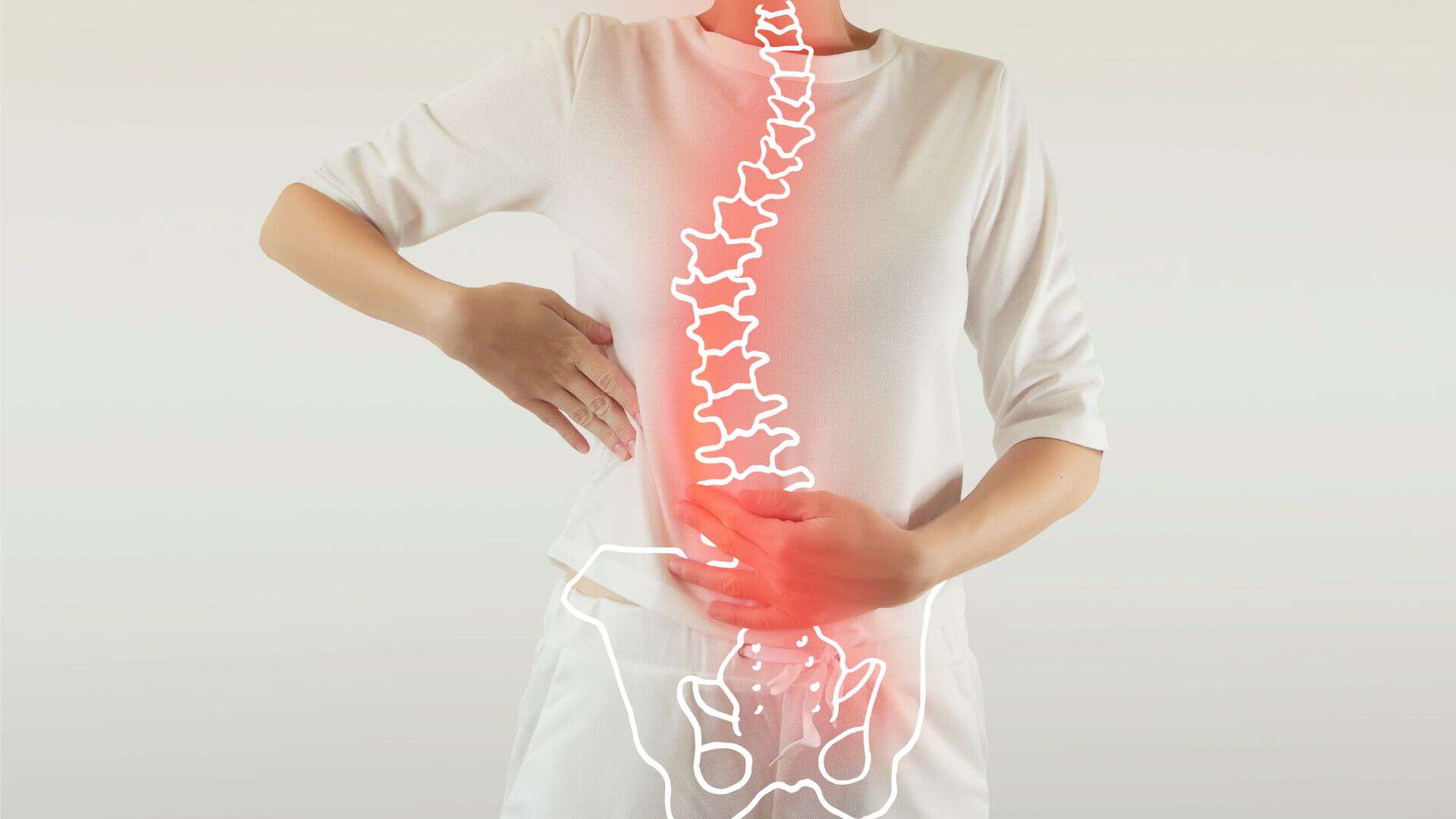
The reality is calmer than that. The large majority of back and neck pain is managed without an operation, and the non surgical options available today are considerably more targeted than a general prescription for rest and pain medication.
Here is what those options actually are, what each one is good at, and how the choice between them gets made at our Brooklyn office.
Most Back And Neck Pain Never Needs An Operation
Most episodes of back and neck pain improve, and most people who have one never need a surgeon. Even findings that sound alarming on a report, such as a disc herniation, often improve over months without one.
That is not a reason to ignore persistent pain. It is a reason not to read a scan as a verdict. Imaging shows anatomy, not pain, and plenty of people have degenerative changes on an MRI while feeling fine.
Surgery has real and specific indications: significant nerve compression with progressive weakness, instability, certain fractures, and structural problems that have not responded to well aimed non surgical care. Outside those, the useful question is which non surgical approach is pointed at the right structure.
A few situations need prompt attention rather than a stepwise plan. New loss of bowel or bladder control, weakness that is worsening, fever with back pain, or pain after significant trauma should be evaluated right away.

What Can Physical Therapy Realistically Fix?
Physical therapy is the backbone of non surgical spine care, and it is also the option people most often dismiss because they tried it once and nothing happened. That is worth unpacking, because a generic program and a targeted one are entirely different things.
What therapy is genuinely good at: restoring range of motion that pain has taken away, rebuilding strength in the deep muscles that support the spine, correcting movement patterns that keep re irritating the same structure, and raising your tolerance so ordinary activity stops provoking symptoms. For mechanical back and neck pain, that covers a great deal of ground.
What it is less good at on its own: pain severe enough that you cannot participate. If a nerve root is inflamed to the point where you cannot get through the exercises, therapy is not failing. It is being asked to work under conditions where it cannot. That is frequently the situation where an injection is used to make therapy possible rather than to replace it.
A meaningful trial usually means several weeks of consistent attendance plus the home program, and the home program is where most of the results actually come from. Two sessions a week with nothing in between rarely changes much.
For neck pain specifically, therapy tends to focus on the deep neck flexors, the muscles between the shoulder blades, and how your workstation is arranged, because sustained positions are usually a bigger contributor than any single injury.
It should be specific to your findings. Ask what the program is targeting and what would count as progress. If nobody can answer that, you are doing exercise rather than physical therapy, and there is a difference.
Image Guided Injections: Epidurals, Facet Blocks, And Nerve Blocks
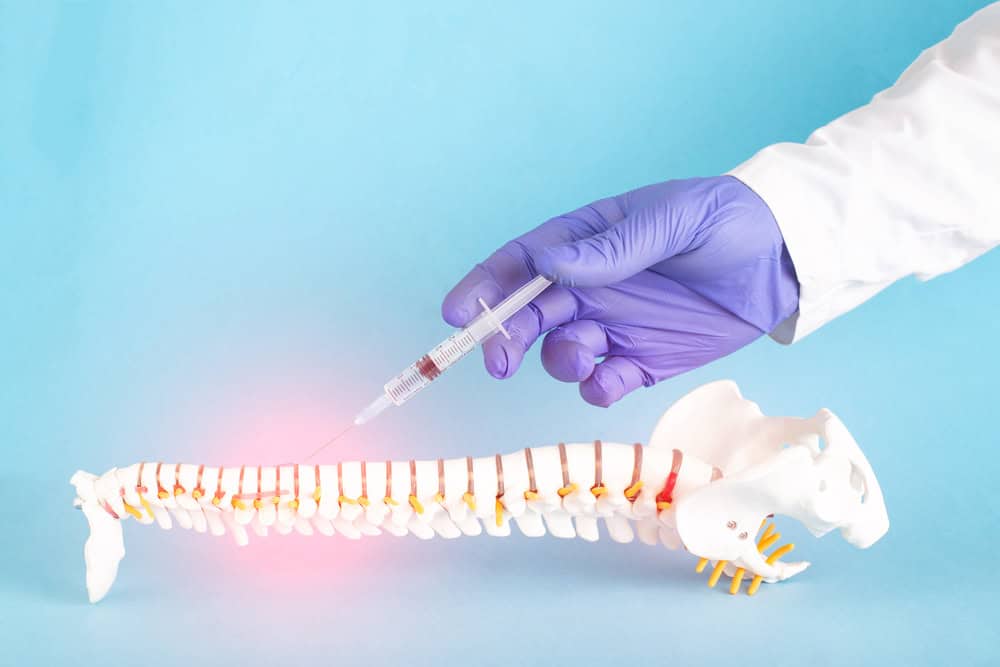
Image guided injections are the interventional part of pain management, and the phrase image guided is not marketing language. It means the physician is using live X ray, called fluoroscopy, to place the needle exactly where it needs to be, with contrast dye confirming the position before any medication is delivered. That precision is the difference between a targeted treatment and a hopeful one.
An epidural steroid injection places anti inflammatory medication into the space around an irritated nerve root. It is the usual approach when a herniated disc or spinal stenosis is producing pain, numbness, or tingling down an arm or a leg. It is performed in an outpatient setting, typically takes under half an hour, and when it works, relief often lasts from several weeks to several months.
A facet joint injection or medial branch block targets the small paired joints at the back of the spine, a common source of pain that worsens with standing, bending backward, or turning. These are often used diagnostically first, to confirm whether that joint really is the source, before anything longer lasting is considered.
A nerve block delivers anesthetic, sometimes along with a steroid, to a specific nerve in order to interrupt pain signaling and confirm that the nerve is involved. Sacroiliac joint injections work on similar logic for pain centered lower down, near the belt line and off to one side.
What none of these do is repair anything structural. They reduce inflammation and interrupt pain, which buys you a window. What you do with that window, usually rehabilitation, is what determines whether the improvement holds.
Want live answers?
Connect with a NY Spine Medicine expert for fast, friendly support.
Radiofrequency Ablation And Longer Lasting Relief
When diagnostic blocks confirm that facet joints are generating the pain, radiofrequency ablation becomes an option. A specialized needle uses controlled heat to interrupt the small medial branch nerves that carry pain signals from that joint. It is an outpatient procedure performed with imaging guidance.
The appeal is duration. Because the nerves themselves are interrupted rather than simply bathed in medication, relief commonly lasts many months rather than several weeks. Those nerves do regenerate over time, so it is not permanent, and the procedure can be repeated when symptoms return.
The catch is that it only works when the target is correct, which is exactly why the diagnostic blocks come first. Ablation performed without confirming the source is closer to a coin flip, and a careful practice will not skip that step.

Where Neck Pain Options Differ From Lower Back Pain Options
Neck pain is not simply back pain located higher up. The cervical spine is more mobile, carries the weight of your head all day, and sits near structures that make certain approaches technically different. So some of the options shift.
The overlap is real. Cervical epidural injections, cervical facet blocks, and radiofrequency ablation of the cervical medial branches all exist and work on the same principles as their counterparts in the lower back. What changes is the technical demand and the way symptoms tend to present.
Symptom patterns are the biggest practical difference. Neck problems commonly refer pain into the shoulder blade, the upper arm, or specific fingers, and people frequently assume they have a shoulder injury when the source is actually the neck. A careful examination sorts that out, and electrodiagnostic testing can confirm whether a nerve is genuinely involved and roughly where.
Headaches complicate the picture as well. Pain originating in the upper cervical joints can produce headaches at the base of the skull that get treated as migraines for years. Not every headache is cervical, but the ones that arrive with neck stiffness and a consistent one sided pattern deserve a look.
Conservative care for the neck also leans harder on daily habits than lower back care does. How you hold your head at a screen, how you sleep, and how many hours you spend looking down matter more here, because the cervical spine spends most of its time under a sustained low grade load rather than an occasional heavy one.
Warning signs for the neck include weakness or clumsiness in the hands, changes in balance or walking, and pain following a collision or a fall. Those are reasons to be seen promptly rather than to wait out another course of stretches.
How To Tell Which Non Surgical Option Actually Fits Your Situation
With that many options on the table, the obvious question is how anyone decides. The honest answer is that the decision is driven by the diagnosis rather than by the menu, which is why a thorough evaluation is worth more than any single treatment on the list.
Three things drive the choice. First, which structure is generating the pain: a nerve root, a facet joint, a sacroiliac joint, a disc, or a muscle and movement pattern problem. Second, how long it has been going on and what has already been tried. Third, how much the pain is limiting what you need to do, which determines how quickly relief needs to arrive.
Pain that radiates below the knee or below the elbow, with numbness or tingling, points toward nerve involvement, and the plan generally starts with therapy and moves toward an epidural approach if symptoms persist. Pain that stays local, worsens with bending backward or standing, and eases when you sit points more toward the facet joints, and that plan is more likely to involve diagnostic blocks.
Pain that is diffuse, worse in the morning, and closely tied to activity level and stress often responds best to a rehabilitation and habit focused plan, where an injection would not have a clear target anyway.
Timelines are worth agreeing on out loud. A reasonable plan states what is being tried, for how long, and what result would prompt a change. Without that, care drifts. People end up eighteen months into an approach that stopped producing results after the first six weeks.
It is fair to ask what a practice does once the non surgical options have been exhausted. A pain management practice that works alongside spine surgeons can tell you honestly when the answer has moved outside its scope, and that willingness is a good sign rather than a worrying one.
One more thing worth saying plainly: none of these options is meant to be a permanent substitute for capacity. The goal is to get you back to loading your spine normally, because a spine that does nothing does not become more comfortable over time.
Starting Non Surgical Care At Our Brooklyn Office
The short version is that surgery is the exception rather than the destination. Most back and neck pain is managed with some combination of targeted rehabilitation, image guided injections aimed at a confirmed source, and adjustments to the loads your spine handles day to day.
Reframed usefully: the question worth asking is not which treatment is best, but which structure is causing this and what is aimed at it. A precise answer to that makes the treatment choice mostly obvious.
At NY Spine Medicine, our Brooklyn office provides evaluation, electrodiagnostic testing, fluoroscopically guided procedures, and physical therapy in one location, so a diagnostic block and the rehabilitation that follows it do not require appointments in three different parts of the city. And when surgery genuinely is the right answer, we will tell you that too.
If you are dealing with back or neck pain and want to understand your non surgical options, call us at 212-750-1155.