
Summary:
Most people who search this question are not looking for a biology lesson. They want to know whether what they are feeling is serious, whether it is going to get better, and what they should do this week.
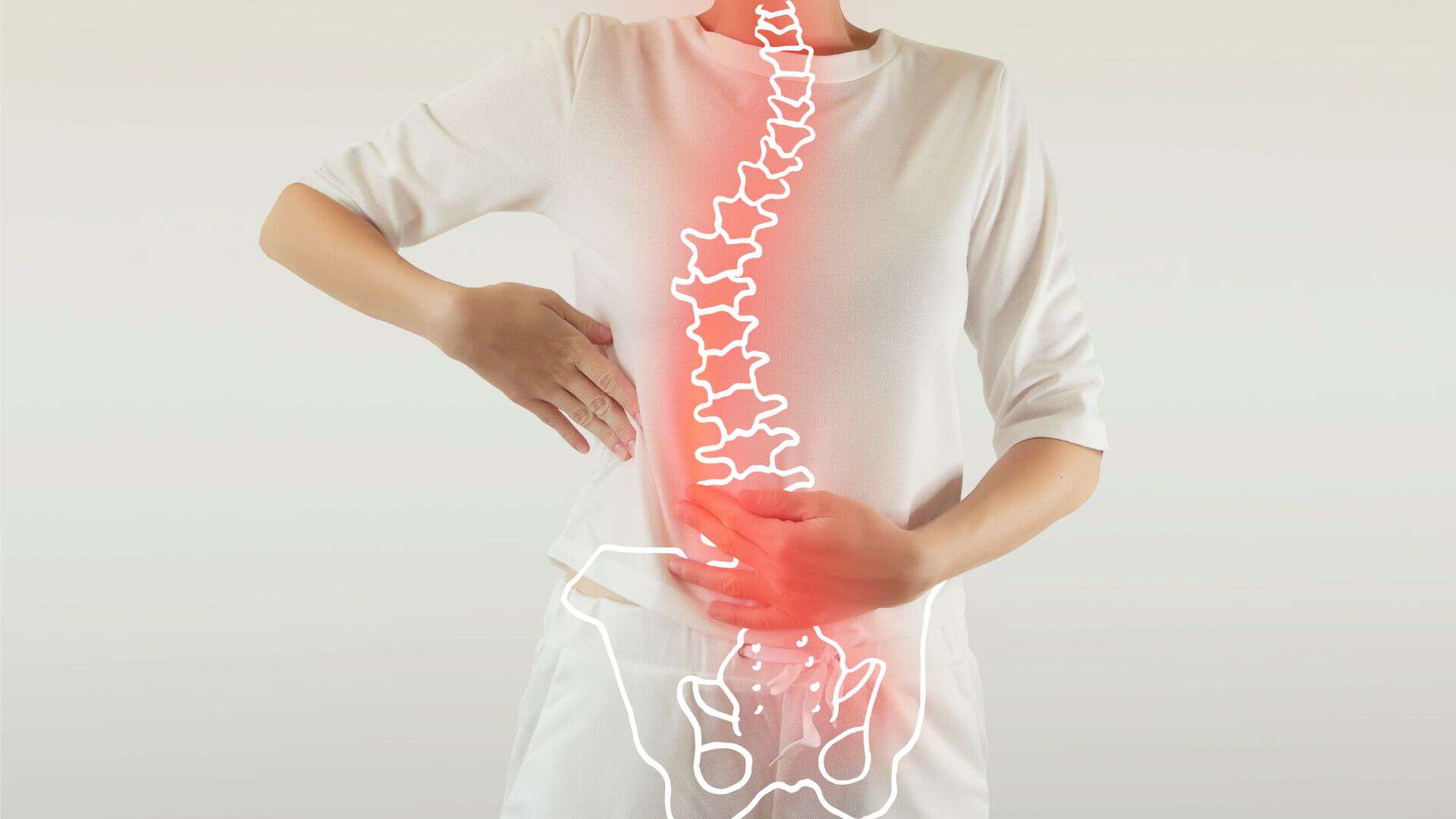
The honest answer is that lower back pain has a long list of possible sources, and the good news buried in that list is that the large majority of them are not dangerous and do improve. The work is figuring out which structure is generating your particular pain, because muscular strain, an irritated disc, an inflamed facet joint and a compressed nerve root all need different handling.
Here is how that gets sorted out, and what you can notice yourself before you ever sit down with a doctor.
The Most Common Sources Of Lower Back Pain
Muscular and soft tissue strain is the single most frequent cause. It usually follows something identifiable, a heavy lift, an awkward twist, a long drive, a weekend of moving furniture, and it tends to feel like a broad ache with spasm across the low back that eases with movement and worsens after sitting still.
Discs are the next major category. A disc can become painful when its outer wall is irritated, or it can herniate and press on a nearby nerve root, which is what most people mean when they say sciatica. Facet joints, the small paired joints at the back of each spinal level, generate pain that is often worse when you lean backwards or twist. The sacroiliac joints, where the spine meets the pelvis, produce pain low and slightly off to one side, right around the belt line. Spinal stenosis, more common with age, crowds the nerves and typically shows up as leg symptoms with walking.

Is My Pain Coming From Muscle, Disc, Joint Or Nerve?
Muscular pain tends to be diffuse. You can rarely point to it with one finger, it covers an area rather than a spot, and it often feels tight or gripping. It usually responds to gentle movement, heat and time, and it improves noticeably over one to three weeks. It does not typically travel below the knee, and it does not usually come with numbness or true weakness.
Disc related pain often behaves differently. It tends to be worse with sitting, bending forward, coughing or sneezing, and better when standing or walking. When a disc is pressing on a nerve root, the pain frequently runs into the buttock and down the leg in a defined line, sometimes to the foot, and it can bring pins and needles, numbness or a heavy feeling in specific muscles. That distribution is a valuable clue, because different nerve roots supply different territories.
Facet joint pain is usually more localized, sitting to one or both sides of the spine, and it characteristically worsens with extension. Standing for a long time, arching backwards, or rolling over in bed can set it off, and it often eases when you bend forward or sit. Sacroiliac pain sits lower still, often described by pointing directly at one spot just below the belt line, and it can be aggravated by climbing stairs or getting out of a car.
Stenosis has its own signature. Instead of pain at rest, people describe heaviness, cramping or burning in both legs that comes on after walking a certain distance and reliably settles when they sit down or lean forward over a counter or shopping cart. That relief with flexion is so characteristic that many patients notice it themselves before anyone explains it to them.
How The Pattern Of Your Pain Points Toward Its Actual Cause
When you see a physician about your back, most of the diagnosis comes from the story, not the scan. What makes it worse and what makes it better may be the two most informative questions in the whole encounter. Pain that improves when you lean forward and worsens when you arch back suggests a different structure than pain that behaves the other way round.
Timing matters as well. Pain that is worst first thing in the morning and loosens up within half an hour reads differently from pain that builds through the day with activity, and both read differently from pain that wakes you at night for no clear reason. Night pain that is unrelated to position, especially with fever, unexplained weight loss or a history of cancer, is a signal to be evaluated promptly rather than watched.
Where the pain travels is the next major clue. Pain confined to the back itself points toward local structures such as muscle, facet joints or the sacroiliac joint. Pain that runs in a narrow band down the leg, particularly below the knee, raises the likelihood that a nerve root is involved. Pain in both legs brought on by walking distance points toward stenosis. Vague pain that wanders around the buttock and thigh without a clear line is very often referred pain from a joint rather than true nerve compression.
Then there are the signals that override everything else. Weakness that is progressing, numbness in the groin or inner thighs, loss of bowel or bladder control, fever with back pain, or a significant new injury such as a fall or a car accident all mean you should be seen without delay. These are uncommon, but they are the reason nobody should simply wait out symptoms that are changing quickly.
Want live answers?
Connect with a NY Spine Medicine expert for fast, friendly support.
Why Lower Back Pain Often Has More Than One Cause
It is tempting to hunt for the one culprit, and sometimes there is one. Frequently, though, several things are contributing at once. A stiff hip changes how your lower back moves. Weak deep abdominal and gluteal muscles leave the spine doing work it was not designed to do alone. An old disc problem can settle down while the facet joints at the same level, now carrying more load, become the new source of pain.
This is why treatment that addresses only one layer often gives partial relief. An injection can calm an inflamed structure, but if the movement pattern that overloaded it never changes, the pain tends to find its way back. The most durable plans usually pair something that reduces the pain now with something that changes the mechanics over the following months.
What A Thorough Lower Back Evaluation Actually Involves
A proper evaluation starts with a detailed history. When it began, what you were doing, how it has changed, what you have already tried, what your work and daily life demand of you, and whether anything about it is getting worse. Workers compensation and auto injury cases add another layer, because the timeline and mechanism of injury need to be documented carefully as well as understood clinically.
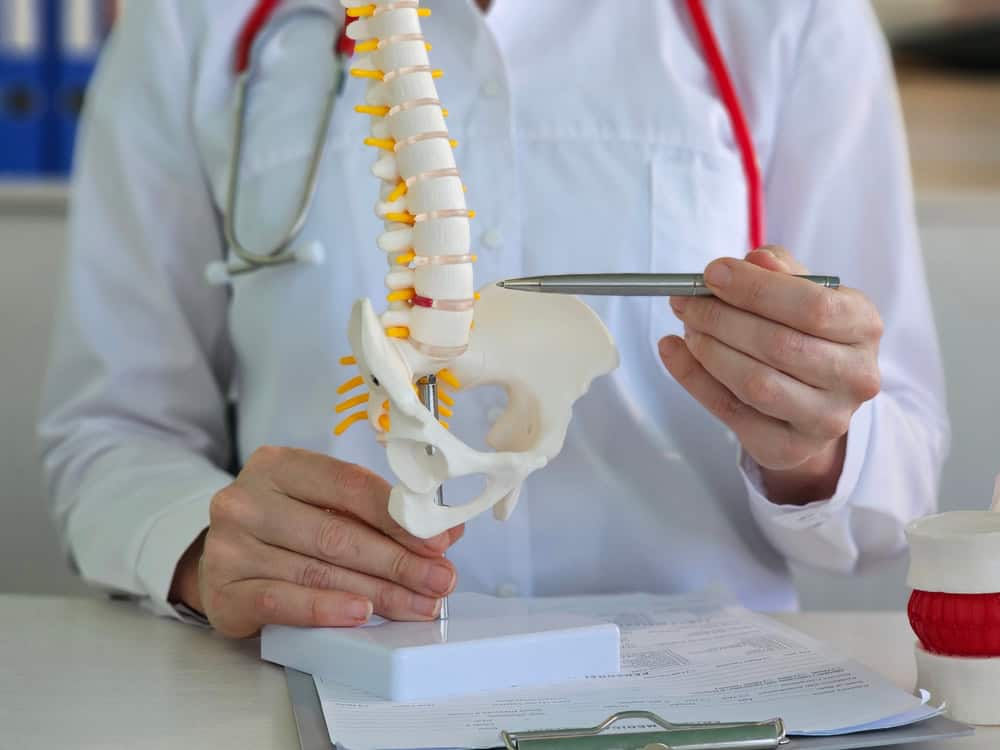
The physical examination follows. Your physician will watch how you move, test your strength in specific muscle groups, check your reflexes and sensation, and use positional tests that load one structure while sparing another. Straight leg raising, extension based maneuvers and sacroiliac provocation tests each stress different tissue, and the combination of what hurts and what does not narrows the field considerably.
Imaging comes after that, and only when it will change something. X-rays show alignment, fractures and joint changes. An MRI shows discs, nerve roots and the spinal canal, which is why it is ordered when nerve involvement is suspected or when symptoms are not settling as expected. It is worth remembering that disc bulges and degenerative changes appear commonly in people with no pain at all, so imaging is interpreted alongside the examination rather than in place of it.
When symptoms suggest nerve involvement but the picture is not clean, electrodiagnostic testing such as EMG and nerve conduction studies can show whether a nerve is genuinely irritated or damaged, and roughly where. Occasionally the most informative test is a diagnostic injection. If numbing a specific facet joint or nerve reliably takes the pain away for the duration of the anesthetic, that is direct evidence about the source.
Treatment Options Once You Know Where The Pain Is Coming From
For most people, the first phase is conservative and it works. Staying reasonably active rather than resting in bed, modifying the specific activities that provoke the pain, and starting structured physical therapy aimed at the actual problem, not a generic handout, resolves a large share of lower back pain within weeks. Physical therapy for a disc related problem looks different from therapy for stenosis, which is one reason a specific diagnosis pays off.
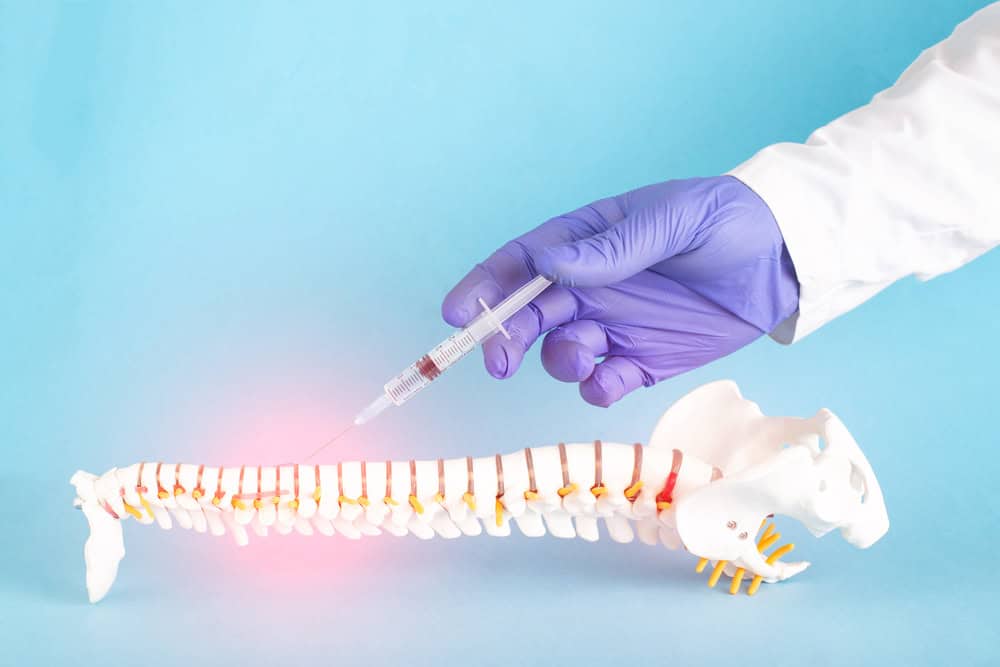
When pain persists despite that, or when nerve symptoms are limiting what you can do, targeted interventional options come into play. An epidural steroid injection delivers anti inflammatory medication directly around an irritated nerve root, and it is performed under live X-ray guidance so the medication reaches the precise level involved. For facet joint pain, a diagnostic block confirms the source first, and if the response is clear, radiofrequency ablation can interrupt the pain signal from those joints for a considerably longer stretch.
Sacroiliac joint pain has its own injection approach. Compression fractures in the setting of osteoporosis may be addressed with kyphoplasty. Persistent nerve pain that has not responded to other measures is sometimes managed with spinal cord stimulation, usually after a trial period so you can judge the benefit before committing. Regenerative treatments are also discussed with appropriate candidates, with a realiztic account of what is and is not established.
Surgery is genuinely necessary for a minority of patients, and a good interventional practice should be honest about when you have crossed into that territory. Progressive neurological deficit, an unstable spine, or severe symptoms that have not budged after a well executed non surgical plan are the usual reasons. For most people, the sequence never gets that far.
Getting Real Answers About Your Lower Back Pain
The useful takeaway is that lower back pain is a symptom, not a diagnosis, and the value of an evaluation lies in turning it into something specific. Muscle, disc, facet joint, sacroiliac joint and nerve all hurt in recognizably different ways, and once the source is clear the treatment becomes far more targeted than rest and hope. Most people improve, and most improve without surgery.
At NY Spine Medicine, we approach this diagnostically first. Our physicians combine a detailed examination with imaging, electrodiagnostic testing when it is warranted, and diagnostic blocks when the source is genuinely unclear, so that treatment is aimed at something identified rather than assumed. Because interventional pain management and physical therapy are both offered in house at our Manhattan and Brooklyn offices, the plan can move between calming the pain and rebuilding the mechanics without gaps in care. We also handle workers compensation and auto injury cases directly.
If your lower back pain has outlasted your patience, or you simply want to know what is actually going on, call us at 212-750-1155 to schedule an evaluation.