
Summary:
The advice most people get about arthritis is some version of learn to live with it. That is a discouraging thing to hear at fifty five, and it is not accurate. Joint damage may be permanent. The pain and the lost function usually are not fixed quantities.
What complicates the picture is that arthritis pain fluctuates on its own, which makes it easy to credit whichever treatment you happened to start last week. Sorting out what genuinely helps takes a little structure and a little patience.
Here are the approaches that carry the most weight for arthritis pain, roughly in the order a pain specialist in New York City would consider them.
Knowing Which Kind of Arthritis You Are Actually Treating
Osteoarthritis is the common one. Cartilage thins over years, the joint surfaces change, and the surrounding structures get irritated. It usually affects knees, hips, hands, and the small facet joints of the spine, and it typically hurts more with use and eases with rest, though it stiffens up if you sit too long.
Inflammatory arthritis, including rheumatoid and psoriatic arthritis, is a different disease with a different treatment path. The clues are morning stiffness lasting more than an hour, swelling in several joints, symmetry between sides, and sometimes fatigue or fever. That pattern belongs with a rheumatologist, because medications that alter the disease course are the priority and symptom control alone is not enough.
The distinction matters more than any technique below. Everything here is aimed primarily at osteoarthritis and the joint pain that comes with it.
How Do Movement and Strength Training Change Arthritis Pain?
If one intervention has the strongest support across arthritis of the knee and hip, it is exercise. That surprises people who assume a worn joint should be rested, and the logic is worth understanding, because believing it is what gets you to actually do it.
Cartilage has no blood supply of its own. It is nourished by joint fluid, and movement is what circulates that fluid. A joint that does not move gets stiffer and more painful rather than more protected. Meanwhile the muscles that unload the joint weaken, so the joint absorbs more of the force with every step you take.
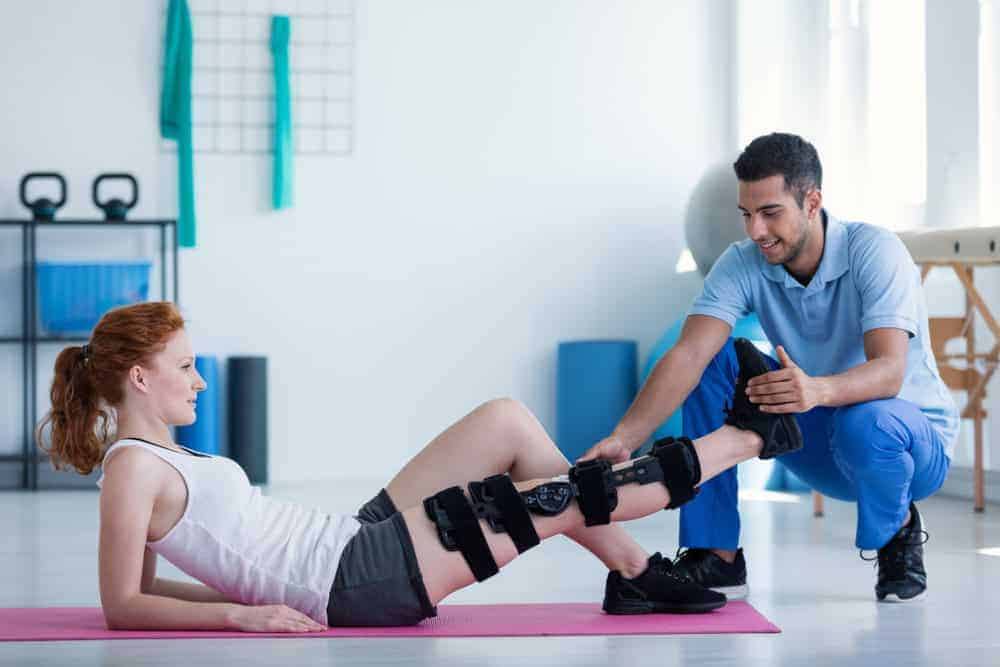
Strengthening the muscles around an arthritic joint is the single most useful thing most patients can do. For knees that means the quadriceps and hip muscles. For hips, the glutes. For arthritic facet joints in the spine, the deep trunk muscles along with hip mobility. The effect is not subtle, and it accumulates over weeks rather than days.
Low impact aerobic work matters too. Walking, cycling, swimming, and pool exercise keep joints moving while limiting peak loads. Pool work is particularly useful early, when land based exercise is still too provocative, and it is available at plenty of facilities around New York City.
Expect mild discomfort during and after. The working rule most therapists use is that soreness settling within a day is acceptable, and pain clearly worse for two or three days means the dose was too high. Adjust the dose rather than stopping.
The main failure point is not intensity, it is consistency. Two months of moderate steady work beats two weeks of ambitious work followed by quitting, every single time.
Medication and Topical Treatments, and Their Honest Limits
Medication has a genuine role in arthritis and a smaller one than most people hope. It manages symptoms so you can do the things that actually change your trajectory. It does not slow joint degeneration.
Topical anti inflammatories are underused and worth asking about, particularly for knees and hands, because a joint close to the skin surface can be treated with far less systemic exposure than a pill involves. For many patients that is a better first choice than an oral drug.
Oral anti inflammatories do work, and their risks scale with age, dose, and duration. Stomach, kidney, blood pressure, and cardiovascular considerations all matter, and they matter more if you take them daily for years, which is exactly what people drift into. Acetaminophen is gentler on those fronts and generally less effective for arthritis pain. Both belong in a conversation with your physician rather than being managed indefinitely from the pharmacy aisle.
Supplements come up constantly. Some patients feel better taking them and the overall evidence is unimpressive. They are not dangerous for most people, though they are not regulated the way medications are and some interact with blood thinners, so mention what you take.
Opioids are a poor fit for long term arthritis pain. They do not outperform other options over time, their risks grow with duration, and they tend to reduce activity, which is the opposite of what helps here.
Heat, cold, and bracing are simple and routinely dismissed. Heat before activity, cold after a flare, and an appropriate brace or a cane used on the correct side can genuinely change what a day feels like.
Want live answers?
Connect with a NY Spine Medicine expert for fast, friendly support.
Injections for Arthritis Pain: What NYC Specialists Use and When
Injections are the next step when exercise and medication are not enough, and they serve two purposes that are easy to confuse. Some are for relief. Others are diagnostic, telling your physician which structure is generating the pain before a longer term treatment gets planned.
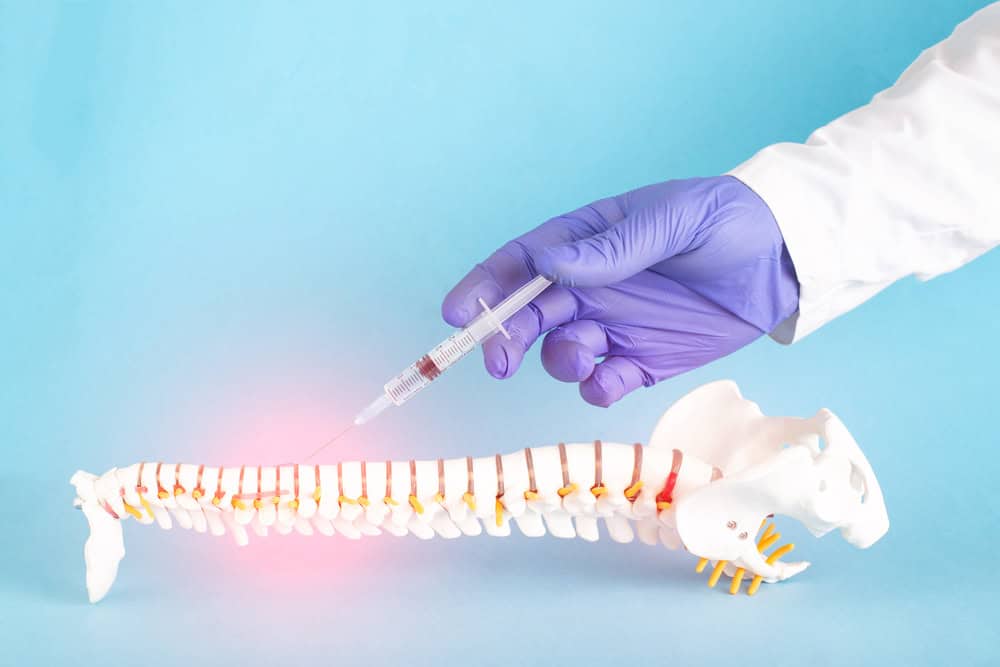
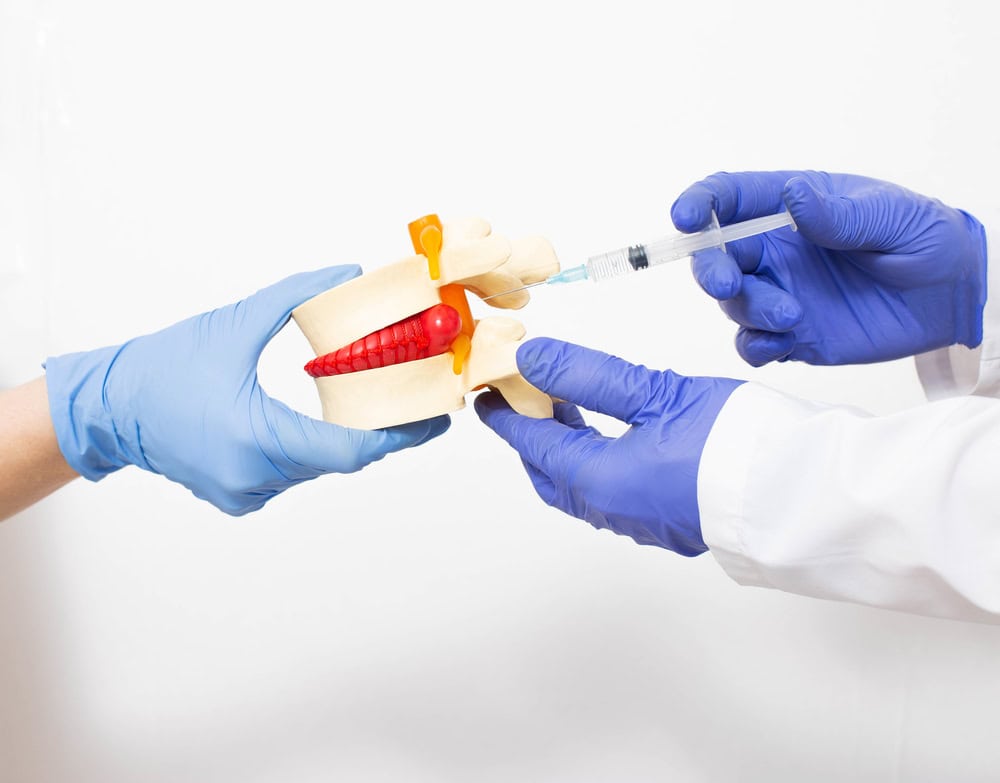
Corticosteroid injections into an arthritic knee, hip, shoulder, or spinal facet joint reduce inflammation, and relief commonly lasts anywhere from several weeks to several months. They are repeated with care rather than on demand, since frequent steroid injections into the same joint are not harmless. Hyaluronic acid injections are used for some knees, with mixed evidence and reasonable results in selected patients. For spinal arthritis, image guided facet injections and medial branch blocks are standard, and fluoroscopic guidance is what separates a precise injection from a hopeful one.
Radiofrequency Ablation and Nerve Targeted Options for Joint Pain
When a spinal facet joint is confirmed as the source of pain, radiofrequency ablation becomes an option. The idea is straightforward. The small medial branch nerves that carry pain signals from that joint are heated with a specialized needle, which interrupts the signal.
The confirmation step matters and should not be skipped. Before ablation, a physician performs diagnostic medial branch blocks, numbing those nerves temporarily. If your pain drops substantially and predictably afterward, the joint is the likely culprit and ablation is worth considering. If it does not, ablation is unlikely to help, and you have avoided an unnecessary procedure.
The procedure is done in an outpatient setting with fluoroscopic guidance and usually takes under an hour. Most people are sore for a few days and back to normal activity fairly quickly. Relief, when it works, often lasts several months to a year or more, because the nerves gradually regenerate, and it can be repeated when symptoms return.
Genicular nerve blocks and ablation for knee arthritis apply the same principle to the small nerves around the knee, and they are increasingly used for patients who are not surgical candidates or who want to delay a joint replacement.
These are not cures and nobody should describe them that way. They interrupt a pain signal from a joint that is still arthritic, which is frequently exactly what someone needs in order to get back into an exercise program. Pairing ablation with strengthening tends to produce better and longer lasting results than the procedure on its own.
Weight, Sleep, Footwear, and the Daily Habits That Move the Needle
The daily inputs get far less attention than procedures, and over the course of a year they do more work than most patients expect.
Body weight is the uncomfortable one, and it deserves a plain explanation rather than a lecture. Every pound of body weight multiplies across the knee with each step, so modest weight loss produces a disproportionate reduction in joint load. Even a small change is worth having, and it becomes easier once pain is better controlled, which is one more reason the sequence of treatment matters.
Sleep matters because poor sleep lowers your pain threshold. A stretch of bad nights makes the same joint hurt more during the same amount of activity, and people routinely blame the arthritis for what is partly a sleep problem.
Footwear is genuinely important in New York City, where you walk more than you think. Cushioned, supportive shoes that actually fit reduce impact through the knees and hips across thousands of steps a day. That is not a small effect when your commute includes a mile of pavement and two flights of subway stairs.
Activity pacing prevents the pattern nearly every arthritis patient recognizes. A good day leads to doing everything you have put off, which leads to three bad days. Spreading the work across the week produces a higher average, even though it feels less satisfying at the time.
Assistive tools deserve less resistance than they get. A cane used in the hand opposite the painful knee or hip meaningfully reduces load. A rolling cart changes what a grocery trip costs you. Nobody still walking their own errands at eighty regrets having used the cane at sixty five.
Finally, some symptoms are not arthritis. A hot, swollen, exquisitely painful joint with fever needs urgent evaluation, and so does a joint that gives way, locks, or changes suddenly after a fall.
Building an Arthritis Pain Plan That Fits Your Life in NYC
The real takeaway is that arthritis care works best as a stack rather than a search for one answer. Movement and strength at the base, sensible symptom control on top of it, injections when they are needed to keep you participating, and nerve targeted options for a confirmed pain source when the earlier layers are not enough on their own.
The most useful reframe is to judge every treatment by what it lets you do rather than by how it feels for a week. If an injection buys you three months in which you build real strength, it was valuable. If it buys three months of doing nothing, you will be in the same position when it wears off.
At NY Spine Medicine, our Manhattan and Brooklyn offices provide image guided injections, radiofrequency ablation, and in house physical therapy, which means the procedure and the rehabilitation that makes it last are planned by the same team rather than negotiated across two practices.
If arthritis pain is deciding what your weeks look like, call us at 212-750-1155 and we will help you build a plan.