
Summary:
Sciatica gets used loosely. People say it about any pain in the lower back and any ache in the leg, and that vagueness costs patients time, because the treatment that helps depends completely on why the nerve is unhappy in the first place.
Real sciatica has a signature. It follows a nerve. It runs down the back or the side of one leg in a line you could almost draw, and it behaves in ways ordinary muscle pain does not, worse when you sit, worse when you sneeze, sometimes better when you walk.
If that sounds like what you have been living with, here is what the symptoms mean, what causes them, and what the treatment options actually look like for patients in New York City.
What Sciatica Actually Is, and What It Is Not
Sciatica is not a diagnosis. It is a description of a symptom pattern, pain radiating along the sciatic nerve, which forms from nerve roots in the lower spine and runs through the buttock and down the back of the leg toward the foot.
That distinction matters more than it sounds. Telling a physician you have sciatica tells them where the problem shows up, not what is causing it. Two patients with identical leg pain can have completely different underlying problems, and giving them the same treatment means one gets better and the other loses three months.
The useful question is always one level deeper. What is touching the nerve, where along its path, and how much? Answering that is what turns sciatica from a frustrating label into a treatable condition.

What Do the Symptoms of Sciatica Feel Like?
The pain itself is usually described in electrical terms. Sharp, shooting, burning, like a hot wire running down the leg. It is typically on one side, and it follows a path rather than sitting in one spot. Some people feel it mostly in the buttock, others mostly in the calf or along the outside of the foot, depending on which nerve root is involved.
Position changes things. Sitting is often the worst, because sitting raises pressure inside the lumbar discs. Standing up from a low chair or a car seat can be brutal. Coughing, sneezing, or straining tends to send a jolt down the leg, which is a fairly specific sign that a nerve root is being compressed rather than a muscle being strained.
Numbness and tingling frequently travel with the pain, usually in a patch rather than the whole leg. A numb outer calf and top of the foot points to one nerve root. Numbness along the back of the calf and the sole points to a different one. Physicians use those maps to predict which level of the spine is involved before any imaging is ordered.
Weakness is the symptom that changes the urgency. Difficulty lifting the front of your foot, so that it slaps or catches when you walk, or trouble pushing off with your toes, means the nerve is not merely irritated but is losing the ability to do its job. That is worth reporting immediately rather than at your next scheduled visit.
What sciatica usually is not is two sided. Pain shooting down both legs, especially with any change in bowel or bladder control or numbness in the groin and saddle area, is a different and far more urgent picture, and it belongs in an emergency department rather than an office.
What Causes the Sciatic Nerve to Become Irritated in the First Place
The most common cause is a lumbar disc herniation. The disc between two vertebrae develops a tear in its outer wall, and inner disc material pushes out and presses against a nerve root as it exits the spine. Part of the pain is mechanical pressure, but a large part is chemical, because disc material is inflammatory and irritates the nerve on contact.
Spinal stenosis is the second common cause, and it behaves differently. Here the canal, or the openings where nerves exit, have narrowed over years from arthritis, thickened ligaments, and loss of disc height. Stenosis-related sciatica tends to be worse with standing and walking and better with sitting or leaning forward over a shopping cart, close to the opposite of disc-related sciatica.
Spondylolisthesis, where one vertebra slips forward on the one beneath it, can narrow the space a nerve root travels through and produce the same leg symptoms. So can degenerative changes in the facet joints that crowd the exit.
Piriformis syndrome gets discussed often and is less common than the internet suggests. The sciatic nerve passes near or through the piriformis muscle deep in the buttock, and in some people tightness there irritates the nerve. It is a real entity, but it is diagnosed after spinal causes have been considered, not instead of them.
Less common causes deserve mention because missing them is costly. A vertebral fracture, a spinal infection, or a tumor pressing on nerve tissue can all present as leg pain. These are rare, and they are exactly why a proper evaluation asks about fever, cancer history, unexplained weight loss, and recent trauma rather than jumping straight into a stretching program.
Want live answers?
Connect with a NY Spine Medicine expert for fast, friendly support.
How Sciatica Is Diagnosed at a New York City Spine Practice
The exam does most of the work. A physician will check reflexes, test strength in specific muscle groups, map where sensation has changed, and use positional tests such as the straight leg raise, which reproduces radiating pain when a nerve root is compressed. The pattern of findings usually predicts the level involved.
Imaging comes next, when it will change something. An MRI shows discs, nerve roots, and the size of the canal, which is what you need before considering an injection or surgery. Ordering it in week one is usually premature, since most sciatica improves anyway.
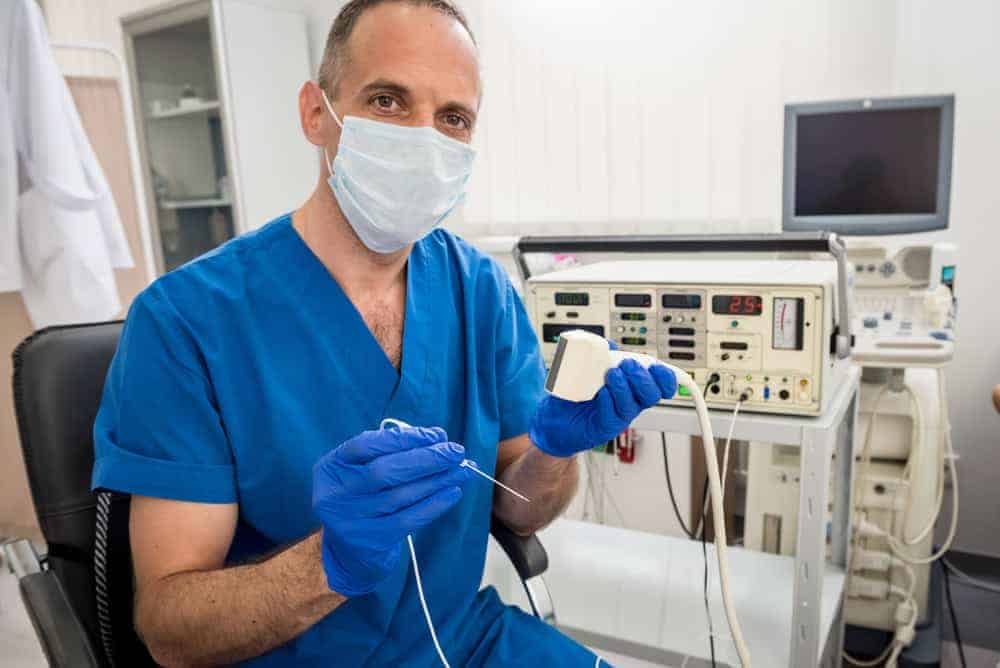
Electrodiagnostic testing, meaning EMG and nerve conduction studies, is useful when symptoms do not match the imaging, or when a peripheral nerve problem might be masquerading as sciatica. It measures how nerves function rather than how they look.

Conservative Treatment Options That Help Most Sciatica Patients
The reassuring part of sciatica is that most cases resolve without any procedure. Inflammation around the nerve settles, herniated disc material often shrinks over time, and symptoms recede across weeks to a few months. That is the expected course, and treatment during that window is aimed at keeping you functional while it happens.
Physical therapy is the backbone. A good program does more than stretch a hamstring. It works on directional preference, finding the movements and positions that pull your pain back toward the spine and away from the foot, then builds core and hip strength so the segment is better supported. Therapists also correct the habits that keep aggravating it, particularly how you sit and how you lift.
Activity modification is not rest. Walking is usually good for disc-related sciatica even when it is uncomfortable at first. Prolonged sitting is usually the thing to interrupt. If your job has you at a desk in Midtown for nine hours, the practical intervention may be a schedule of standing breaks rather than anything clinical.
Medication plays a supporting role. Anti-inflammatories can reduce the chemical irritation around the nerve, and physicians sometimes use a short course of oral steroids during an acute flare. Nerve-specific medications are used in selected cases. All of it is managed individually, and the purpose is to make movement possible rather than to be the treatment on its own.
The honest caveat is that conservative care has a timeline. If six to eight weeks of consistent therapy has not moved the needle, or if symptoms are worsening rather than plateauing, continuing the same plan out of stubbornness is not a neutral choice. That is the point to escalate the workup.
When Sciatica Needs Injections, Surgery, or Urgent Evaluation
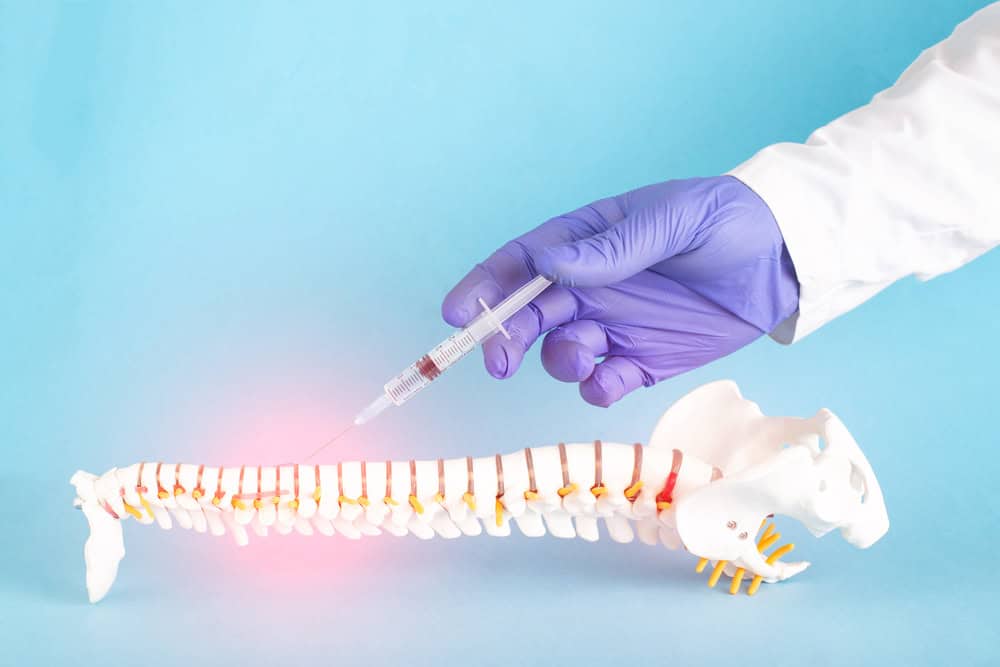
Epidural steroid injections are the usual next step when conservative care stalls. Steroid is delivered under live X-ray guidance into the epidural space near the affected nerve root, reducing the inflammation that generates much of the pain. For many patients it does not simply relieve symptoms, it makes physical therapy tolerable enough to finally work.
Selective nerve root blocks serve double duty. When imaging shows changes at more than one level, an injection targeted to a single root can confirm which one is actually responsible, information that matters a great deal if surgery is ever discussed.
Surgical referral becomes appropriate in a minority of cases. A microdiscectomy, which removes the fragment of disc pressing on the nerve, has a well established role for patients with confirmed compression, matching symptoms, and pain that has not responded to a fair trial of everything else. For stenosis, decompression addresses the narrowing directly. Most people with sciatica never need either one.
Three situations skip the queue entirely. Progressive weakness in the leg or foot means the nerve is losing function and should be evaluated within days, not weeks. Loss of bowel or bladder control, numbness in the saddle region, or new symptoms down both legs can indicate cauda equina syndrome and require an emergency department immediately. Fever with back and leg pain, or back pain after significant trauma, also needs prompt imaging.
Pain severity alone, oddly enough, is not the deciding factor. Sciatica can be excruciating and still resolve completely with time. What drives the decision is whether the nerve is losing function, whether the pattern is worsening, and how long you have already given the conservative route.
The other consideration in New York City is practical. Long commutes, subway stairs, and desk work all pull against recovery, and a plan that ignores how you actually spend your day tends to underperform. Treatment should account for that rather than assume you can rest for a month.
Finding Real Relief From Sciatica in New York City
If there is one thing to take from this, it is that sciatica is a symptom with several possible causes, and the treatment that helps one cause can be useless for another. The goal of a good evaluation is not to confirm you have sciatica, which you probably already suspect. It is to determine what is compressing the nerve, at what level, and how much time you have.
At NY Spine Medicine, our Manhattan and Brooklyn offices are built around that sequence. We evaluate the nerve clinically, use EMG and nerve conduction testing when the picture is ambiguous, perform image-guided epidural and selective nerve root injections when they are warranted, and keep physical therapy in house so the rehabilitation that protects your result is coordinated rather than outsourced. When surgery is genuinely the right answer, we will tell you that as well.
If leg pain has been running your life for more than a few weeks, call us at 212-750-1155 and we will help you find out what is actually causing it.