
Summary:
If you’ve had a spinal injection before and felt great for a few months, only to end up back in pain, you’re not imagining things, and the injection didn’t fail you. What likely happened is that the injection did exactly what it was supposed to do. It reduced the inflammation around the affected nerve. It gave you relief. But without a structured plan to address the underlying weakness and movement patterns that contributed to the problem in the first place, the pain had nowhere to go but back.
That’s the gap this page is about. And if you’re navigating chronic back or neck pain while living in New York City, it’s a gap worth understanding.
Why Spinal Injections Alone Don't Always Produce Lasting Results
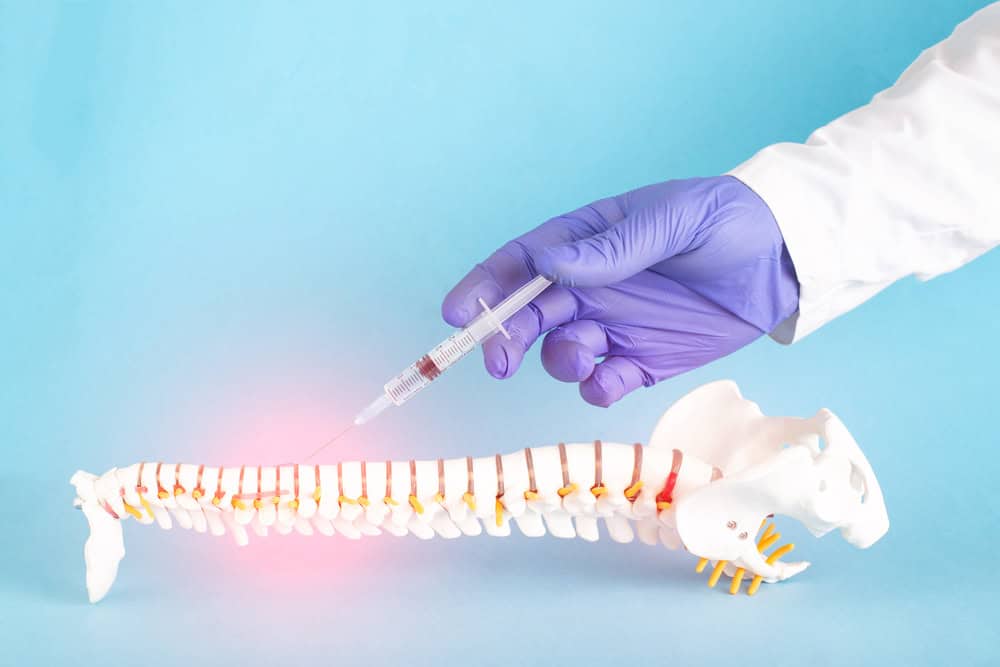
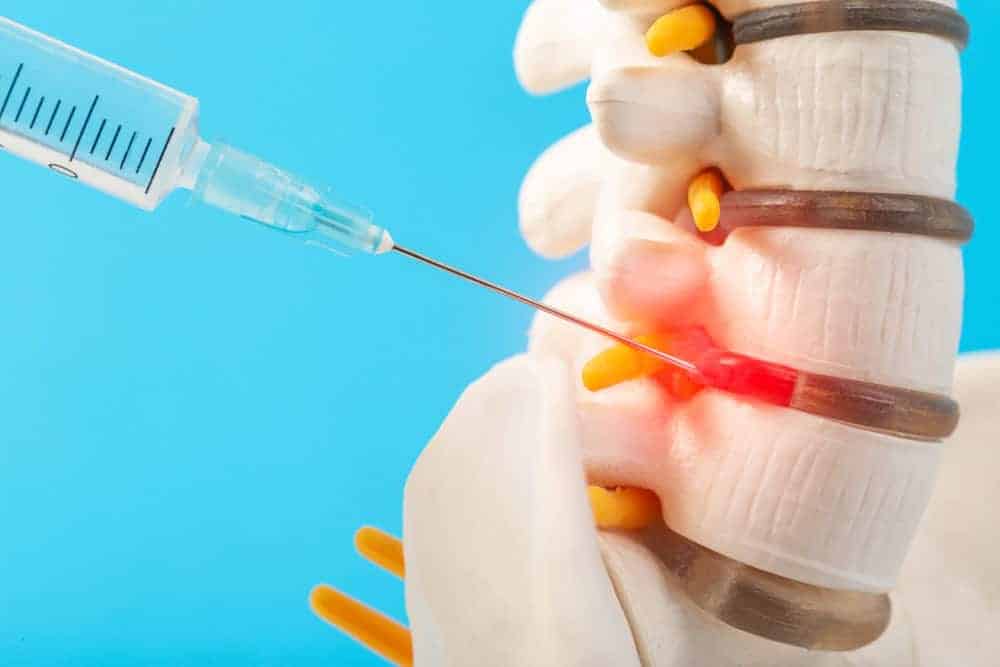
A spinal injection (such as an epidural steroid injection, a facet joint injection, or a nerve block) is a targeted, minimally invasive treatment. It delivers anti-inflammatory medication directly to the source of nerve irritation, and it can be remarkably effective at reducing pain in the short term.
But here’s the thing: it doesn’t fix the muscular weakness, poor posture, or movement dysfunction that allowed the problem to develop. Those factors don’t go away on their own. And when the injection’s effects begin to taper, they’re still there, waiting.
This is why the research consistently points to better long-term outcomes when injections are combined with physical therapy. The injection manages the pain. Physical therapy addresses what’s driving it.

How The Injection-To-PT Window Works
Think of a spinal injection as opening a door. Before the injection, many patients are in enough pain that they can’t fully engage in physical therapy. The exercises are too uncomfortable, the range of motion too limited, and the effort too discouraging. The injection changes that. By reducing inflammation and quieting the nerve irritation, it creates a period, often several weeks to a few months, during which the patient can participate in rehabilitation at a meaningful level.
That window is the opportunity. A well-designed physical therapy program during that period focuses on strengthening the muscles that support the spine, correcting the postural habits that contribute to disc and joint stress, and teaching the body to move in ways that reduce the risk of re-injury. These aren’t temporary fixes. When done consistently, they produce structural changes that outlast the injection itself.
Epidural steroid injections are the most commonly performed interventional procedure for low back pain in the United States, and their utilization has more than doubled over the past decade. The patients who tend to get the most out of them in terms of lasting relief are the ones who use the pain-free window to do the work.
At NY Spine Medicine, this isn’t an afterthought. It’s the model. We integrate physical therapy directly alongside injection treatments, so the two reinforce each other rather than happening in isolation. Our goal isn’t just to get you feeling better for a few months. It’s to give your spine the structural support it needs to stay that way.
The type of injection matters, and so does the technique. All injection procedures we perform are done under fluoroscopic guidance (real-time X-ray imaging) with contrast dye used to confirm that the needle is placed correctly before any medication is delivered. This is the standard of care, and it separates a targeted, effective injection from a guesswork procedure.
What Conditions Respond Well To Combined Injection And Physical Therapy Treatment
Not every spine condition is the same, and the right combination of injection type and physical therapy approach depends heavily on what’s causing the pain. That’s why we start with a thorough diagnostic evaluation, and in some cases, a diagnostic injection, to confirm the pain source before recommending any treatment.
Lumbar disc herniation with radiating leg pain (commonly called sciatica) is one of the clearest examples. The evidence for epidural steroid injections in this context is strong, and when the injection reduces the radicular pain enough for a patient to move and exercise without significant discomfort, physical therapy can make a real difference in long-term outcomes.
Spinal stenosis, which affects roughly 30% of adults over 60, is another condition where this combination often proves effective. The narrowing of the spinal canal that characterizes stenosis can’t be reversed by an injection, but the pain and nerve irritation it causes can be significantly reduced, and that reduction creates room for the kind of targeted strengthening and mobility work that helps patients stay active and functional.
Facet joint syndrome, degenerative disc disease, cervical radiculopathy, and sacroiliac joint pain are all conditions we treat with this integrated approach as well. The common thread is that the injection addresses the acute inflammatory component, and physical therapy addresses the chronic mechanical component.
If you’ve had injections in the past that didn’t hold, it’s worth asking if physical therapy was part of the plan afterward. In many cases, it wasn’t, and that’s often the missing piece.
Want live answers?
Connect with a NY Spine Medicine expert for fast, friendly support.
Pain Management In NYC: Why The City's Demands Make This Approach More Important
New York City is genuinely hard on the spine. That’s not hyperbole; it’s practical reality. The daily physical demands of living in Manhattan, Brooklyn, Queens, the Bronx, and Staten Island are different from almost anywhere else in the country, and they matter when you’re thinking about back pain treatment.
If you commute by subway, you’re standing in a crowded car with nothing to hold onto, carrying a bag on one shoulder, and navigating stairs at stations that weren’t designed with ergonomics in mind. If you work at a desk in Midtown Manhattan, you’re likely sitting for eight to ten hours a day. If you work in construction, food service, or healthcare across Brooklyn, Queens, the Bronx, or Staten Island, your body is absorbing physical stress that accumulates over years.
The point isn’t that New York City is uniquely dangerous. It’s that recovery and long-term pain management here require a plan that accounts for what you’re returning to.
How NYC's Daily Demands Affect Back Pain Recovery, And What To Do About It
When a patient in Manhattan or Brooklyn finishes a spinal injection and goes home feeling significantly better, that’s a good sign. But within a day or two, they’re back on the subway, back at the desk, and back to the physical reality of their life. If the underlying muscular support isn’t there (if the core isn’t strong enough, if the posture hasn’t improved, if the movement patterns haven’t changed), the spine is going to be under the same stress that contributed to the problem in the first place.
This is why the physical therapy component of treatment isn’t optional for us. It’s the part that makes the relief last in the context of real New York City life. The exercises and techniques used in physical therapy are specifically designed to build the kind of functional strength and resilience that holds up under daily demands, not just in a clinical setting, but on the platform at Grand Central, in the stairwell at your office building, or on the job site in the Bronx.
For patients coming to us from Queens (one of the most ethnically and occupationally diverse boroughs in the city), the physical demands vary enormously. We see patients who work at JFK and LaGuardia, patients in food service and construction, and patients whose commutes involve transfers across multiple subway lines. Our multilingual staff helps ensure that language is never a barrier to understanding your treatment plan or asking the questions that matter.
For Staten Island patients, who often face longer commutes by car or ferry and a higher rate of physically demanding occupations, the same principle applies. The treatment plan has to account for what you’re doing every day, not just what happens in our office.
We’re open Monday through Saturday, 7AM to 7PM, and we can typically schedule new patients within 24 to 48 hours. For someone in acute pain who can’t afford to wait weeks for a specialist slot at a major academic medical center, that access matters.
Does Integrating Physical Therapy With Spinal Injections Help Avoid Surgery?
This is one of the most common questions we hear, and the honest answer is that for many patients, yes. Not for everyone, and not in every situation. But the integrated approach we use is specifically designed to exhaust every evidence-based non-surgical option before a surgical referral is ever considered.
Our core belief, and the one that has guided this practice since we opened in 2008, is that surgery should be a last resort. That’s not a marketing line; it’s the framework we apply to every patient evaluation. When a spinal injection reduces pain enough to allow meaningful participation in physical therapy, and physical therapy rebuilds the structural support the spine needs, many patients reach a level of function that makes surgery unnecessary.
Our approach leads with nerve blocks, epidural steroid injections, radiofrequency ablation, and physical therapy, rather than prescription pain medication. For patients who have been managing pain with medication for too long and are looking for a real alternative, the integrated injection and physical therapy model is often exactly that.
We accept workers’ compensation and no-fault auto insurance, which is relevant for a significant number of New York City patients injured on the job or in auto accidents. New York’s no-fault system has specific filing requirements and timelines, and our team has experience navigating that process so patients aren’t left managing paperwork on top of managing pain.
If you have existing imaging (an MRI you had done months ago that no one has fully explained to you), we offer a free MRI review. It’s a straightforward way to get a physician-level read on what you’re dealing with before committing to any course of treatment.
Finding Long-Term Back Pain Relief In NYC: What Works
Spinal injections work. Physical therapy works. The combination of the two, done in the right sequence with a clear plan behind it, tends to work significantly better than either one alone, especially for people living in a city that doesn’t give you much room to slow down.
If you’ve been through the cycle of temporary relief followed by returning pain, the question worth asking isn’t if injections are effective. It’s if the full picture was addressed. In most cases, it wasn’t.
NY Spine Medicine has been treating patients across Manhattan, Brooklyn, Queens, the Bronx, and Staten Island since 2008. If you’re ready to understand what’s driving your pain, and what a real plan for managing it looks like, reach out to us. We’re here Monday through Saturday, and we can usually get you in within a day or two.