

Summary:
Most people searching for information about epidural spinal injections aren’t starting from scratch. You’ve already done the physical therapy. You’ve taken the medications. Maybe you’ve even been told surgery is on the table. And you’re still in pain. If that’s where you are, you’re not alone — and you’re not out of options. This page is for people who are stuck between “conservative care didn’t work” and “I’m not ready for surgery.” We’ll walk you through how epidural spinal injections work, who tends to benefit most, and how they honestly compare to other approaches.
How Epidural Spinal Injections Work — and Why They're Different From What You've Already Tried
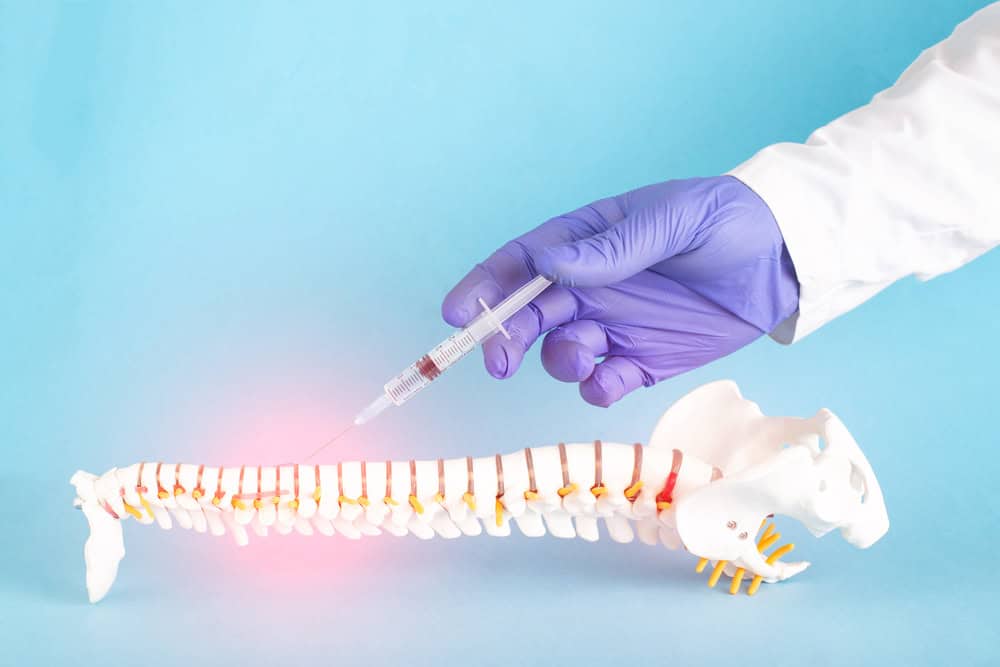
An epidural spinal injection delivers a corticosteroid — an anti-inflammatory medication — directly into the epidural space surrounding the spinal cord and nerve roots. That targeted delivery is what makes it different from taking an oral anti-inflammatory like ibuprofen, which has to travel through your entire system before reaching the source of the problem.
When a nerve root is compressed or irritated — by a herniated disc, bone spur, or narrowed spinal canal — it becomes inflamed. That inflammation is what causes the radiating pain, numbness, or weakness you feel in your back, legs, or arms. The injection addresses that inflammation directly, which is why many patients feel relief that oral medications simply couldn’t provide.
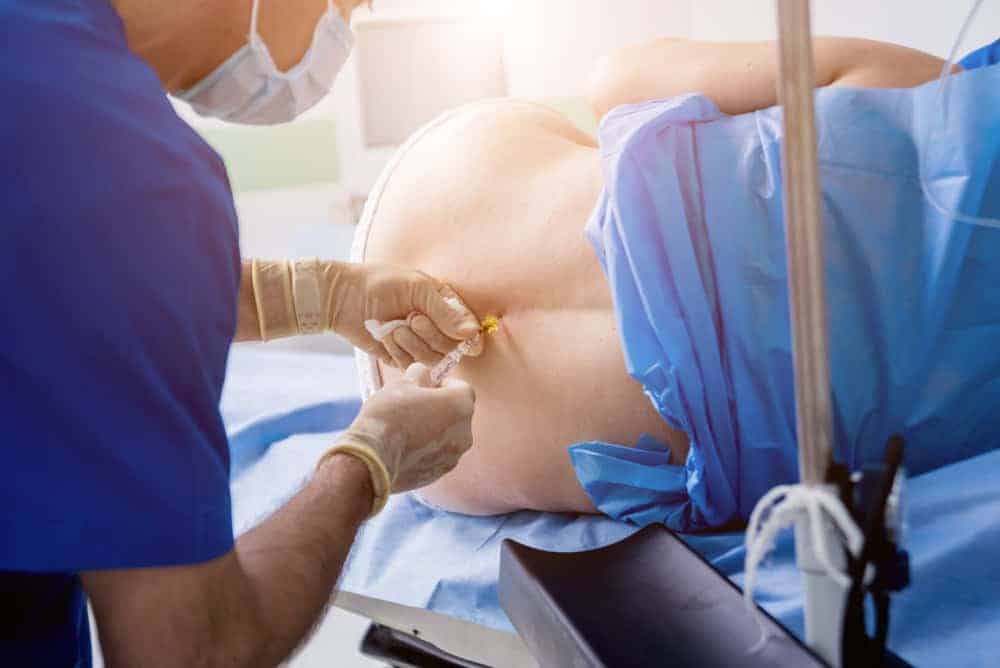
The procedure itself is brief. Most patients are in and out in under 30 minutes, and because it’s done with image guidance — fluoroscopy, essentially a real-time X-ray — the medication goes exactly where it needs to go.

What Conditions Are Epidural Steroid Injections Actually Used to Treat?
Epidural steroid injections are used for a fairly wide range of spinal conditions, which surprises some patients who assumed they were only for one specific problem. The most common reason people come to us for this treatment is sciatica — the sharp, shooting leg pain caused by compression of the sciatic nerve, usually from a herniated disc in the lumbar spine. Sciatica affects anywhere from 10% to 25% of the general population at some point, and it’s one of the conditions that responds particularly well to epidural injection therapy.
Beyond sciatica, epidural injections are used for cervical radiculopathy (nerve pain radiating into the arm from the neck), spinal stenosis (narrowing of the spinal canal that compresses nerves), degenerative disc disease, and postherpetic neuralgia. The common thread across all of these is nerve irritation driven by inflammation — and that’s exactly what the injection targets.
It’s worth being honest about what injections don’t do. They don’t remove a herniated disc or reverse structural changes in the spine. What they do is reduce the inflammation that’s making those structural changes painful, which can create a meaningful window of relief — enough to allow the body to heal, to make physical therapy more productive, or simply to restore quality of life while you weigh your longer-term options.
For patients with a new disc herniation who respond well to their first injection, that window of relief can become permanent. For patients with chronic or recurrent conditions, injections can provide relief lasting three to six months or more — with the option to repeat the treatment within safe limits. That’s a meaningful outcome for someone who has been dealing with daily pain that’s disrupting their work, their sleep, and their ability to move through a city that demands a lot from your body.
Interlaminar, Transforaminal, Caudal: Does the Type of Epidural Injection Matter?
Yes — and this is something patients rarely ask about but genuinely should. There are three primary approaches to epidural spinal injections, and the right one depends on the location and nature of your pain, your anatomy, and what the imaging shows.
The interlaminar approach is the most traditional. The needle is inserted between two vertebrae and medication is delivered into the general epidural space. It’s effective for widespread or bilateral symptoms — pain on both sides, or pain that isn’t clearly localized to one nerve root.
The transforaminal approach is more targeted. The needle is guided toward the specific opening (foramen) where a nerve root exits the spine, allowing the medication to be delivered right at the source of irritation. This approach is often preferred for patients with clearly localized radicular pain — for example, sciatica that’s specifically tracing down the left leg from the L4-L5 level.
The caudal approach accesses the epidural space through the sacral hiatus at the base of the spine. It’s commonly used for lower lumbar and sacral nerve root conditions and can be particularly appropriate for patients who’ve had prior spinal surgery.
The reason this matters to you as a patient is simple: not all providers approach this decision the same way, and the choice of technique affects both the precision of the treatment and the likelihood of a good outcome. A physician with deep training in interventional pain management — not just general pain management — brings a different level of clinical judgment to that decision. At NY Spine Medicine, our physician’s background spans both neurology and interventional pain management, which means the full picture of your condition informs how and where we place the injection.
Want live answers?
Connect with a NY Spine Medicine expert for fast, friendly support.
Epidural Injections vs. Physical Therapy, Medications, and Surgery: An Honest Comparison
The question most patients are really asking isn’t just “how do injections work?” — it’s “are injections the right next step for me, given what I’ve already tried?” That’s the more useful question, and it deserves a straight answer.
The honest answer is that injections sit in a specific place on the treatment spectrum. They’re not the first thing to try, and they’re not a replacement for surgery in cases where surgery is genuinely necessary. But for a large number of patients — particularly those who have exhausted conservative care and aren’t surgical candidates — they represent the most effective available step between “I’ve tried everything” and “I don’t want an operation.”
When Physical Therapy and Medications Aren't Enough — and What Comes Next
Physical therapy is a genuinely valuable treatment for many spinal conditions. It builds the muscular support around the spine, improves posture and movement patterns, and can reduce pain over time. The problem is that when inflammation around a nerve root is severe enough, physical therapy becomes very difficult to tolerate — and sometimes impossible to benefit from. You can’t do the work when you’re in too much pain to move.
This is where epidural injections often make the most practical sense. By reducing the inflammation first, an injection can create enough relief to make physical therapy actually productive. Many patients who couldn’t tolerate PT before an injection are able to engage with it meaningfully afterward. In that sense, the two treatments aren’t competing — they work better together.
Oral medications — anti-inflammatories, muscle relaxants, nerve pain medications — operate on a similar principle to injections but with far less precision. They affect the entire body rather than the specific inflamed nerve root, which limits both their effectiveness and their tolerability over the long term. For patients dealing with sciatica or herniated disc pain that hasn’t responded to oral medications, an epidural steroid injection delivers the same type of anti-inflammatory effect at a much higher concentration, exactly where it’s needed.
A 2025 systematic review published in the journal Neurology found that compared to patients who didn’t receive epidural steroid injections, 26% more patients who did reported meaningful reductions in disability at three months. That’s not a marginal difference — it’s a clinically significant one, and it reflects what we see in practice: patients who were stuck making real progress.
For NYC patients specifically, the timeline matters enormously. If you’re commuting on the subway every day, sitting at a desk in Midtown for eight hours, and trying to maintain any semblance of a normal life, a treatment that can deliver meaningful relief within days — without requiring weeks of surgical recovery — fits your reality in a way that surgery simply doesn’t.
How Do Epidural Injections Compare to Surgery for Back and Neck Pain?
Surgery is appropriate for a specific subset of patients — those with progressive neurological deficits, severe structural instability, or conditions like cauda equina syndrome that require immediate intervention. For the majority of people dealing with sciatica, herniated discs, or spinal stenosis, surgery is not the only path forward, and in many cases it’s not the best first path.
The core belief at NY Spine Medicine is that surgery should be a last resort. That’s not a marketing line — it’s a clinical philosophy that shapes every treatment recommendation we make. We exhaust every available non-surgical option before surgery enters the conversation, because the evidence supports doing so and because our patients deserve that approach.
Epidural spinal injections represent one of the most powerful tools in that non-surgical toolkit. They can delay or eliminate the need for surgery in many patients. For those who do eventually need surgery, a period of injection-based pain management can allow them to approach the operation in better overall condition — which typically improves surgical outcomes.
From a practical standpoint, the contrast between injections and surgery is stark. A spinal injection takes under 30 minutes. There’s no general anesthesia, no hospital admission, and no weeks of post-operative recovery. Most patients resume normal activity within a day. Surgery, by comparison, typically involves a recovery period of four to six weeks at minimum — and in a city like New York, where most people can’t afford to be out of commission for that long, that distinction is not trivial.
The credential of the physician performing your injections matters here more than patients often realize. Epidural injections require precise needle placement in close proximity to the spinal cord and nerve roots. When performed by a physician with specialized training in interventional pain management and image guidance, the risk profile is very low. Dr. Schottenstein at NY Spine Medicine is one of approximately 200 physicians in the entire country who holds dual board certification in both neurology and interventional pain management — a combination that reflects not just procedural skill but a deep understanding of the neurological conditions driving the pain in the first place.
Finding the Right Pain Treatment in New York City — What to Do Next
If you’ve been living with back, neck, or leg pain that hasn’t responded to what you’ve already tried, the decision about what comes next doesn’t have to feel like a leap in the dark. Epidural spinal injections are a well-established, minimally invasive option with a strong track record — but whether they’re right for you depends on your specific diagnosis, your imaging, and your history.
That’s exactly why we offer a complimentary MRI review. If you’ve had imaging done and haven’t gotten a clear path forward, send it to us. Our physician will review it and give you an honest assessment of whether injection therapy makes sense for your situation — no pressure, no commitment required.
NY Spine Medicine serves patients across Manhattan, Brooklyn, and Queens. We understand the particular demands this city places on your body and your schedule. If you’re ready to talk through your options, we’re here.