

Summary:
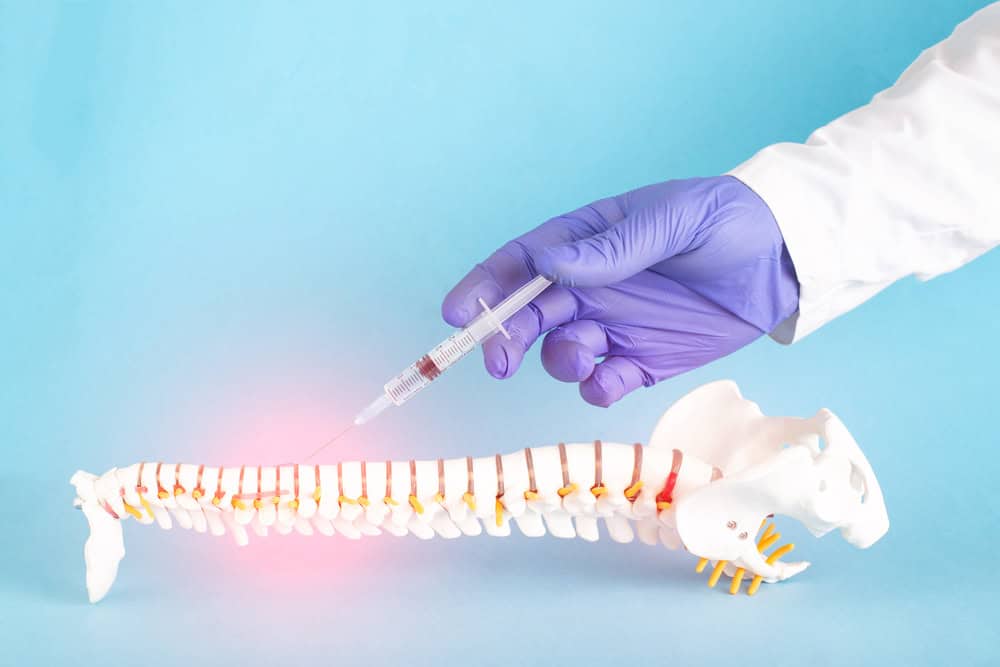
If two different physicians have suggested two different injections for the same back pain, you are not being given conflicting advice. You are being told that your pain could be coming from more than one structure, and nobody has confirmed which one yet.
Your spine has several plausible pain generators sitting within a few centimeters of each other. A disc pressing on a nerve root and an arthritic facet joint can both make your low back hurt, but they respond to completely different treatments. Injecting the wrong one wastes weeks you do not have to spare.
The useful part is that both of these injections are also diagnostic tools. Here is how to tell which conversation you should be having.
What Each Of These Injections Is Actually Treating
An epidural steroid injection places anti-inflammatory medication into the epidural space, the area just outside the covering of the spinal cord where nerve roots exit. The problem it addresses is chemical and mechanical irritation of those nerve roots, usually from a herniated or degenerated disc, or from stenosis narrowing the space the nerve needs. The medication reduces inflammation around the nerve so the nerve can settle down.
A facet block is aimed somewhere else entirely. The facet joints are the small paired joints at the back of each spinal segment that let you bend and twist. They develop arthritis like any other joint. A facet block places anesthetic, often with steroid, either into the joint itself or onto the medial branch nerves that supply it. It treats joint pain, not nerve root pain. Same spine, different structure, different problem.

Which Symptoms Point Toward A Nerve Root Problem?
Nerve root pain has a signature. It travels. Pain that starts in your low back and runs down the back of your thigh into your calf or foot, or neck pain that shoots into the shoulder blade, arm, and fingers, is following the path of a specific nerve. Patients often describe it as electric, burning, or sharp rather than achy. It frequently comes with numbness or pins and needles in a defined area, and sometimes with weakness in one specific movement, such as lifting your foot or gripping a jar.
The behavior of the pain matters as much as its location. Radicular pain from a disc is often worse with sitting, bending forward, coughing, or sneezing, all of which raise pressure on the disc. Pain from spinal stenosis tends to be the opposite. Walking a block or two brings on leg heaviness and burning, leaning forward on a shopping cart relieves it, and sitting down resets the clock. Both are nerve root problems, and both are commonly addressed with an epidural approach, though the technique used differs.
When the exam matches the story and the MRI shows a disc or stenosis at the level that explains your symptoms, an epidural steroid injection is a reasonable next step. Its job is to reduce inflammation enough that you can move, sleep, and participate in physical therapy while the disc itself settles down, which many do over a period of weeks to months. Relief varies widely between patients, and the injection is a tool inside a plan rather than a standalone fix. If your symptoms include progressive weakness, or any loss of bowel or bladder control, that is not an injection conversation. That is an urgent evaluation, the same day.
Which Symptoms Point Toward The Facet Joints Instead?
Facet pain stays home. It sits in a band across the low back, or in the neck and the tops of the shoulders, and it is usually described as deep, achy, and stiff rather than electric. It can refer into the buttock or the back of the thigh, and neck facets can refer into the head and produce headaches, but it does not usually travel past the knee or into the fingers, and it does not typically bring numbness or true weakness with it. Pressing on the muscles alongside the spine at that level often reproduces the familiar ache.
Movement tells you a great deal. Facet joints are loaded when you extend and rotate, so standing for a long time, walking downhill, arching backward, and turning to look over your shoulder tend to make it worse. Sitting and leaning forward often feels better, which is the reverse of the classic disc pattern. Mornings are stiff for the first twenty or thirty minutes, and the pain can be worse after a day of activity than during it.
Age and history push the odds. Facet arthritis becomes more common with each decade, and it is frequent after whiplash type injuries, in patients with prior spine surgery, and in people whose work involves repeated bending and twisting. Imaging can show facet arthritis, but it cannot prove the joints are the source of your pain, because arthritic facets appear on plenty of scans belonging to people with no symptoms at all. That is exactly why the block is done. A facet block or medial branch block is both a treatment and a test, and a clear response is what justifies moving on to a longer lasting option such as radiofrequency ablation.
Want live answers?
Connect with a NY Spine Medicine expert for fast, friendly support.
How Your Physician Actually Decides Between The Two
The decision is built from three things, in order. First, your history, meaning where the pain travels, what makes it better and worse, and how it started. Second, the physical exam, including reflexes, strength testing, sensation, and specific maneuvers that load the nerve root or the facet joints. Third, imaging, which is used to confirm or contradict the first two rather than to lead them.
Imaging alone is the least reliable of the three. Most adults past forty have disc bulges and facet changes on an MRI. The finding that matters is the one that lines up with your symptoms and your exam. When those three sources agree, the choice of injection is usually straightforward. When they disagree, the injection becomes primarily diagnostic, and the response you report afterward turns into the most valuable piece of information anyone has.
What Each Of These Procedures Feels Like On The Day You Have It
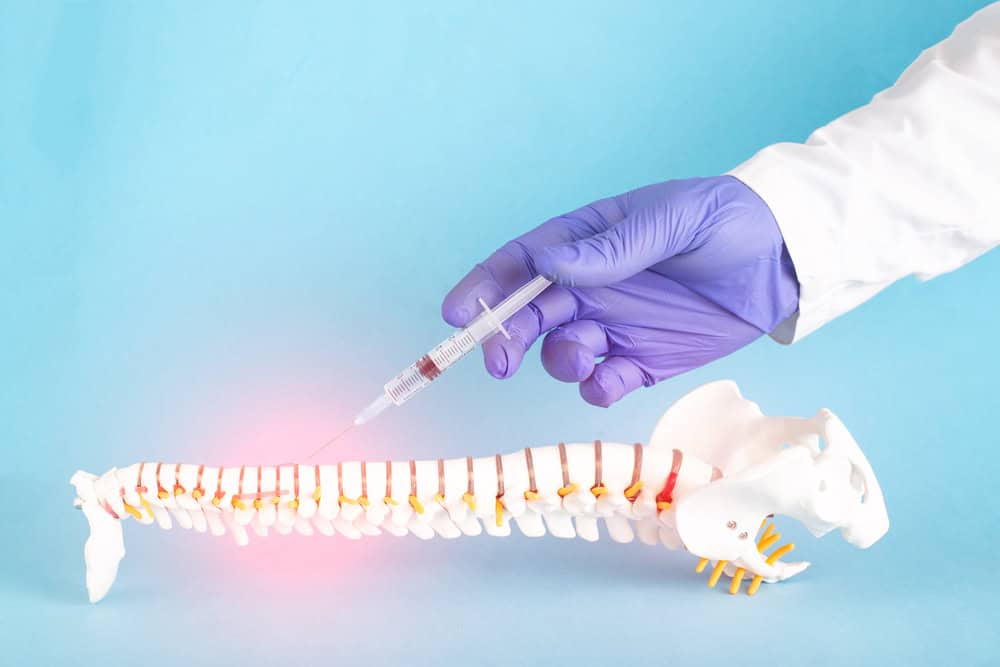
Both are done in an outpatient procedure suite, and both use fluoroscopy, which is live X-ray, to guide the needle. You lie on a table, the skin is cleaned and numbed with local anesthetic, and the physician advances a thin needle under imaging. Contrast dye is often injected first to confirm the medication will spread exactly where it is intended. That confirmation step is what separates a precise injection from a blind one, and it is the standard of care. Sedation is available if you need it, though many patients do not.
For an epidural, the needle is directed toward the epidural space, either from the midline, from the side near the exiting nerve root, or through the sacral opening at the base of the spine, depending on your anatomy and the level involved. You may feel pressure. Occasionally there is a brief zing of familiar pain as the medication reaches the irritated nerve, which is unpleasant for a second and usually a good sign about targeting. The whole thing typically takes well under thirty minutes.
A facet block is generally quicker and gentler. The needles are shallower, several levels can be treated in one sitting, and most patients describe pressure rather than pain. Afterward, both procedures involve a short observation period and a ride home if sedation was used. Numbness or leg heaviness for a few hours after an epidural is normal. Soreness at the injection site for a day or two is normal. Most people return to ordinary activity the next day. Fever, a severe headache that appears when you sit or stand, spreading weakness, or drainage from the site is not normal, and those warrant a call to the office right away.
What The Weeks After The Injection Tell You About Your Diagnosis
The most useful thing you will do after either injection is pay attention and write things down. Two separate signals matter, and patients often blur them together. The first is the immediate response in the first few hours, while the local anesthetic is working. That window tells you whether the right structure was targeted. The second is the response over the following days and weeks, as the steroid reduces inflammation. That tells you whether the treatment will hold.
Keep a simple log. Note your pain level before the procedure, then a few hours after, then once daily for two weeks. Note what you can do that you could not do before, because function is often a better measure than a number on a scale. Walking further, sleeping through the night, and getting through a workday are the outcomes that matter. A two line note on your phone each evening is enough.
Interpretation is where the two paths diverge. If a facet or medial branch block gives you strong, short lived relief that matches the duration of the anesthetic, that is a positive diagnostic result and points toward radiofrequency ablation for longer relief. If an epidural relieves your leg pain substantially, that supports the nerve root as the source, and the plan usually shifts to physical therapy while the disc heals, with the option of repeating the injection if symptoms return. Either way, you leave with a clearer diagnosis than you arrived with.
A poor response is information too, and it should change the plan rather than repeat it. Sometimes the level treated was not the level responsible. Sometimes there are two pain generators, and treating one uncovers the other, which is common and not a failure. Sometimes the source is the sacroiliac joint, or a hip that has been quietly arthritic the whole time. A physician who reassesses after a negative result is doing the job correctly. Repeating the same injection a third time with no response is not a plan.
Getting The Right Injection Instead Of The Next One
The real answer to epidural versus facet block is that they are not competitors. They treat different problems, and the one that is right for you is the one aimed at the structure actually generating your symptoms. Radiating pain with numbness usually means nerve root. Deep, local pain that hates extension and rotation usually means facet joint. Your exam and your imaging either support that impression or send the workup in a different direction.
It is also fair to say that some patients eventually need both, at different times, for different problems. That is not a sign anyone guessed wrong. Spines commonly have more than one thing going on at once.
At NY Spine Medicine, we perform both procedures under fluoroscopic guidance at our Manhattan and Brooklyn offices, and we run physical therapy inside the same practice, so what happens after the injection is planned rather than improvised. If you are trying to work out which injection actually fits your symptoms, call 212-750-1155 and we will start with the evaluation rather than the procedure.