
Kenilworth sits at a crossroads right now. The 107-acre former Merck campus on Galloping Hill Road is actively being rebuilt into the NEST Center one of the largest life sciences redevelopment projects in New Jersey history. That means electricians, laborers, HVAC techs, carpenters, and facilities workers are on that site every day doing physically demanding work with real injury exposure. Add to that the thousands of Kenilworth residents driving the Garden State Parkway and Route 22 to warehouses, retail floors, and healthcare facilities across Union County, and you have a community with a genuine, ongoing need for workers’ comp medical care that actually holds up.
What most injured workers don’t realize is that the quality of your treating physician directly affects your claim outcome. It’s not just about getting treated it’s about getting treated by someone whose documentation carries weight when the insurance company pushes back. A thorough clinical record from a double board-certified specialist in both neurology and interventional pain management is a very different thing than a form filled out at a walk-in clinic.
We connect Kenilworth residents with qualified workers’ comp physicians who understand both the medical and administrative side of what you’re dealing with. You get an accurate diagnosis, a treatment plan built around getting you functional again, and a physician whose records protect your claim not the insurer’s bottom line.
We built our practice around a straightforward belief: surgery should be the last option, not the first one someone reaches for. Our practice is led by Dr. Douglas Schottenstein, who holds double board certification in both neurology and interventional pain management a combination held by only approximately 200 physicians in the entire United States.
That means he can identify the neurological root cause of a work injury and treat it with precision, without defaulting to a surgical referral. He’s been named to the Castle Connolly and New York Magazine Best Doctors lists for ten consecutive years. He completed his fellowship at Columbia University/NewYork-Presbyterian Hospital and holds an academic appointment as Assistant Professor of Anesthesiology and Neurosurgery at Weill Cornell Medicine.
For Union County workers who assume that level of care is only available inside a major hospital system, our referral network changes that assumption. With 881 verified Zocdoc reviews averaging 4.8 out of 5, our track record speaks for itself. Patients consistently describe being walked through every step, feeling genuinely heard, and leaving with a clear understanding of what comes next which matters when you’re navigating a workers’ comp claim for the first time.
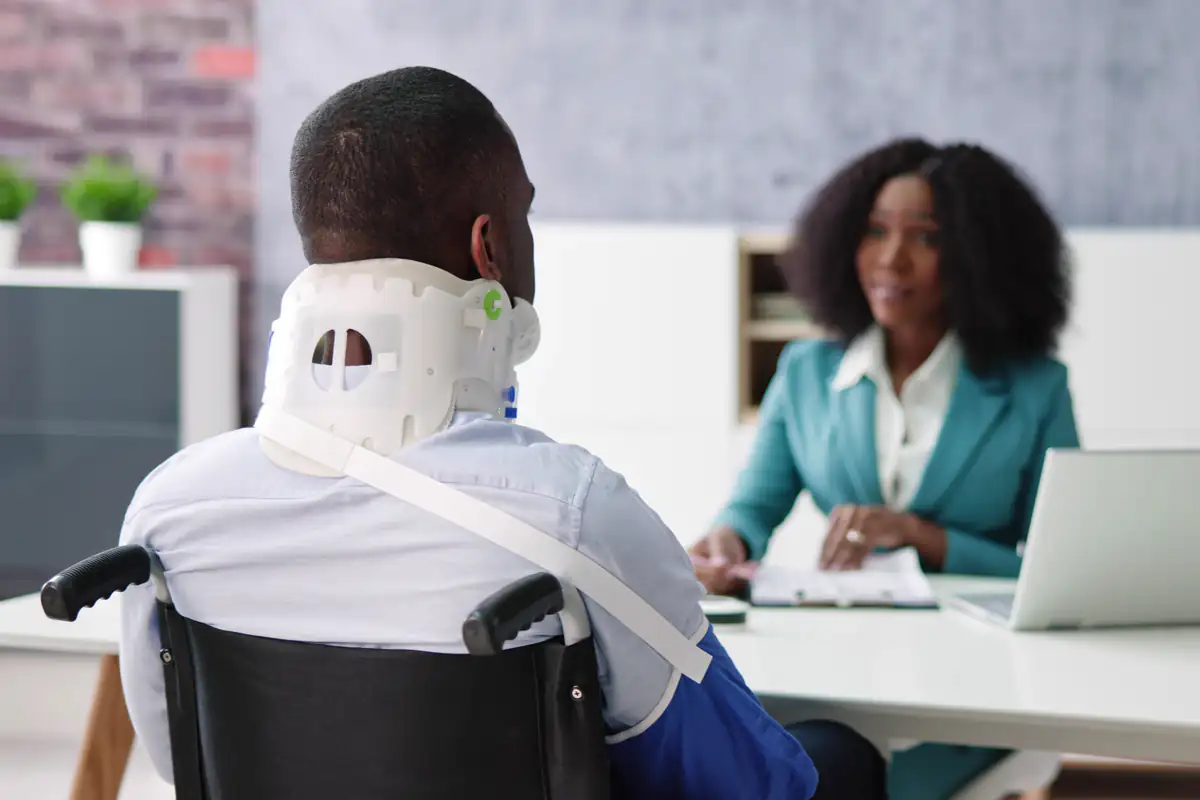
One of the real friction points for Kenilworth residents is logistics. With no NJ Transit rail stop in the borough, getting to medical appointments while injured and on restricted duty is a legitimate obstacle. Our referral network is designed to reduce that friction you’re not necessarily commuting to Manhattan for every visit. We connect you with a qualified workers’ comp physician who serves your area, so the process doesn’t add unnecessary travel to an already stressful situation.
Here’s what the process actually looks like. You contact us, describe your injury and situation, and get connected with a qualified workers’ comp physician through our referral network. From there, your physician handles the clinical evaluation, documents your injury thoroughly, and begins building a treatment plan. All communication and paperwork with your employer and insurer is managed on your behalf you don’t have to figure out the NJ workers’ comp system on your own.
Treatment itself depends on what your injury actually requires. We exhaust every minimally invasive option before anything more involved is considered nerve blocks, epidural steroid injections, radiofrequency ablation, and other targeted procedures that address the source of the problem. For a Kenilworth trades worker who can’t afford a months-long surgical recovery, that philosophy isn’t a selling point it’s the whole point.

Ready to get started?
The workers in Kenilworth who get hurt most often aren’t always the ones who look like “industrial workers” on paper. Retail trade is the single largest employment sector for Kenilworth residents 705 people working in environments where slip-and-fall injuries, repetitive strain from stocking and scanning, and lifting injuries happen regularly. Health care and social assistance is the third-largest sector, and CNAs, home health aides, and hospital support staff sustain some of the highest rates of musculoskeletal injury in the entire U.S. workforce. These workers often minimize what happened to them, assume it’s not serious enough to file, or worry about what their employer will say. That hesitation can cost them.
What we provide is a physician who takes the full picture seriously the neurological component of a repetitive strain injury that a standard evaluation might miss, the documentation that protects your claim when the insurer sends their own doctor to dispute it, and a treatment plan that actually addresses the root cause rather than managing symptoms until you give up. We handle all insurer and employer communication, which removes the single most overwhelming part of the process for most first-time claimants.
For construction and trades workers on the NEST campus or other Union County job sites, the interventional procedures we offer including spinal cord stimulation, facet joint injections, and nucleoplasty represent a genuine alternative to surgery that most workers didn’t know existed. You don’t have to choose between toughing it out and going under the knife.

In New Jersey, your employer or their insurer may have a managed care organization an MCO that directs where you receive initial treatment. If that’s the case, you’ll need to start within that network. However, if no MCO arrangement exists, you’re free to seek treatment with any licensed physician who handles workers’ comp cases. And in either scenario, the MCO network still gives you options you’re not locked into a single company-selected doctor with no alternatives.
The more important point is this: even within the system’s constraints, the quality of your treating physician matters enormously. The doctor you see is the one producing the clinical documentation that determines how your claim is evaluated, whether your injury is taken seriously, and what happens if the insurer sends their own independent medical examiner to dispute your diagnosis. Choosing a physician with the right credentials not just any available provider is one of the most consequential decisions you’ll make after a workplace injury in Kenilworth or anywhere in Union County.
In New Jersey, as in most states, workers’ comp insurers have the right to require an independent medical examination commonly called an IME. The doctor performing that exam is selected and paid by the insurance carrier, which creates an obvious conflict of interest. IME reports frequently minimize the severity of injuries or suggest that the worker has reached maximum medical improvement earlier than their treating physician would conclude.
The best defense against an unfavorable IME outcome is a treating physician whose documentation is thorough, credible, and clinically defensible. When your treating physician is double board-certified in both neurology and interventional pain management with fellowship training at Columbia University/NewYork-Presbyterian and an academic appointment at Weill Cornell Medicine their clinical opinion carries real weight in any workers’ comp proceeding. For a Kenilworth worker whose income depends on their claim being handled fairly, who your treating doctor is matters as much as what your injury is.
Yes, and these are among the most commonly underreported categories of workplace injury in New Jersey. Retail workers in Kenilworth sustain repetitive strain injuries from scanning, stocking, and cashiering; lifting injuries from moving inventory; and slip-and-fall injuries from wet floors, uneven surfaces, and cluttered aisles. All of these are covered under NJ workers’ compensation, provided they are documented properly and connected to your work activities.
The challenge with repetitive strain injuries in particular is that they don’t always show up clearly on a standard orthopedic evaluation. Many of these injuries involve nerve compression or nerve damage which is exactly where a physician with neurology training alongside interventional pain management expertise becomes critical. A diagnosis that identifies the neurological component of your injury is a stronger, more defensible clinical record than one that simply notes soft tissue damage. For Kenilworth’s retail workforce, which represents the largest single employment sector in the borough, getting that level of evaluation from the start can make a significant difference in how a claim proceeds.
New Jersey law requires you to notify your employer of a workplace injury as soon as possible and in most cases, no later than 90 days after the injury occurs. Missing that window can jeopardize your ability to file a claim at all. For occupational illnesses or injuries that develop over time, such as repetitive strain conditions common among Kenilworth’s retail and healthcare workers, the clock typically starts when you knew or should have known that the condition was work-related.
On the medical side, prompt treatment matters for two reasons. First, your recovery outcome is generally better when injuries are evaluated and treated early before inflammation, nerve involvement, or compensatory movement patterns make the underlying condition harder to treat. Second, a gap between the injury and your first medical visit gives insurers an opening to argue that the injury wasn’t serious or wasn’t work-related. Getting connected to a qualified work injury doctor in Kenilworth quickly after an incident protects both your health and your claim.
The most common work injuries seen in a community like Kenilworth span a wide range. Construction and trades workers on sites like the NEST campus redevelopment at the former Merck headquarters on Galloping Hill Road typically present with back injuries, herniated discs, shoulder injuries, and knee injuries often from falls, heavy lifting, or equipment use. Retail and warehouse workers tend to present with lumbar strain, repetitive stress injuries to the wrists and shoulders, and injuries from slip-and-fall incidents. Healthcare workers a significant segment of Kenilworth’s workforce frequently sustain back and shoulder injuries from patient handling.
Our network addresses all of these through a range of minimally invasive interventional procedures: epidural steroid injections, nerve blocks, facet joint injections, sacroiliac joint injections, radiofrequency ablation, and more. The goal in every case is to identify the root cause of the pain including any neurological involvement and treat it directly, without defaulting to surgery. For workers who need to return to physically demanding jobs, that approach makes a practical difference in recovery time and long-term function.
We operate a workers’ compensation physician referral network that extends well beyond our Manhattan office at 18 East 48th Street. Kenilworth residents and workers throughout Union County are specifically served through this network, which means you’re connected with a qualified workers’ comp physician in your area rather than being required to make a cross-state trip for every appointment.
This matters practically for Kenilworth, which has no NJ Transit rail stop within the borough. The nearest Raritan Valley Line stations are in Cranford and Roselle Park, and the overwhelming majority of Kenilworth residents commute by car via the Garden State Parkway or Route 22. When you’re injured and managing restricted mobility, reducing the logistical burden of getting to care is a real consideration not a minor convenience. Our referral network is built to connect you with the right physician efficiently, so the process of getting into treatment doesn’t become its own obstacle on top of the injury you’re already dealing with.